

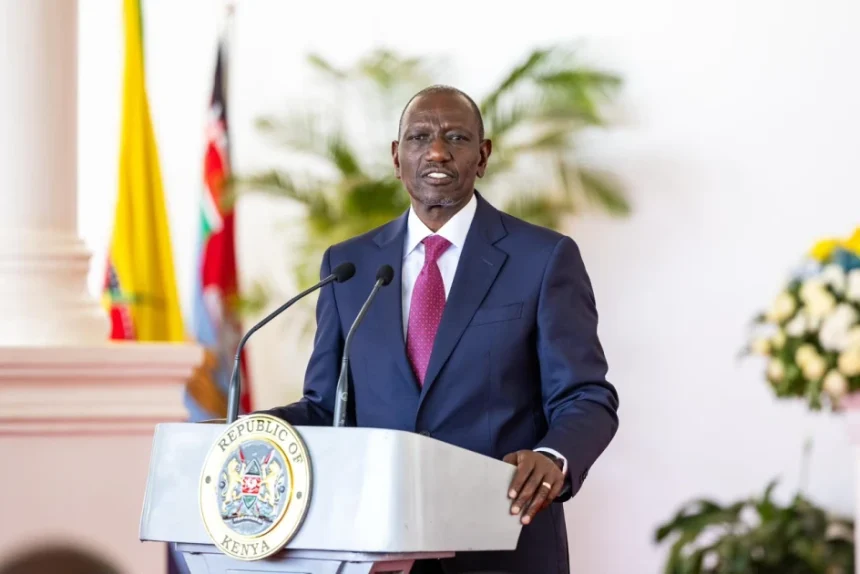
When President William Ruto stepped onto the podium to address a joint sitting of Parliament and the nation, the executive objective was clear: project stability, celebrate macroeconomic stabilization, and outline a grand roadmap for Kenya’s future beyond Vision 2030.
Speaking of stabilized exchange rates, foreign direct investment inflows, and expanded tax revenues, the Head of State presented a narrative of a nation emerging victorious from economic distress.
Yet, outside the air-conditioned chambers of Parliament, across the bustling streets of Nairobi, Mombasa, Kisumu, and Eldoret, the reaction was swift, blunt, and uncompromising. Within hours, three Swahili words dominated public discourse: “Ni kelele tu”—It’s just noise.
How did a speech filled with impressive statistical benchmarks fail so completely to connect with the populace? Why has public trust eroded to a point where official government addresses are dismissed as background noise?
To understand this historic disconnect, one must look past the teleprompter and examine the severe friction between executive economic theories and the daily survival of the average Kenyan citizen.
The Two Kenyas: Macroeconomic Metrics vs. Microeconomic Reality
At the heart of the “Ni kelele tu” sentiment lies a fundamental economic paradox that has come to define the Kenya Kwanza administration.
+————————————————————————-+
| THE DUAL REALITY OF KENYA’S ECONOMY |
+————————————————————————-+
| |
| STATE HOUSE STATISTICAL BOARD THE STREET-LEVEL SURVIVAL MAP |
| —————————– —————————– |
| • Shilling stabilized vs. USD • Prices of staple foods remain |
| • Foreign exchange reserves up • Sky-rocketing utility bills |
| • Inflation stats cooling • Heavy new tax deductions |
| • Housing project stats rising • High youth unemployment rate |
| • Macroeconomic growth targets • Shrinking MSME profit margin |
| |
+————————————————————————-+
From an executive standpoint, the government can cite real financial stabilization measures:
Currency Stability: The Kenya Shilling has stabilized against major currencies after months of volatility.
Foreign Reserves: Foreign exchange reserves reached historic highs.
Inflation Control: Headline inflation figures dropped relative to previous peak years.
However, macroeconomic stabilization does not automatically translate into household prosperity. For the average consumer purchasing maize flour, cooking oil, electricity, and fuel, prices have plateaued at an already record-high baseline. When citizens hear that “inflation has dropped,” they expect prices to decrease. When prices remain high while taxes and statutory deductions (such as housing levies and health insurance contributions) increase, the statistical win feels like a statistical illusion.
The Catalyst Issues Fueling Public Cynicism
The dismissive response to the State of the Nation Address was not created in a vacuum. It is the cumulative result of months of policy friction across key public sectors:
1. The Healthcare Transition Chaos (SHA/SHIF)
Healthcare remains a touchstone issue for every Kenyan family. The transition from the long-standing National Health Insurance Fund (NHIF) to the Social Health Authority (SHA) and the Social Health Insurance Fund (SHIF) was billed as a flagship move toward Universal Health Coverage (UHC).
In practice, the rollout has been plagued by system integration glitches, unpaid claims to private and faith-based hospitals, and widespread confusion over coverage tiers. Stories of cancer patients turned away from treatment facilities or forced to pay out-of-pocket despite monthly salary deductions dominate local news cycles. When the President speaks of health transformation, citizens facing real-world hospital rejections view the claims as detached from reality.
2. Taxation Without Tangible Public Service Return
Since the introduction of successive finance bills and aggressive revenue collection strategies, the formal sector workforce and informal Jua Kali operators have felt financially squeezed.
Formal Employees: See their take-home pay diminished by housing levies, increased health contributions, and PAYE tax brackets.
Informal Entrepreneurs: Face increased licensing costs, turnover taxes, and declining customer spending power.
The primary grievance is not taxation itself, but the perceived absence of proportional value. When roads remain unmaintained, public schools suffer under delays in capitation disbursements, and hospitals lack basic commodities, citizens interpret calls for fiscal discipline as a one-way sacrifice.
3. The Youth Employment Dilemma
With over 70% of Kenya’s population under the age of 30, youth unemployment is the country’s most pressing socioeconomic challenge. The administration’s focus on exporting manual and service labor abroad, while lauded by officials as a solution to foreign exchange inflows, is viewed by many young graduates as an acknowledgment that the domestic economy cannot support its own educated workforce.
Comparative Analysis: Speeches vs. Street Realities
To see why “Ni kelele tu” resonated so deeply, consider how key themes in the State of the Nation Address compare with ground-level conditions:
Speech Theme Official Government Perspective Street-Level Public Experience
Economic Recovery Debt default averted, fiscal consolidation achieved, inflation tamed. Stagnant wages, high cost of basic goods, declining purchasing power.
Universal Health Care SHA guarantees equal access to medical care for all social classes. System outages, rejected insurance cards, high out-of-pocket medical expenses.
Affordable Housing Creates immediate construction jobs while addressing housing deficits. Mandatory salary deductions amidst an immediate cost-of-living crisis.
Job Creation Labor export agreements and digital hubs providing youth opportunities. Millions of university graduates struggling with prolonged underemployment.
Long-Term Vision Building a new national development charter beyond Vision 2030. Urgency for immediate relief rather than multi-decade promises.
The Evolution of Political Consciousness in Kenya
The popularization of the phrase “Ni kelele tu” marks a significant shift in Kenya’s political culture.
Historically, Kenyan political discourse was heavily driven by regional alliances, ethnic mobilization, and top-down party structures. Today, driven by an interconnected Gen Z and millennial demographic, the political arena has shifted toward issue-based accountability, digital advocacy, and economic commentary.
HISTORICAL POLITICAL MODEL MODERN CITIZEN-LED MODEL
————————– ————————
• Ethnic coalition building • Decentralized digital activism
• Top-down party manifestos • Fact-checking & budget tracking
• Reliance on traditional media • Real-time social media commentary
• Loyalty to political figures • Demands for immediate service delivery
Younger voters rely less on traditional political rallies and more on real-time budget analysis, parliamentary tracking, and peer-to-peer discourse. When an official speech is delivered, digital communities analyze the claims against official gazette notices, budget allocations, and lived experiences within minutes.
The phrase “Ni kelele tu” is the product of this active civil scrutiny—a collective expression that polished PR campaigns cannot substitute for governance outcomes.
What Must Change: Restoring Public Trust
For the government to bridge the gap between executive messaging and citizen sentiment, political analysts argue that a structural shift in approach is required:
Prioritize Immediate Microeconomic Relief: While long-term infrastructure projects are vital, immediate focus must be placed on reducing the cost of essential commodities, stabilizing agricultural input costs, and supporting small business cash flows.
Fix Service Delivery Operational Flaws: The operational glitches within SHA, public education funding, and municipal services must be resolved swiftly to ensure citizens receive value for their tax contributions.
Engage in Authentic Two-Way Communication: Rather than framing public skepticism as “cynicism”, executive leadership must acknowledge legitimate public struggles and demonstrate empathy in official rhetoric.
Ensure Absolute Transparency in Public Spending: Public willingness to bear tax burdens depends on clear evidence that state funds are managed efficiently, without waste or corruption.
Conclusion: Beyond the Noise
Presidential addresses are meant to inspire, align, and direct a nation toward a shared future. But when the public responds with “Ni kelele tu,” it signals that speechmaking has hit a wall of exhaustion.
Kenya remains a resilient, ambitious nation filled with hard-working citizens eager to build a better future. However, citizens are demanding that national development metrics match the realities of their daily lives. Moving forward, the true test of governance will not be measured by the eloquence of executive speeches, but by whether ordinary families feel the positive impact of state policy at their dinner tables.