

We live in an era of “productivity porn,” where everyone is looking for the next app, supplement, or gadget to give them an edge. But in 2026, the most successful individuals aren’t just managing their time; they are managing their internal state. They have realized that a body in a constant state of “fight or flight” cannot make high-level decisions, sustain creativity, or maintain healthy relationships.
The barrier for most people isn’t that they don’t know breathing is good for them; it’s that they don’t know how to make it a habit. You don’t need to spend an hour on a yoga mat to see results. By using a psychological concept called Habit Stacking, you can integrate the five exercises we’ve discussed into the “cracks” of your day.
The Morning Launch: Priming the System
How you wake up sets the chemical tone for your entire day. If you immediately reach for your phone and scroll through the news (like the tragic reports from Kyiv we covered earlier), your brain starts the day in a reactive, high-cortisol state.
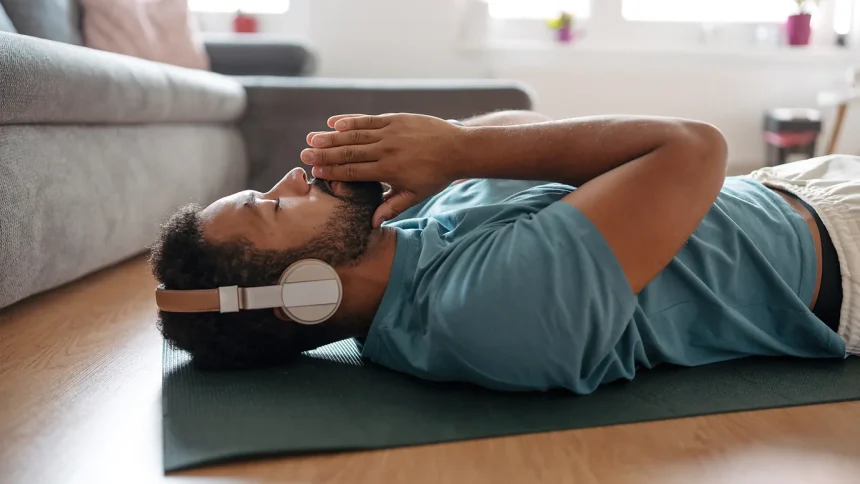
The Strategy: Before your feet even touch the floor, perform 5 minutes of Diaphragmatic Breathing.
The Habit Stack: “After I turn off my alarm, but before I check my phone, I will take 10 deep belly breaths.”
The Result: You flood your system with oxygen and signal to your brain that despite the chaos of the world, you are in control. This “anchors” your nervous system before the day’s demands begin.
The Commute: Turning Traffic into Training
Whether you are navigating the streets of Nairobi or taking a train in London, the commute is often a source of “micro-stressors.” Instead of letting your blood pressure rise with the traffic, use this time as a mobile breath clinic.
The Strategy: Practice Pursed Lip Breathing.
The Habit Stack: “Every time I hit a red light or my train stops at a station, I will do three rounds of Pursed Lip Breathing.”
The Result: This keeps your respiratory rate low and prevents the buildup of carbon dioxide that leads to that “mid-morning brain fog.”
The Workplace: Tactical Composure
The modern workplace is a minefield of stressors: back-to-back meetings, urgent emails, and shifting deadlines. To stay in your “flow state,” you need a tool that works in real-time.
The Strategy: Use Box Breathing during meetings or high-stakes tasks.
The Habit Stack: “Before I click ‘Join’ on a Zoom call or walk into the boardroom, I will perform 4 cycles of Box Breathing.”
The Result: Because Box Breathing doesn’t require moving your body or making noise, you can do it right in front of people. It keeps your prefrontal cortex (the seat of logic) online, ensuring you respond with clarity rather than emotion.
The Afternoon Slump: The Natural Caffeine
Around 3:00 p.m., most people reach for a second or third cup of coffee. However, the “slump” is often caused by shallow breathing and poor posture. Instead of caffeine, try a brain-balancing reset.
The Strategy: Alternate Nostril Breathing.
The Habit Stack: “When I finish my lunch, before I start my afternoon tasks, I will do 2 minutes of Alternate Nostril Breathing.”
The Result: This technique balances the left and right hemispheres of the brain, providing a natural surge of focus and mental energy without the “jitters” of coffee.
The Evening Wind-Down: Signaling Safety
The biggest challenge of the digital age is “switching off.” Your brain needs a clear signal that the workday is over and it is safe to enter a state of repair.
The Strategy: The 4-7-8 Technique.
The Habit Stack: “After I brush my teeth and get into bed, I will perform 4 cycles of 4-7-8 breathing.”
The Result: This is arguably the most powerful tool for insomnia. By extending the exhale, you manually force your body into a parasympathetic state. It is the biological equivalent of a “Shutdown” command for your nervous system.
Overcoming the “I Forgot” Hurdle
The hardest part of any new routine is remembering to do it. Here are three professional tips to keep your breathwork on track:
Visual Triggers: Put a small sticker on the corner of your computer monitor or your car’s steering wheel. Every time you see it, take three conscious breaths.
App Integration: Use your smartwatch or phone to set “Breathe Reminders” every two hours.
The “One-Breath” Rule: If five minutes feels too daunting, commit to just one conscious breath. Usually, once you take one, your body will want to take ten more.
Conclusion: Designing a Life, Not Just a Living
Breathwork is the ultimate “low-input, high-output” activity. It requires zero financial investment, zero special equipment, and very little time. Yet, the dividends it pays—in the form of lower stress, better sleep, and sharper focus—are immeasurable.
As we navigate the complexities of 2026, the people who thrive will be those who can remain calm in the center of the storm. By integrating these five exercises into your daily habits, you aren’t just “breathing better”—you are designing a nervous system that is built for the long haul.
Your challenge for today: Choose just one of the habit stacks above and try it for the next three days. Notice how your body feels. Notice how your mind responds. The power has been in your lungs all along; it’s time to use it.