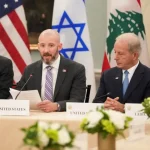


While political leaders exchange heavy rhetorical blows on national television, the ground reality of the controversial US-backed quarantine facility has moved into a dangerous new phase. What began as an abstract policy debate over international health partnerships has transformed into a profound constitutional crisis, complete with street battles, a tragic local fatality, and a judicial showdown that puts the executive branch on the defensive.
The underlying tension behind the Laikipia Ebola centre court order points to a systemic breakdown in public transparency. As details slowly emerge about the bilateral arrangement between President William Ruto and the Trump administration, the legal and civic resistance in Nanyuki proves that Kenyans are no longer willing to allow high-stakes foreign policy to bypass local constitutional guardrails.
The High Court Ultimatum: Forcing Executive Disclosure
The major legal turning point occurred on Tuesday, June 2, 2026, when High Court Judge Patricia Nyaundi aggressively extended the initial suspension halting the operationalization of the field hospital. Built by the US military inside the highly restricted perimeter of the Laikipia Air Base on the outskirts of Nanyuki, the 50-bed makeshift hospital was originally scheduled to open its doors on Friday.
KSAT
However, a robust constitutional challenge filed by the Katiba Institute has completely frozen those plans. The rights advocacy group argued that the entire negotiation violated the basic tenets of the Kenyan Constitution due to an absolute lack of public participation.
In a decisive move that temporarily tilts the power dynamic back toward the judiciary, the High Court issued a strict 7-day ultimatum ordering the state to hand over:
The complete, unredacted text of all bilateral agreements and protocols signed between Nairobi and Washington.
Full environmental and biological hazard assessments detailing the local risk profile of managing the rare Bundibugyo Ebola strain.
Documented proof of clearance and safety certifications from domestic health agencies.
This judicial intervention targets a core weakness in how modern state partnerships are managed. When a government relies on anonymous foreign sources to leak details of a local biosecurity facility, it naturally breeds deep public suspicion and legal vulnerability.
Blood on the Streets of Nanyuki: When Policy Sparks Fury
The legal gridlock in Nairobi directly mirrors the volatile unrest unfolding on the ground in Laikipia County. On Monday, June 1, the frustration felt by Nanyuki residents boiled over into massive street protests that quickly spiraled out of control.
The Columbian
Hundreds of local youths marched toward the gates of the Laikipia Air Base, chanting anti-Ebola slogans and demanding the immediate removal of the facility. The rationale driving the local community is purely practical: hundreds of Nanyuki residents enter the military base daily as casual laborers, cooks, and maintenance staff. Because the current Congolese outbreak involves the Bundibugyo species—which currently features no approved vaccine or clinical treatment—workers fear they will unwittingly act as biological vectors, carrying an untreatable hemorrhagic fever back to crowded residential estates.
KSAT
+ 1
“Why are they not doing it in the DRC? Why are they not doing it in Uganda? Why must they bring it here? We want nothing to do with this. Take that facility out of our town, and take it out of Kenya.”
— Malin Ndegwa, Nanyuki resident during the civic march.
KSAT
The escalation turned tragic when peaceful demonstrators returning to the town center were met by anti-riot police forces. The deployment of tear gas and live ammunition resulted in a chaotic stampede. One young demonstrator was shot in the leg and tragically succumbed to his injuries. In a furious retaliatory response, angry crowds stormed the local Nanyuki Law Courts, tearing down perimeter fencing and damaging state property before heavy security reinforcements could restore a tense, militarized calm over the town.
The Geopolitical Transaction: Outsourcing Risk for KSh 1.8 Billion
To understand why the executive is willing to absorb this immense domestic political damage, one has to examine the geopolitical leverage being applied from Washington. The plan reveals a calculated reluctance by the Trump administration to fly American citizens exposed to Ebola back to US soil, preferring instead to isolate them within a strategically allied African nation.
KSAT
In exchange for hosting this high-risk cohort, US Secretary of State Marco Rubio announced a $13.5 million (KSh 1.8 billion) financial package dedicated to Kenya’s broader emergency health infrastructure. President William Ruto has fiercely defended his acceptance of the deal, explaining that the US President directly requested Kenya’s logistical support, and arguing that the country’s medical surveillance networks stand to gain permanent institutional upgrades from the partnership.
Daily Herald
What Happens Next? The Imminent Devolution Clash
The Laikipia Ebola controversy is fast becoming a definitive test case for Kenyan devolution and judicial independence in 2026. If the Ruto administration attempts to use executive or military privilege to operationalize the Nanyuki field hospital while defying the High Court’s 7-day disclosure window, it will trigger an unprecedented constitutional standoff with the legal sector.
Furthermore, with local county leadership openly backing the protests, the state faces a severe breakdown in cooperation between national security agencies and local devolved governments. In the game of high-stakes international diplomacy, skipping local consensus and judicial oversight doesn’t just invite lawsuits—it turns local communities into active combatants against state policy.
For more on the executive’s perspective and the financial breakdown of this international health partnership, you can view this report detailing how President Ruto defends the Kenya-U.S. quarantine project. This broadcast outlines the state’s arguments regarding the KSh 1.8 billion health package and provides the administration’s justification for hosting the facility amidst ongoing legal challenges.