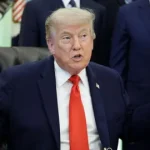

On Wednesday, July 15, 2026, Room 216 of the Hart Senate Office Building became the epicenter of American constitutional anxiety.
Todd Blanche, acting U.S. Attorney General and President Donald Trump’s personal defense attorney turned nominee to permanently lead the Department of Justice (DOJ), stood before the Senate Judiciary Committee. What followed was a grueling, five-hour examination. This was not merely a performance review of an acting cabinet member; it was a fundamental clash over the core tenets of American jurisprudence: the separation of power, the limits of presidential authority, and the institutional independence of the DOJ.
Ballotpedia
For Democrats, Blanche’s rapid ascension from Trump’s criminal defense lawyer to the highest law enforcement officer in the land represents an unprecedented threat to the rule of law. For Republicans, Blanche is viewed as a highly capable reformer seeking to dismantle what they allege has been a highly politicized “weaponization” of federal law enforcement.
This deep dive deconstructs the key revelations, structural clashes, and political leverage points that defined one of the most consequential confirmation hearings of the decade.
The Nominee: A Historic and Controversial Profile
To understand the intensity of the hearing, one must look at Blanche’s unique trajectory. Unlike traditional Attorney General nominees—who typically rise through the ranks of state prosecution, federal judiciaries, or established DOJ careers—Blanche’s defining credential in the eyes of his critics is his work as Donald Trump’s primary criminal defense attorney.
Fox News
He defended Trump in the New York hush-money trial, navigated federal indictments, and became the President’s closest legal confidant. In April 2026, Trump appointed Blanche to serve as Acting Attorney General following the abrupt removal of Pam Bondi. On June 3, 2026, Trump announced his formal nomination to make Blanche’s role permanent.
The Guardian
+ 2
The transition from a client’s personal shield to the nation’s public prosecutor sparked a fiery opening statement from Senate Judiciary Committee Chairman Dick Durbin (D-Ill.), who openly accused Blanche of cultivating institutional corruption and treating the DOJ as a private defense firm for the executive branch.
www.forbes.com
Blanche countered by declaring that he had spent his months as Acting Attorney General working to fix “purported missteps by the Biden Administration”.
www.forbes.com
“The work of this department is too important to be reduced to political theater. None of this is Republican or Democrat.”
— Todd Blanche, in his opening remarks
www.forbes.com
Yet, a notable slip of the tongue during questioning by Senator John Kennedy (R-La.) laid bare the deep-seated identity crisis of the nominee. When Kennedy asked Blanche directly if he and President Trump were personal friends, Blanche replied, “I’m his lawyer.” He paused, visibly correcting himself before adding, “Was his lawyer.”
The Guardian
This brief exchange captured the central anxiety of the entire hearing: can a lawyer who spent years saying “yes” to Donald Trump successfully say “no” when constitutional boundaries demand it?
1. The Jeffrey Epstein Files: An Apology Under Pressure
One of the most legally and ethically fraught segments of the hearing focused on the Justice Department’s implementation of the Epstein Files Transparency Act.
Under Pam Bondi and subsequently Todd Blanche, the DOJ undertook a massive initiative to release hundreds of thousands of internal files, photographs, and surveillance logs related to convicted sex offender Jeffrey Epstein. However, the rollout was marred by severe administrative errors: the DOJ released files without properly redacting the names, addresses, and personal identifying information of multiple Epstein survivors.
Ballotpedia
+ 1
The Redaction Failures and Survivor Backlash
Senator Richard Blumenthal (D-Conn.) led a scathing line of questioning, pointing out that the DOJ’s handling of the files had effectively “re-traumatized” victims who had fought for decades to maintain their privacy. Blumenthal forced Blanche to directly address the victims.
www.forbes.com
Under intense scrutiny, Blanche relented and apologized:
“Any mistake that we made should not have been made. I am sorry to the victims for those errors.”
— Todd Blanche
www.forbes.com
Blanche defended the broader operational scope, however, arguing that the redaction failures only impacted roughly “one percent” of the released files, and that the department corrected the data breaches as soon as they were identified. He further asserted that the current administration has been “more transparent than any past administration” regarding the Epstein network.
The Guardian
+ 1
However, the political and emotional damage was already done. Prior to the hearing, several Epstein survivors, including Annie Farmer, launched public campaigns—complete with billboards and video messages—imploring the Senate to reject Blanche’s nomination. They accused him of attempting to quietly bury active aspects of the investigation into Epstein’s broader network of enablers.
The Guardian
When pressed by Blumenthal to commit to a personal meeting with the survivors to hear their grievances, Blanche notably declined. He asserted that while he took the matter seriously, specialized advocates within the FBI and DOJ’s victim services divisions were “better positioned” to manage direct, sensitive communication with survivors.
CBS News
+ 1
Furthermore, Blanche made it clear that the DOJ does not consider the book closed on Epstein’s associates. He testified that there are “no closed investigations” within the DOJ regarding potential co-conspirators, stating that the department remains ready to prosecute anyone who aided Epstein’s criminal operation.
www.cbc.ca
2. The IRS-Trump Tax Settlement: Shielding the Executive
While the Epstein files dominated the human-interest aspect of the morning, the afternoon shift to fiscal and tax law saw some of the most complex, legally dense clashes of the day.
Democrats turned their sights on a highly controversial, one-page settlement agreement reached between the DOJ, the IRS, the Treasury Department, and Donald Trump. The settlement resolved a long-running civil lawsuit over the leak of the President’s tax returns. However, the document contains a sweeping clause declaring that the federal government is “FOREVER BARRED and PRECLUDED” from prosecuting or pursuing any tax claims against Trump, his sons, and his associated businesses for tax returns filed prior to the agreement.
CBS News
+————————————————-+
| THE TRUMP-IRS TAX SETTLEMENT CONTROVERSY |
+————————————————-+
|
+—————————-+—————————-+
| |
[ DEMOCRATIC CRITIQUE ] [ BLANCHE’S DEFENSE ]
– Broad, permanent immunity clause. – Routine practice to resolve lawsuits.
– “Unprecedented” protection for a president. – Did not personally draft the settlement.
– Shields Trump’s sons and businesses. – Does not apply to the current tax year.
Senator Adam Schiff (D-Calif.) pressed Blanche relentlessly on why such an extraordinary immunity clause was granted to a sitting president. Schiff asked if Blanche had personally drafted the document that bore his signature.
Blanche denied writing the specific text of the settlement but fiercely defended its legality. He claimed that broad immunity agreements are standard procedure when resolving complex litigation where the government faces substantial legal liability. Furthermore, Blanche pushed back against the idea that the President had been placed above the law, noting that the settlement:
CBS News
Resolved legitimate civil claims regarding unlawful disclosures.
CBS News
Adhered to “very clear ethics rules” that he was legally required to follow.
CBS News
Does not apply to current or future tax years, leaving Trump’s ongoing and future financial filings subject to standard IRS audits and enforcement.
3. The $1.8 Billion “Anti-Weaponization” Fund Declared Dead
In a major legislative and administrative development, the hearing put a final nail in the coffin of one of the administration’s most controversial policy proposals: the $1.8 billion anti-weaponization fund.
Originally conceived by hardline administration allies, the fund was designed to financially compensate individuals who claimed they were targets of politically motivated federal prosecutions—a group that critics pointed out could include individuals convicted in connection with the January 6, 2021, Capitol riot.
The proposal had drawn fierce bipartisan condemnation. Moderate Republicans, including Senators John Cornyn (R-Texas) and Thom Tillis (R-N.C.), had joined Democrats in expressing deep discomfort with utilizing nearly two billion dollars in taxpayer money to establish what they characterized as a political slush fund.
The Guardian
Recognizing that the fund had become an insurmountable roadblock to his confirmation, Blanche used his testimony to issue a definitive, unambiguous declaration:
“We are not moving forward with the fund, period. It is dead.”
— Todd Blanche
www.forbes.com
By explicitly killing the fund, Blanche attempted to clear a path for skeptical Republican senators to support his nomination. However, the move also exposed the delicate balancing act Blanche must perform: maintaining the trust of the populist base that demanded the fund while satisfying the traditionalist legal anxieties of the Senate GOP.
The Guardian
4. January 6 Clemency and Jack Smith: The Law of Retribution?
The shadow of the January 6, 2021, Capitol attack hung heavily over the Hart Senate Office Building. Democrats sought to link Blanche to the administration’s aggressive use of executive clemency to vacate the convictions of those involved in the riot.
The Guardian
Senator Dick Durbin asked Blanche directly if he agreed with the “blanket pardon” of January 6 rioters. Blanche sidestepped the political minefield by anchoring his answer strictly in constitutional mechanics:
Fox News
“The Constitution gives the president the full power to pardon anybody for any reason he wants.”
— Todd Blanche
Fox News
Blanche explained that once President Trump issued those clemency orders, the DOJ was legally obligated to move to vacate the sentences. He sought to distance himself from the actions of the rioters themselves, emphasizing: “I have never said that any sort of violence against law enforcement is appropriate.” This comment was widely interpreted as a direct appeal to Senator Thom Tillis, a key swing vote who has stated he would oppose any nominee who condoned violence against Capitol Police.
The Guardian
+ 2
The Threat of a Jack Smith Investigation
Perhaps the most chilling moment for institutionalists occurred when Blanche was asked about the future of former Special Counsel Jack Smith. Smith, who led the federal prosecutions against Donald Trump, has been a frequent target of conservative ire.
CBS News
Blanche testified that the DOJ is currently evaluating whether to open a perjury investigation into Jack Smith. The potential probe stems from testimony Smith gave to Congress regarding his investigation into Trump’s efforts to challenge the 2020 election results. Democrats immediately decried this disclosure, calling it a textbook example of “retributive lawfare” designed to punish a career prosecutor for doing his job.
CBS News
5. Sanctuary Cities, Media Leaks, and Pardons
Beyond the marquee scandals, the confirmation hearing touched upon a broad range of federal law enforcement policies, outlining what a Blanche-led DOJ would prioritize:
Combatting Sanctuary Jurisdictions: Replying to questions from conservative senators, Blanche vowed to use “everything that we can” at the DOJ’s disposal to crack down on sanctuary cities that restrict cooperation between local police and federal immigration authorities. He argued that sanctuary policies actively place law enforcement and communities at risk.
Fox News
+ 1
Plugging Leaks to the Press: Blanche defended aggressive departmental efforts to unearth the sources behind leaks to the media. When Senator Peter Welch (D-Vt.) cautioned that targeting journalistic sources comes “close to the heart of the First Amendment,” Blanche denied that the DOJ was attacking the press, but insisted that finding internal government leakers remains a critical security priority.
CBS News
Defending the Ouster of the Pardon Attorney: Blanche defended the controversial decision to replace the Biden-era pardon attorney, claiming her recommendations to commute the sentences of every individual on federal death row were “completely inconsistent” with standard executive practice.
CBS News
The Confirmation Math: The Swing Votes to Watch
With a highly polarized 11-10 Republican majority on the Senate Judiciary Committee, Blanche has virtually zero margin for error. If even a single Republican joins the solid Democratic bloc in opposition, the nomination could stall in committee.
The fate of his nomination rests upon three key Republican figures:
+—————————————+
| KEY SENATE REPUBLICANS TO WATCH |
+—————————————+
|
+—————————-+—————————-+
| | |
[ CHUCK GRASSLEY ] [ JOHN CORNYN ] [ THOM TILLIS ]
– Chairman of Committee – Influential GOP Moderate – Critical Swing Vote
– “Eminently qualified” – Stated he is “undecided” – Demands J6 assurances
– Solid “YES” vote – Seeking more answers – Skeptical of “slush fund”
Senator Chuck Grassley (R-Iowa): The veteran lawmaker remains Blanche’s strongest champion on the committee, praising his “commitment to transparency” and declaring him highly qualified to lead the department permanently.
Senator John Cornyn (R-Texas): Cornyn has taken a far more cautious approach. Following a recess during the hearing, Cornyn told reporters he remained “undecided” on Blanche’s nomination, signaling that the nominee’s defenses of the IRS settlement and the initial weaponization fund had not fully satisfied his concerns.
Senator Thom Tillis (R-N.C.): Tillis’s vote remains highly contingent upon Blanche’s absolute rejection of the $1.8 billion fund and his willingness to draw a hard line against the glorification of January 6 defendants.
Conclusion: A Department at a Crossroads
Todd Blanche’s confirmation hearing was far more than a typical Senate job interview. It served as a stark preview of a Justice Department operating under a vastly different set of norms, priorities, and loyalties.
Blanche presented himself as a pragmatist trapped in a hyper-partisan meat grinder, trying to run an efficient DOJ while cleaning up administrative messes like the Epstein leaks. To his opponents, however, his testimony did little to dispel the belief that he is fundamentally a defense lawyer who has merely traded his private office for the ultimate government shield.
The Guardian
As the Senate Judiciary Committee prepares to cast its votes, the central question remains: will the Senate choose a leader dedicated to the historic independence of the Department of Justice, or will they confirm a loyalist who views the department as an extension of the presidency? The answer will shape American law for years to come.
Explore the deeper legal implications of the Todd Blanche nomination:
Analyze the legal precedent of Trump’s IRS tax immunity settlement
Understand the mechanics of the Epstein Files Transparency Act
Review the history of personal lawyers becoming Attorney General