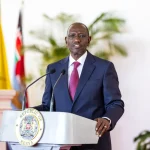

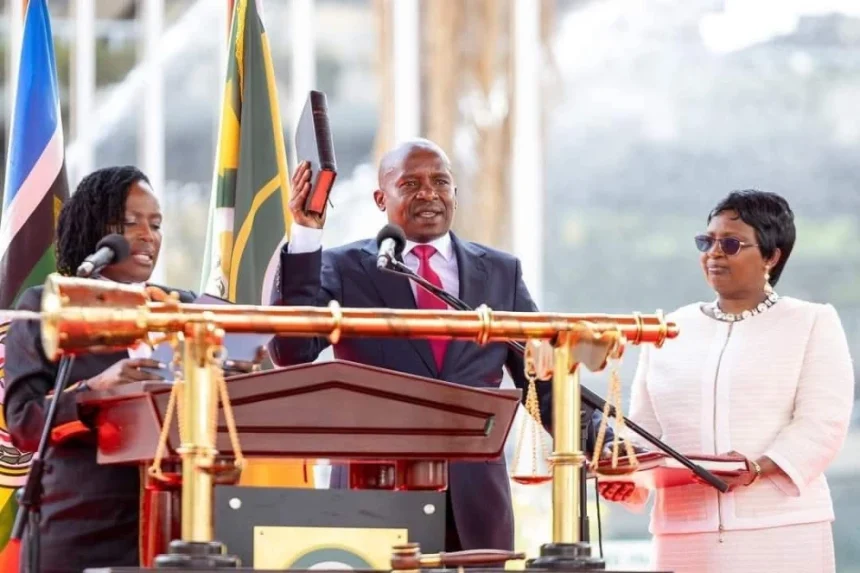
Kenya’s political and legal landscape has been rocked by an unprecedented paradox. The High Court three-judge bench delivered a landmark judgment that permanently cemented the ouster of former Deputy President Rigathi Gachagua and confirmed Prof. Kithure Kindiki’s appointment as completely lawful.
Citizen Digital
Yet, in a shocking twist, the same court ordered the Senate to pay Gachagua KSh 50 million in financial compensation.
Former Deputy President Rigathi Gachagua tracking his legal battles.. Source: The Eastleigh Voice
How can a leader be “rightfully impeached” but simultaneously awarded millions of shillings in damages by the state? The answer lies in a delicate distinction the High Court made between substantive grounds for removal and procedural fairness.
The Fine Legal Line: Substantive vs. Procedural Justice
The three-judge bench comprising Justices Eric Ogolla, Anthony Mrima, and Freda Mugambi refused to reinstate Gachagua to the second-highest office in the land. The judges ruled that Parliament acted well within its constitutional mandate and that there were substantial, verified grounds for his impeachment.
Citizen Digital
However, they heavily penalized the Senate for how the trial was concluded, specifically pointing out a massive breach of Gachagua’s constitutional right to a fair hearing.
The Core Violation: During the Senate impeachment proceedings, Gachagua fell suddenly ill and was hospitalized. Despite his legal team pleading for a brief adjournment to allow him to recover and face cross-examination, the Senate chose to plow ahead with the historic vote in his absence.
YouTube
The High Court ruled that this rushed timeline breached Article 50 of the Constitution. You cannot strip someone of a major state office without allowing them their full day in court—even if the case against them is overwhelming.
Citizen Digital
What Gachagua Demanded vs. What the Court Granted
Gachagua’s legal team went into the Milimani Law Courts asking for full retirement benefits and salaries for the remainder of his five-year term, arguing his removal was entirely fraudulent. Kindiki’s defense team strongly opposed this, warning that a massive full-term payout would trigger a “constitutional crisis” and undermine the will of the people.
allAfrica.com
+ 1
Ultimately, the High Court struck a compromise:
Financial Relief Item Gachagua’s Request High Court Verdict
Reinstatement to Office Demanded full restoration as DP Denied (Kindiki’s appointment upheld)
Full Term Salary and Benefits Demanded over KSh 80 million Denied (Ruled incompatible with valid ouster)
Constitutional Damages Left to court discretion Granted: KSh 50 Million (Fined for Senate’s fair trial breach)
Retirement Package Demanded full statutory DP benefits Denied (Forfeited due to valid impeachment grounds)
Why This Judgment Matters for Kenya’s Future
This ruling creates an essential legal precedent for the Kenyan governance architecture. It serves as a stern warning to a highly politicized Parliament: speed cannot override the Bill of Rights.
While the National Assembly and the Senate hold the ultimate sovereign power to impeach state officers, they are not above the law. They must respect procedural milestones, even when dealing with emergency timelines.
For Gachagua, the KSh 50 million is a bittersweet consolation prize. He walks away with a major financial windfall funded directly by Kenyan taxpayers, but his political career faces a permanent, constitutionally mandated roadblock.