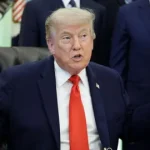

When U.S. President Donald Trump took to Truth Social to reassure the public that neither Chinese President Xi Jinping nor Russian President Vladimir Putin would supply armaments to Iran, his tone was marked by quiet confidence.
Citing personal assurances given during high-level meetings in Beijing and direct dialogues with Moscow, Trump stated plainly that both global leaders had pledged to remain on the sidelines.
Yet, behind the polished doors of the White House press room and Capitol Hill briefing chambers, a far more complex and contentious narrative is unfolding.
Statements from Defense Secretary Pete Hegseth, reports from senior intelligence analysts, and congressional inquiries paint a picture of “grey-zone” assistance. While Beijing and Moscow may not be shipping crates of finished ballistic missiles directly to Tehran, evidence suggests that targeting intelligence, satellite monitoring, radar technology, and dual-use hardware are actively fueling Iran’s operational capabilities.
1. The Disconnect: Executive Trust vs. Defense Department Intelligence
The core tension in Washington lies in the contrast between President Trump’s reliance on executive diplomacy and the intelligence gathered by U.S. defense agencies.
During congressional testimony, Defense Secretary Pete Hegseth stated directly that both Russia and China, at varying levels, are “enabling what Iran is doing.” When asked by reporters to reconcile Hegseth’s assessment with his own Truth Social post, Trump pushed back, stating: “I don’t know that they’re ‘enabling’… President Xi said he will not partake, and President Putin said the same thing. I think I trust them.”
[ The Friction Over Foreign Support ]
│
┌────────────────────────────┴────────────────────────────┐
▼ ▼
Executive Diplomacy (Trump): Defense / Intelligence View:
• Personal promises from Xi & Putin. • Russia sharing real-time satellite data.
• Direct assurances covering private firms. • Chinese long-range radar & guidance hardware.
• Focus on formal weapons sales prevention. • Hegseth: Both powers “enabling” Tehran.
2. Satellite Imagery and Radar: How Russia and China Aid Tehran Without “Selling Weapons”
Why is there such a stark difference in interpretation? The answer lies in the evolving definition of modern warfare.
While President Trump defined the line around traditional kinetic weapons sales (e.g., selling complete tanks, fighter jets, or missiles), military analysts emphasize that in 21st-century warfare, targeting data is as lethal as the munition itself.
Key Intelligence Reports Under Scrutiny:
Russian Satellite Tracking: U.S. intelligence officials investigated whether Moscow provided Iran with real-time satellite imagery to map American troop deployments and CIA facilities across the Gulf region.
Chinese Guidance & Radar Systems: Reports presented to national security committees indicate that Iranian strike networks have utilized Chinese long-range radar and optical guidance technology. This technology enhances missile accuracy against maritime and ground targets without requiring formal state-to-state arms deals.
Commercial Proxy Channels: Chinese commercial defense entities frequently operate in grey markets, providing dual-use electronic components, drone circuit boards, and rocket propellants under civilian trade classifications.
3. The Economic Shockwave: Red Sea, Bab el-Mandeb, and $100 Oil
The geopolitical maneuvering surrounding Iran extends far beyond diplomatic rhetoric—it is actively impacting the global economy.
As regional tensions escalates, Houthi forces in Yemen launched targeted strikes against international shipping and crude tankers in the strategic Bab el-Mandeb strait. The resulting disruption sent shockwaves through global energy markets:
Economic Metric Immediate Market Impact Strategic Consequence
Crude Oil Prices Surged past $100 per barrel for the first time in months. Heightened inflationary pressures globally, affecting shipping fuel and consumer goods.
Maritime Insurance Shipping insurance rates through the southern Red Sea doubled overnight. Commercial fleets forced to reroute around the Cape of Good Hope, adding 10–14 days to transit.
Strait of Hormuz Protocol Chinese vessels began transiting under Iranian escort protocols. Highlights China’s unique diplomatic leverage and access in the region.
4. The Geopolitical Balancing Act: What Comes Next?
For President Trump, maintaining open lines of communication with Beijing and Moscow is essential to preventing a localized Middle Eastern conflict from spiraling into a broader global confrontation.
By publicly emphasizing that Xi and Putin gave their word, Trump sets a clear boundary: any overt, documented transfer of military hardware will be treated as a direct breach of personal trust, triggering immediate trade or diplomatic consequences.
However, as long as Iran relies on indirect intelligence streams and commercial trade networks to sustain its operations, Washington will remain locked in a delicate balance—navigating executive diplomacy on one hand and military intelligence realities on the other.
Conclusion
The debate over whether Russia and China are arming Iran reveals the complexities of modern superpower rivalry. While President Donald Trump relies on personal commitments from Xi Jinping and Vladimir Putin to prevent formal military alliances, the reality on the ground—defined by satellite feeds, radar integration, and shipping bottlenecks—demonstrates that proxy support remains a potent tool. As oil prices fluctuate and naval escorts patrol key maritime choke points, the true test of these diplomatic assurances lies in the weeks ahead.