

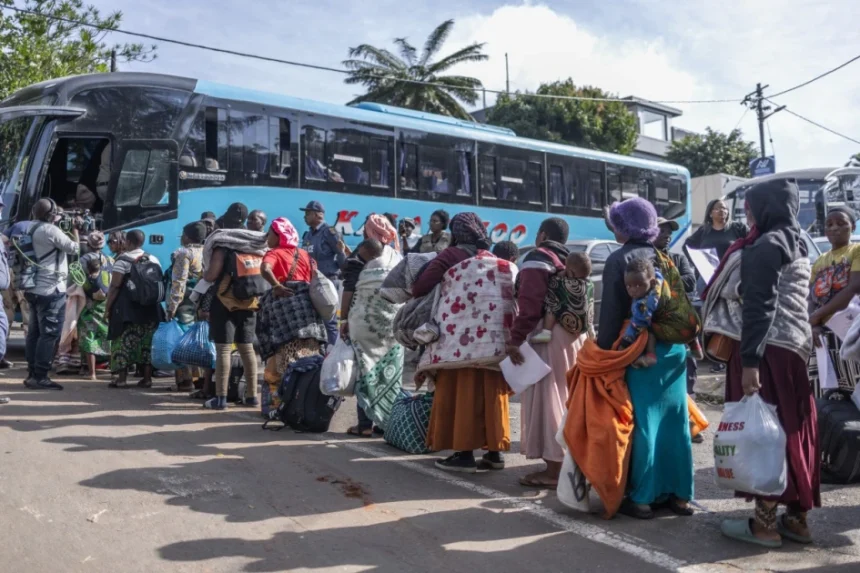
The removal of 2,745 foreign nationals in a single week marks a critical turning point for immigration enforcement in southern Africa. While street-level coverage focuses heavily on the immediate logistical evacuations, the real story lies within the halls of government in Pretoria.
NAMPA
The data, released by Home Affairs Minister Dr. Leon Schreiber during an emergency media briefing on June 14, 2026, represents the initial execution of a new, highly structured state policy.
Exactly seven days prior, President Cyril Ramaphosa addressed the nation to unveil an aggressive, comprehensive five-point migration management blueprint. The resulting inter-departmental enforcement campaign is designed to shift South Africa away from reactive, ad-hoc policing toward an aggressive, legally sound system of absolute border sovereignty.
The Legal Architecture: Ramaphosa’s Five-Point Blueprint
The current enforcement campaign is orchestrated by the newly empowered Inter-Ministerial Committee (IMC) on Migration, chaired directly by Minister of Justice and Constitutional Development Mmamoloko Kubayi.
The IMC’s immediate goal is to use legal channels to calm public anxieties and dismantle vigilante groups that have been issuing unlawful eviction threats. The strategy relies on five distinct pillars:
THE FIVE-POINT IMMIGRATION BLUEPRINT
[1. ZERO TOLERANCE] ──► Immediate deportation of statutory violators
────────────────────────────────────────────────────────────────────
[2. BORDER SECURITY] ──► Multi-layered Border Management Authority deployment
────────────────────────────────────────────────────────────────────
[3. ANTI-CORRUPTION] ──► Eradicating internal bribery and fake document syndicates
────────────────────────────────────────────────────────────────────
[4. LEGAL REFORMS] ──► Closing structural loopholes in the Immigration Act
────────────────────────────────────────────────────────────────────
[5. REGIONAL DIALOGUE] ─► Bilateral processing with SADC and AU counterparts
By institutionalizing these pillars, the Government of National Unity (GNU) is attempting to separate lawful migration from irregular flows, ensuring that the state—rather than street-level movements—remains the sole authority on national security and population tracking.
Internal Reforms: Eradicating the Syndicates and Fake Identity Loops
A primary reason past immigration enforcement initiatives underperformed was systemic vulnerability within the Department of Home Affairs itself. To address this, Minister Schreiber has launched an aggressive internal anti-corruption sweep.
The initiative targets deep-seated passport fraud, bribery networks at points of entry, and the unlawful issuance of fraudulent residency visas by corrupt officials.
DEPORTATION AND REFORM ACCELERATION MATRIX
Historical Annual Baseline Current Reform Trajectory (2025/26)
┌──────────────────────────────┐ ┌────────────────────────────────┐
│ 39,672 deportations per year │ │ Cumulative deportations reach │
│ managed under archaic paper │ VS │ 109,344 following structural │
│ filing tracking networks. │ │ digital tracking deployments. │
└──────────────┬───────────────┘ └──────────────┬─────────────────┘
│ │
└─────────────────┬──────────────────┘
▼
[THE LEGISLATIVE MARGIN]
A 46% cumulative efficiency spike achieved by deploying
biometric verification tools and fast-tracked internal audits.
The introduction of modern biometric verification tools and automated identity audits has streamlined enforcement. Over the past two financial years, total domestic deportations have surged by a cumulative 46 percent, reaching 109,344 by the close of the recent cycle. The current weekly processing rate of 2,745 individuals proves that these backend structural efficiencies are working.
South African Government
Securing the Perimeters: The Border Management Authority (BMA)
On the physical frontier, the strategy relies heavily on the expanded deployment of the Border Management Authority (BMA). Armed with new statutory powers, the BMA has evolved into a highly effective third armed service focused entirely on perimeter defense.
Enforcement Agency Operational Mandate Tactical Execution Matrix
Border Management Authority Perimeter denial & port modernization Intercepted and turned back over 500,000 irregular cross-border attempts.
Department of Home Affairs Internal tracking and visa processing Enforcing five-year bans and processing mass repatriations.
SAPS Border Patrol Units Joint urban sweeps & tactical cordons Securing temporary shelters and providing transit escorts.
By using advanced drone surveillance, thermal imaging cameras, and reinforced vehicular patrols along the perimeter with Zimbabwe, Mozambique, and Lesotho, the BMA has successfully blocked hundreds of thousands of irregular crossings before individuals could enter the domestic informal labor market.
Closing the Loopholes: Upgrading Corporate Penalties
The final component of the IMC’s strategy targets the primary economic driver of irregular migration: the informal job market.
The Department of Employment and Labour is fast-tracking legislative amendments to significantly increase the legal risks for businesses that bypass formal immigration procedures.
The Compliance Shift: Under the proposed legal updates, the standard practice of issuing minor financial fines to non-compliant firms will be replaced by a progressive penalty framework. Businesses found to be employing undocumented workers without valid visas will face massive, revenue-indexed corporate fines, while repeat corporate offenders and HR directors could face direct criminal prosecution and jail time.
Conclusion: Balancing Sovereignty and Pan-African Integration
The enforcement data released by the IMC proves that South Africa has the institutional capacity to enforce its immigration laws at scale. By replacing ad-hoc police raids with systematic, biometric tracking and strict employer compliance, Pretoria is working to build an orderly, transparent immigration system.
However, the long-term success of this policy overhaul depends on diplomatic cooperation across the continent. As the government continues its domestic sweeps, its ultimate challenge will be balancing absolute national sovereignty with its commitments to the African Continental Free Trade Area (AfCFTA), proving that border security and regional economic integration can successfully coexist.
External Diplomatic Context
To understand the regional impact of these structural reforms and view how neighboring foreign ministries are managing the return of their citizens, watch this Firstpost Africa News Analysis of the South African Immigration Row. This international news segment breaks down the geopolitical tension unfolding between Pretoria and its West and Southern African diplomatic partners.