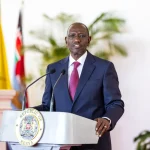

While political events usually draw heavy election rhetoric, National Treasury Principal Secretary Dr. Chris Kiptoo used a recent weekend gathering in Kitui to talk hard economic math. Defending the state’s aggressive fiscal strategy, the PS made it clear that Kenya’s current financial trajectory leaves no room for easy choices.
Rather than looking at new tax proposals as punitive measures, Dr. Kiptoo framed the FY 2026/27 budget layout as a direct act of long-term patriotism. The ultimate goal? Breaking the cycle of heavy borrowing before it completely suffocates local economic growth.
The Kitui Address: Choosing Long-Term Stability Over Popularity
The backdrop of the PS’s address highlights a growing tension across the country: balancing a high cost of living against the state’s urgent need for domestic revenue. Dr. Kiptoo did not shy away from the friction, openly acknowledging that the fiscal medication might taste bitter.
“Every tax measure being introduced is the result of very patriotic and well-considered opinions. These are necessary steps if we are to stabilize our economy and reduce dependence on debt. Painful as some of these measures may be, they are necessary if we are to normalize the situation and secure the country’s economic future.”
— Dr. Chris Kiptoo, Treasury PS
The Treasury’s core perspective is that ignoring structural deficits now only pushes a larger financial crisis onto future generations. By making difficult adjustments today, the government aims to establish a predictable, self-sustaining financial base.
By The Numbers: The FY 2026/27 Fiscal Reality
To understand why the Treasury is digging its heels in on these economic reforms, you have to look at the massive gap between national revenue and unavoidable spending commitments.
Budget Metric Projected Amount (KES) Percentage / Impact Note
Target Revenue Sh3.5 Trillion Driven by enhanced electronic compliance and base broadening.
Total Expenditure Sh4.65 Trillion Total spending ceiling across national ministries and state organs.
Fiscal Deficit Sh1.1 Trillion Stands at roughly 5.3% of GDP, requiring optimized financing.
Fixed Obligations Sh1.8 Trillion Swallowed entirely by internal/external debt servicing and public pensions.
With more than half of the projected revenue immediately spoken for by debt obligations and pensions, the remaining Sh2.8 trillion must cover every ministry, with education and health demanding the largest portions. This narrow window of flexibility explains why the exchequer is aggressively optimizing every potential revenue stream.
A Call for Political Calm Amid Reform
Interestingly, the economic defense in Kitui coincided with a unified message from local leaders regarding the political climate. Recognizing that structural economic updates require a stable environment to succeed, speakers urged politicians to temper early campaigns and preach peace ahead of the 2027 General Election. The underlying sentiment was clear: a fractured political ecosystem will only hinder the economic recovery path the Treasury is trying to map out.
Treasury Breaks Down Sh3.5 Trillion Revenue Targets
This broadcast features a detailed breakdown from PS Chris Kiptoo regarding how the Sh4.65 trillion expenditure framework is split between fixed debt obligations and essential ministry development.