
Inside the High-Security Wards
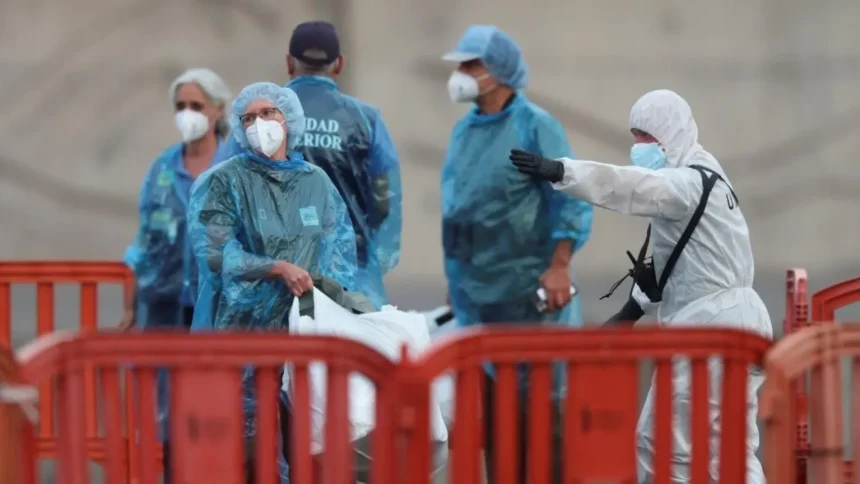
The repatriation of infected nationals was conducted with “Level 3” bio-security protocols, treating the Andes strain as a potential high-threat pathogen due to its rare ability for human-to-human transmission.
The Nebraska “Gold Standard”
In the United States, the 17 returning passengers were met at Offutt Air Force Base by teams from the National Quarantine Center.
Asymptomatic Positive: The American who tested positive is currently housed in a negative-pressure room. While they show no signs of illness, doctors are monitoring for the sudden onset of “vascular leak,” where fluid enters the lungs.
The “Vigil”: Nebraska Medicine experts, known for their work with Ebola, are using this as a textbook case for biocontainment, ensuring that not a single viral particle escapes the facility.
The Paris Crisis
In France, the situation is more acute. The female patient at a specialized Paris hospital is in critical condition.
Intensive Care: She is receiving advanced respiratory support. French authorities are particularly concerned because she developed symptoms during the flight home, prompting an immediate contact-tracing effort for the 22 other passengers and flight crew who were on that aircraft.
The Disinfection of a “Ghost Ship”
While the passengers have moved to hospitals and quarantine centers, the MV Hondius itself remains a biohazard.
The Route to Rotterdam: Following the final evacuations in Tenerife, the vessel is sailing toward Rotterdam, Netherlands.
Deep Clean: Upon arrival, a specialized “bio-remediation” team will strip the ship. Because hantavirus is primarily spread through aerosolized rodent waste, the entire ventilation system, all upholstery, and every cabin will undergo high-grade chemical fogging.
The Body on Board: Spanish authorities confirmed that the body of a passenger who died on board remained on the ship for the transit to the Netherlands to undergo a formal forensic autopsy under high-containment conditions.
Lessons for the 2026 Cruise Season
The MV Hondius outbreak has sent shockwaves through the travel industry, leading to immediate calls for new regulations:
Pre-Expedition Screenings: Cruise lines operating in South American “hot zones” (Patagonia and the Andes) may soon require health declarations or specific screenings for passengers who have spent time in rural areas.
Human-to-Human Protocols: This event proved that cruise ships—with shared air and close quarters—are uniquely vulnerable to the Andes strain. Future ship designs may prioritize more robust localized air filtration in medical bays.