

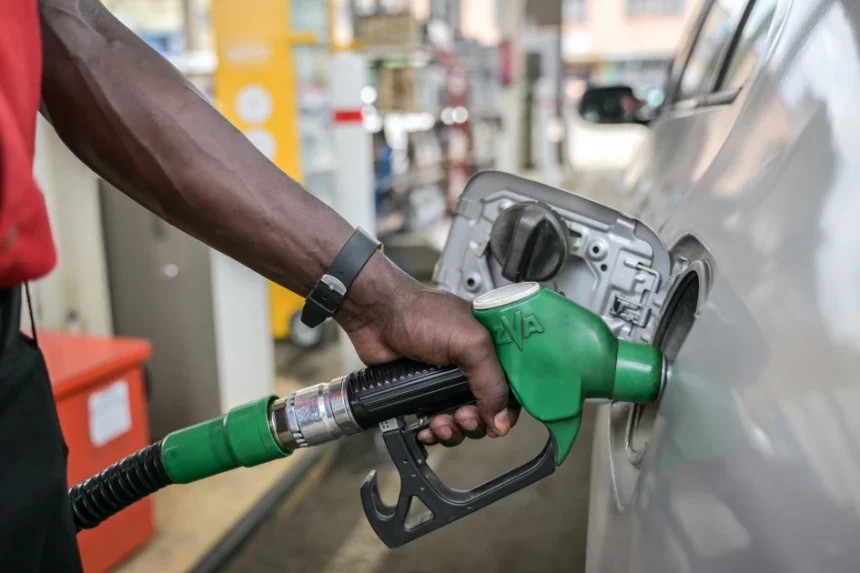
For energy economists, logistics analysts, and corporate financial officers, the monthly pricing announcements by the Energy and Petroleum Regulatory Authority (EPRA) represent a critical data matrix. While the public headlines focus on the consumer relief—headlined by an absolute Ksh.10.00 per litre reduction for Automotive Diesel and a minor Ksh.0.22 per litre drop for Super Petrol—the underlying structural math reveals a complex balancing act of fiscal policy and state intervention.
The pricing structure, running from June 15 to July 14, 2026, exposes a stark divergence between international landed costs and domestic retail caps.
Analyzing the exact components of the EPRA pricing formula reveals how the state used targeted tax legislation and heavy cross-subsidization to insulate the domestic supply chain from global shocks.
The Core Mismatch: International Landed Costs vs. Domestic Caps
A forensic look at EPRA’s import data reveals that free-market dynamics alone did not drive the Ksh.10 diesel cut. In May 2026, the international cost of importing refined petroleum moved in opposite directions for petrol and diesel:
Super Petrol (Import Decline): The average landed cost of imported Super Petrol decreased by 0.56%, dropping from $906.23 to $901.16 per cubic metre. This marginal international drop trickled down directly into the 22-cent retail adjustment in Nairobi.
Automotive Diesel (Import Increase): Conversely, the international landed cost of Diesel actually increased by 0.21%, climbing from $1,291.98 to $1,294.71 per cubic metre due to ongoing logistics and maritime bottlenecks.
JUNE 2026 FREIGHT COSTS VS. PUMP MARGINS
Refined Product Landed Costs EPRA Domestic Retail Price
┌──────────────────────────────┐ ┌──────────────────────────────┐
│ Petrol: 📉 Drops by 0.56% │ │ Petrol: 📉 Drops by Ksh.0.22 │
│ Diesel: 📈 Rises by 0.21% │ VS │ Diesel: 📉 Slashed by Ksh.10 │
└──────────────┬───────────────┘ └──────────────┬───────────────┘
│ │
└─────────────────┬──────────────────┘
▼
[THE REGULATORY GAP]
How did Diesel drop by Ksh.10 if import costs rose?
Answer: Massive State Stabilization Interventions.
Under a pure free-market pass-through system, Kenyan businesses should have faced a diesel price hike. The downward shift at local pumps required significant structural adjustments to taxes and levies.
Fiscal Tool 1: The Ksh.10 Billion Cross-Stabilization Shield
To absorb the landed cost increase on diesel and honor political stability commitments made to the transport industry, the Ministry of Energy activated its primary financial shield.
EPRA deployed approximately Ksh.10 billion from the Petroleum Development Levy (PDL) Fund to act as a price stabilization buffer.
Instead of letting the international price hike hit consumers, this multi-billion-shilling fund allowed the state to issue a direct regulatory subsidy:
Diesel Subsidy Margin: The state absorbed Ksh.34.07 per litre in landed costs.
Kerosene Subsidy Margin: To prevent fuel adulteration—where cheap kerosene is mixed into diesel—the state absorbed an even larger Ksh.55.68 per litre subsidy margin, keeping kerosene flat at Ksh.191.38 in Nairobi.
Fiscal Tool 2: The Evolving Value Added Tax (VAT) Deck
Beyond the PDL fund, the June pricing structure relied heavily on recent legislative updates to energy taxes.
The final calculations explicitly incorporate the statutory framework of Legal Notice No. 70 of April 15, 2026. This emergency amendment temporarily modified the standard 16% VAT rate established under the Finance Act 2023, lowering the VAT burden on energy products down to 8%.
THE NAIROBI COMPONENT SQUEEZE (PER LITRE)
SUPER PETROL [Ksh.214.03 Total]
├── Landed Import Base [Ksh.117.64] │█████████████████████ 55%
└── Taxes & Total Levies [Ksh.74.01] │███████████ 35%
AUTOMOTIVE DIESEL [Ksh.222.86 Total]
├── Landed Import Base [Ksh.168.47] │█████████████████████████████ 76%
└── Taxes & Total Levies [Ksh.66.36] │████████████ 30%
└──────────────────────────────
0% 20% 40% 60% 80% 100%
*Note: Percentages represent approximate shares of final pump retail limits.
By combining an 8% VAT cap with fixed marketing margins and distribution costs, the total tax collection on a litre of fuel now stands at Ksh.74.01 for Super Petrol and Ksh.66.36 for Diesel.
Macro Stability: Currency Anchorage
A key factor that kept the pricing review stable was the performance of the local currency. Throughout May, the Kenyan Shilling maintained a highly stable trading band against the US Dollar.
According to EPRA data, the average exchange rate for the cycle settled at Ksh.129.82 per USD, moving within a tight window of 129.5 to 130.08. This stability prevented a currency-driven spike in import costs, protecting the National Treasury from having to burn through extra PDL funds just to cover foreign exchange conversion gaps.
Spatial Pricing Distribution Matrix
Because of pipeline transit fees, truck haulage costs, and local depot storage fees, the final pump limits are adjusted across different supply zones relative to the central depot system in Mombasa:
Supply Node Location Super Petrol Price (Ksh/Litre) Automotive Diesel Price (Ksh/Litre) Fixed Kerosene Price (Ksh/Litre)
Mombasa (Port Base) Ksh.210.87 Ksh.219.58 Ksh.188.09
Nairobi (Central Hub) Ksh.214.03 Ksh.222.86 Ksh.191.38
Thika Corridor Ksh.213.70 Ksh.222.50 Ksh.191.02
Nakuru Depot Ksh.212.92 Ksh.222.27 Ksh.190.81
Kisumu/Eldoret Terminals Ksh.213.69 Ksh.223.08 / Ksh.223.09 Ksh.191.63
The Outlook: Sustainability of the Fund
The June review demonstrates that the government can successfully use regulatory mechanisms to push down pump prices and provide short-term stability for transport and logistics firms.
However, from an accounting perspective, using a Ksh.10 billion subsidy to mask international landed costs is a temporary fix. If international refined product costs experience another sustained spike due to global supply disruptions, the Petroleum Development Levy Fund will face intense pressure, forcing a difficult choice between increasing state borrowing or letting domestic pump prices rise again in future cycles.
External Analytical Reference
To view the complete televised media briefing detailing the pricing annexes, interviews with energy economists regarding the long-term sustainability of the Petroleum Development Levy, and live feedback from industrial logistics managers, watch this Citizen TV Financial Reporting Segment on the June Fuel Review. This broadcast provides vital macroeconomic context showing how the regulatory framework directly influences corporate operating costs.