
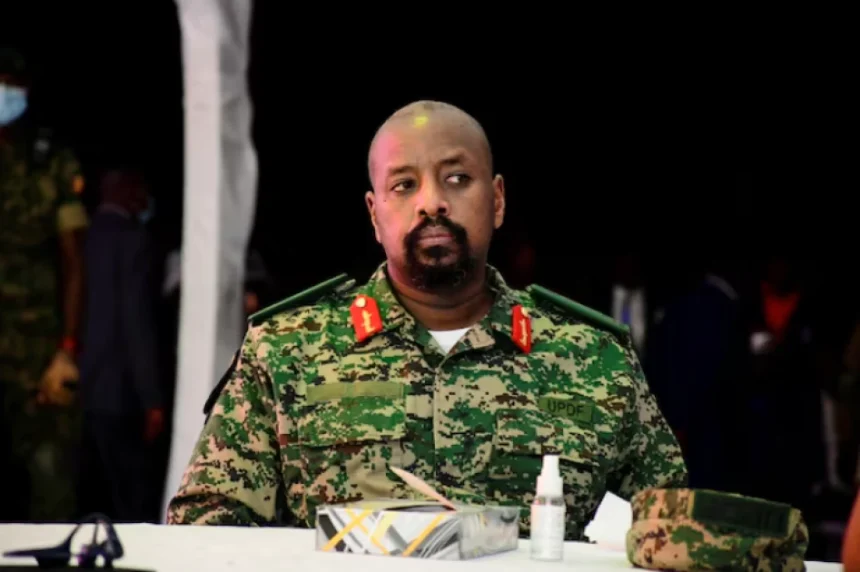
When Senator Jim Risch, Ranking Member of the Senate Foreign Relations Committee, declared that Gen. Muhoozi had crossed a “red line,” he wasn’t just venting frustration. In the world of high-stakes diplomacy, a formal call to “re-evaluate military ties” is the first step toward a total divorce.
The U.S. has reached a point of “strategic fatigue” with a leadership that oscillates between being a counter-terrorism partner and a source of regional instability.
1. The “Power of the Purse”: What’s Actually at Stake?
Uganda receives approximately $950 million annually from the U.S. While the majority of this goes toward health (HIV/AIDS and malaria), the military component is the “glue” that holds the political relationship together.
The IMET Program: The U.S. provides International Military Education and Training (IMET) to Ugandan officers. A review could end these prestigious training slots, isolating the UPDF from modern military standards.
Equipment & Intelligence: Much of Uganda’s sophisticated surveillance and counter-terrorism hardware is U.S.-sourced. A freeze on spare parts or software updates would rapidly degrade the UPDF’s operational capacity.
The “Somalia Subsidy”: The U.S. pays heavily for Uganda’s presence in Somalia (ATMIS/AUSSOM). If Washington decides Muhoozi is too “unpredictable” to partner with, they may shift that funding to other regional players like Kenya or Djibouti.
2. The Sanctions Shadow: Magnitsky 2026
Senator Risch explicitly mentioned sanctions. This likely refers to the Global Magnitsky Act, which allows the U.S. to freeze the assets of individuals involved in “serious human rights abuse or corruption.”
Targeting the Inner Circle: Sanctions would not just hit Muhoozi, but the network of generals and businessmen who form the backbone of the “MK Movement.”
The Travel Ban: We are already seeing the impact of visa restrictions. In late 2025, several top Ugandan officials were quietly denied entry to the U.S. for “undermining democracy.” A formal review would make these bans public and permanent.
3. The “China-Russia” Pivot: A Risky Gamble
In response to U.S. pressure, the Museveni administration has increasingly leaned toward China, Russia, and Iran, joining the BRICS bloc as a partner in 2025.
The Danger: While Russia offers weapons without “human rights lectures,” it does not offer the massive development and health funding the U.S. provides.
The Debt Trap: Shifting entirely to Chinese financing for military infrastructure could leave Uganda deeply indebted, a concern that Senator Risch highlighted in his recent committee hearings on the “strategic alignment” of East African nations.