

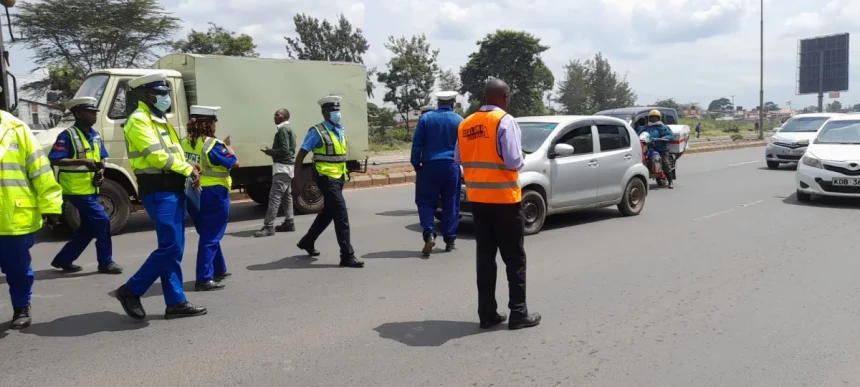
As Kenya enters the peak holiday travel season, a landmark collaboration promises a tougher stance on road carnage. The Ethics and Anti-Corruption Commission (EACC) and the National Transport and Safety Authority (NTSA) have announced they will intensify road safety enforcement in an unprecedented joint operation. Dubbed “Operation Usalama Barabarani,” this initiative directly targets the corruption and regulatory failures that have long undermined traffic law enforcement. With hundreds of lives lost annually during festive periods, this partnership signals a critical shift from mere checks to a systemic assault on the bribery, incompetence, and negligence that fuel road accidents in Kenya. This blog unpacks what this means for you, the driver, and whether it can finally break the cycle of holiday tragedy.
Section 1: Why Now? The Scourge of Holiday Road Carnage
December and January are statistically the deadliest months on Kenyan roads. A confluence of factors creates a perfect storm:
-
Increased Traffic Volume: Mass travel upcountry and for holidays overwhelms infrastructure.
-
Fatigue & Recklessness: Long-distance travel, often at night, coupled with celebratory drinking.
-
Corruption as an Enabler: The well-documented “Kitu Kidogo” culture at checkpoints allows overloaded matatus, unroadworthy vehicles, and unlicensed drivers to ply roads with impunity.
-
Systemic Breakdown: The traditional siloed approach—where NTSA sets rules but lacks arrest powers, and police enforce but are compromised by corruption—has failed.
The recent high-profile crashes, including that of Cyrus Jirongo, have intensified public pressure for a decisive, multi-agency response.
Section 2: The Mechanics of the Crackdown: What “Intensified Enforcement” Actually Means
This is not just about more roadblocks. It’s a targeted, intelligence-driven strategy.
-
EACC’s Revolutionary Role: For the first time, EACC officers will be embedded at major checkpoints and patrols. Their mandate:
-
Target Bribery: Act on real-time reports and conduct sting operations to arrest both motorists offering bribes and officers soliciting them.
-
Audit Integrity: Scrutinize the process of inspection, fining, and clearance to ensure rules are applied uniformly, not selectively.
-
Protect Whistleblowers: Encourage the public to report corruption via the EACC hotline (1551) without fear of retaliation.
-
-
NTSA’s Enhanced Mandate: Working with traffic police, NTSA will deploy:
-
Digital Surveillance: Increased use of speed guns, ALPR (Automatic License Plate Recognition) cameras, and drone monitoring on accident black spots like the Nairobi-Nakuru Highway and Thika Road.
-
Focused Checks: Mandatory inspections for Public Service Vehicles (PSVs), school buses, and long-distance trucks for roadworthiness, speed governor functionality, and crew credentials.
-
Public Awareness Blitz: A nationwide campaign on responsible driving, highlighting the legal and moral consequences of violations.
-
Section 3: Direct Impact on Motorists: What You Must Know
This operation will affect every road user. Here’s how to be compliant and safe:
-
Before You Travel: Ensure your driver’s license, insurance, and inspection sticker (MOT) are valid. Check tire pressure, brakes, and lights.
-
At Checkpoints: Cooperate fully. Paying a bribe is a crime. If asked for one, note the officer’s name and badge number and report immediately via *1551* or the USSD code *225*.
-
Key Offenses That Will Be Strictly Enforced:
-
Speeding (especially for PSVs)
-
Overloading passengers or cargo
-
Driving without a valid license or while using a mobile phone
-
Lack of seatbelt/child restraint use
-
Drink-driving (expect widespread alcoblow tests)
-
Section 4: Skepticism & Hope: Can This Operation Succeed?
While the initiative is laudable, Kenyans are rightfully cautious.
-
The Challenges: Deep-rooted corruption, limited resources, and the vastness of the road network are formidable obstacles. Sustaining the crackdown beyond the holiday season will be the true test.
-
The Opportunity: This sets a powerful precedent. It institutionalizes anti-corruption within law enforcement and makes road safety a governance and integrity issue, not just a transport one.
-
A Public Mandate: Success depends on citizen participation. Using official reporting channels instead of social media complaints is crucial.
Conclusion: A Journey Toward Safer Roads Begins with a Single, Uncorrupted Checkpoint
The EACC-NTSA holiday road safety operation is more than a seasonal campaign; it is a bold experiment in integrated governance. It acknowledges that you cannot separate safety from ethics. As thousands of families prepare to travel, this partnership offers a glimmer of hope that the journey home will not end in tragedy. Its legacy will be measured not by fines collected, but by lives saved and by whether the culture of impunity on our roads finally meets its match. The responsibility is shared: agencies must enforce with integrity, and citizens must obey with responsibility.
Have a Safe and Blessed Holiday Season.