

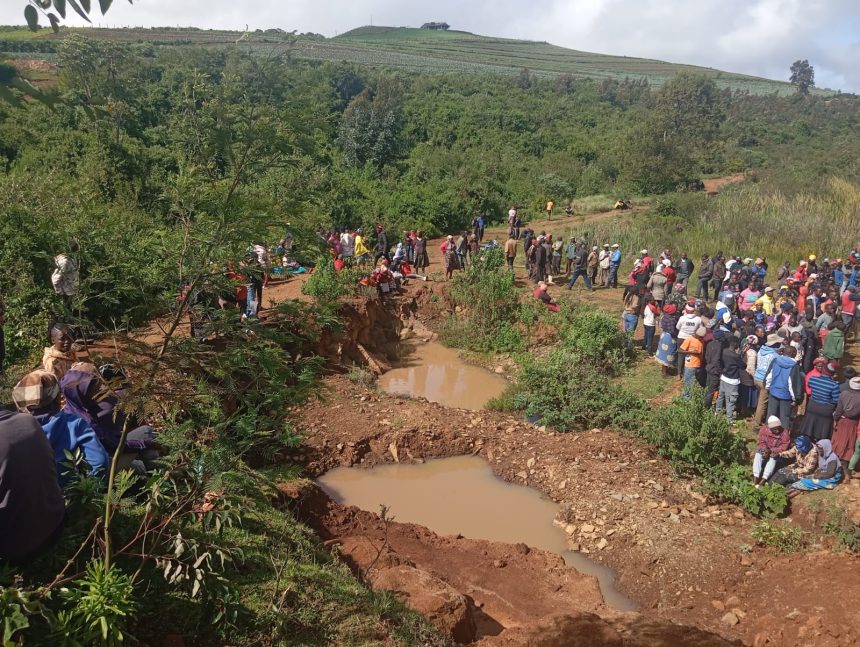
The discovery of a 13-year-old girl’s body in a local dam on April 14, 2026, has moved from a moment of private grief to a point of public outcry. While the family awaits the final post-mortem results from the Kerugoya County Referral Hospital, the wider Kirinyaga community is focusing on a long-standing but neglected issue: the thousands of open, unfenced dams and water pans scattered across the county.
This latest tragedy serves as a painful reminder that without proper infrastructure and safety protocols, these essential water sources remain lethal traps for the most vulnerable.
The “Invisible” Danger
Kirinyaga’s agricultural success—particularly in coffee, rice, and dairy—is fueled by hundreds of small-scale dams. However, as residential areas expand into formerly purely agricultural land, the proximity of these water bodies to homes has created a high-risk environment.
Vandalized Infrastructure: Many dams, like the one in Kiandai Village where two boys tragically drowned in late 2025, were originally fenced but have seen their barriers stolen or weathered away.
Flood Risks: With the government issuing flood warnings across the country in early 2026, many of these dams are currently at peak capacity, with slippery banks that make accidental falls nearly impossible to escape.
Lack of Warning Signs: Most private dams lack “Deep Water” or “No Swimming” signage, leaving children unaware of the dangers beneath the surface.
Community Demands for 2026
In the wake of this week’s heartbreak, local residents and safety advocates are pushing for a three-pronged approach to prevent future losses:
Mandatory Fencing: A call for the county government to enforce a “Safety First” policy, requiring all private dam owners to install and maintain secure perimeter fencing.
The 116 Helpline Awareness: Increasing awareness of the National Child Helpline (116), which allows parents to report missing children or hazardous areas in real-time.
School Safety Programs: Integrating water safety education into the curriculum of the recently upgraded ECDE centers across Kirinyaga to teach children about the dangers of playing near dams.
A Look at the Statistics
While drowning remains a significant cause of accidental death for minors in rural Kenya, 2026 has seen a renewed focus on “Child Protection Measures” led by the State Department for Children Services.
The Investigation Continues
As police finalize their report on the 13-year-old girl’s death, the community remains on edge. Whether the post-mortem points to a tragic accident or foul play, the reality remains that an open dam provided the setting for this tragedy.