

The devastating overnight fire at Utumishi Girls Academy in Gilgil, Nakuru County, has fundamentally broken the heart of the nation. The tragic loss of 16 young students, with 79 others escaping with severe physical and psychological injuries, serves as a grim marker in a long, painful history of Kenyan boarding school infernos.
Kenya National Commission on Human Rights
+ 1
Yet, as the smoke cleared and the Directorate of Criminal Investigations (DCI) swarmed the institution, the conversation rapidly shifted from traditional structural safety to the digital realm.
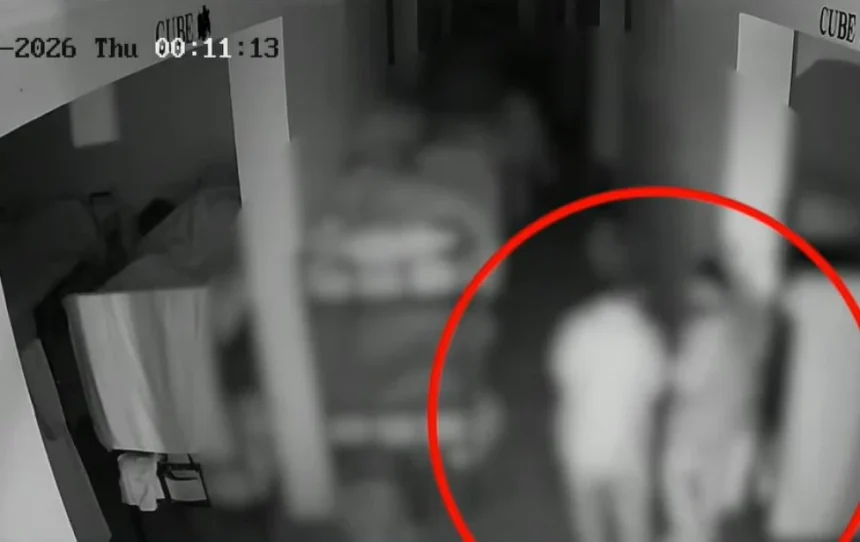
Interior Cabinet Secretary Kipchumba Murkomen stunned the public when he revealed that he had personally reviewed the school’s internal CCTV footage. In a somber statement, he described watching a chilling, minute-by-minute account of students deliberately smuggling paraffin, preparing matchboxes, and lighting the fire while their peers slept peacefully inside the cubicles.
While the surveillance footage proved to be an invaluable forensic tool—leading to the swift arrest of multiple student suspects—it has blown open a fierce, polarizing national debate.
The central issue is a complex catch-22: Does the urgent need to protect children’s lives from arson justify installing surveillance cameras inside the highly private quarters of school dormitories, or does it cross an unacceptable ethical and constitutional boundary?
1. The Pro-Surveillance Stance: An Uncompromising Shield for Human Lives
For a vast number of traumatized parents, school administrators, and state security officials, the revelations from the Utumishi tragedy provide ironclad justification for internal surveillance. The argument here is simple, pragmatic, and grounded in survival: the right to life supersedes the right to privacy.
Traditional Security Gaps ──> Undetected Arson Plots ──> Tragic Loss of Life
│
CCTV Surveillance Intervention ────────▼
Deterrence & Accountability
Unmasking the Shadows of Sabotage
Boarding school fires in Kenya are uniquely insidious because they are rarely random accidents. From the 1998 Bombolulu fire to the 2001 Kyanguli tragedy, and more recently the 2024 Hillside Endarasha catastrophe, arson orchestrated by disgruntled or panicked students has been a recurring theme.
The Straits Times
Proponents argue that standard human oversight has failed. Night matrons, boarding masters, and external security guards cannot be everywhere at once. Internal dormitory CCTV cameras eliminate these physical blind spots.
If students are aware that high-definition lenses are recording their every move, the psychological deterrent against plotting arson, smuggling contraband, or planning mass destruction becomes immensely powerful.
Decisive Forensic Accountability
Without the surveillance cameras at Utumishi Girls Academy, establishing the truth behind the inferno would have taken months of messy, bureaucratic, and highly traumatized interrogation. Instead, the forensic video evidence allowed detectives from the Child Protection Unit and forensic teams to instantly map out the timeline.
YouTube
For the families seeking justice, and for a state demanding accountability, the cameras provided immediate clarity. To the safety-first camp, a camera lens is a small price to pay to ensure that individuals who pose a threat to hundreds of sleeping children are identified and contained.
2. The Civil Liberties Backlash: The Battle for Minor Privacy and Dignity
Conversely, human rights defenders, digital privacy advocates, and legal experts are viewing the deployment of cameras inside sleeping quarters with profound alarm. They argue that turning school dormitories into high-surveillance containment zones shifts our educational culture toward a punitive, prison-like environment.
The Constitutional Mandate: Article 31
The legal pushback against dormitory cameras is anchored firmly within the Constitution of Kenya (2010). Under Article 31, every Kenyan citizen—regardless of age—is explicitly guaranteed the right to privacy. This includes the right not to have their person, home, or property searched, or their private communications infringed upon.
A boarding school dormitory is not merely a transient public space like a school gate, a dining hall, or a laboratory corridor. For nine months out of the year, that specific cubicle serves as a child’s temporary home. It is where young girls and boys undress, sleep, deal with personal hygiene, and seek a rare moment of psychological refuge from the grueling academic calendar.
Filming minors in states of undress or vulnerability, even under the banner of security, presents a massive legal liability.
The Data Protection Nightmare
Furthermore, legal specialists are pointing out major structural vulnerabilities regarding Kenya’s Data Protection Act. If schools are recording hundreds of hours of raw footage from inside minors’ bedrooms, critical questions must be asked:
Who controls the server rooms? Who is monitoring the IT staff, the school guards, or the teachers who have access to these video feeds?
What safeguards exist against data breaches? If a school’s local server is hacked, or if a compromised staff member leaks sensitive footage of teenage girls changing clothes onto platforms like TikTok or Telegram, the psychological damage to those students would be catastrophic and permanent.
The risk of voyeurism, blackmail, and severe breaches of minor confidentiality makes the widespread adoption of indoor dormitory cameras a massive ethical gamble.
3. The Structural Blindspot: Can Cameras Actually Stop a Fire?
Beyond the legal and ethical arguments lies a hard, physical truth that emergency response experts are eager to highlight: CCTV cameras document a tragedy; they do not prevent it.
The harrowing accounts from the survivors of Utumishi Girls Academy reveal that when the fire broke out around midnight, the primary barriers to survival were completely structural. Students reported that they could not navigate through the main exits because an emergency door was locked from the outside.
Al Jazeera
Many were forced to break window panes and jump from upper floors, sustaining severe fractures and lacerations, while suffocating from dense, toxic smoke.
The Guardian
The tragedy proves that while the cameras successfully recorded the perpetrators lighting the fire, they did absolutely nothing to extinguish the flames or unlock the doors. Security experts argue that the heavy financial investments required to install high-end CCTV systems and digital storage would be far more effective if directed toward physical, life-saving infrastructure, including:
Industrial Fire Alarms and Smoke Detectors: Systems that automatically trigger loud, campus-wide sirens the absolute second smoke is detected, giving sleeping students vital minutes to evacuate.
Unbolted Emergency Exits: Ensuring that all dormitories adhere strictly to the Ministry of Education’s Safety Standards Manual, which dictates that emergency doors must open outwards and must never be locked from the outside during sleeping hours.
Fire-Retardant Infrastructure: Phasing out highly flammable wooden partitioning, overcrowded triple-decker beds, and cheap foam mattresses that emit lethal, incapacitating gases when ignited.
4. Seeking a Middle Ground: The Hybrid Security Framework
As the Ministry of Education contemplates a nationwide audit of boarding schools following the Utumishi disaster, policymakers must avoid knee-jerk reactions that compromise student dignity. A balanced, hybrid security framework is entirely possible.
Surveillance Zone Allowed? Justification / Alternative
School Gates & Perimeters YES Crucial for monitoring external intruders and unauthorized student exits.
Dormitory Outer Corridors & Entryways YES Captures everyone entering or leaving the sleeping areas without filming the private cubicles.
Inside Sleeping Cubicles NO Violates Article 31 privacy rights; must be replaced with smoke detectors.
By restricting camera lenses to external entryways, corridors, and perimeter fences, schools can track exactly who enters a dormitory with contraband or suspicious materials without ever pointing a camera at a student’s bed.
5. Conclusion: A Call for Radical Systemic Reform
The fire at Utumishi Girls Academy is a stark warning that the current boarding school model in Kenya is under immense strain. Relying entirely on surveillance technology to solve a crisis of student unrest is akin to treating a deep, infected wound with a temporary bandage.
If we truly want to secure our institutions, we must address the root causes of student radicalization—including academic burnout, communication breakdowns between administrations and learners, and inadequate mental health support.
Technology should be utilized to support human life, not to strip away the basic dignity of our children. As the country moves forward from this tragedy, the ultimate goal must be to create learning environments that are structurally unassailable, legally sound, and emotionally nurturing. Our daughters and sons deserve nothing .