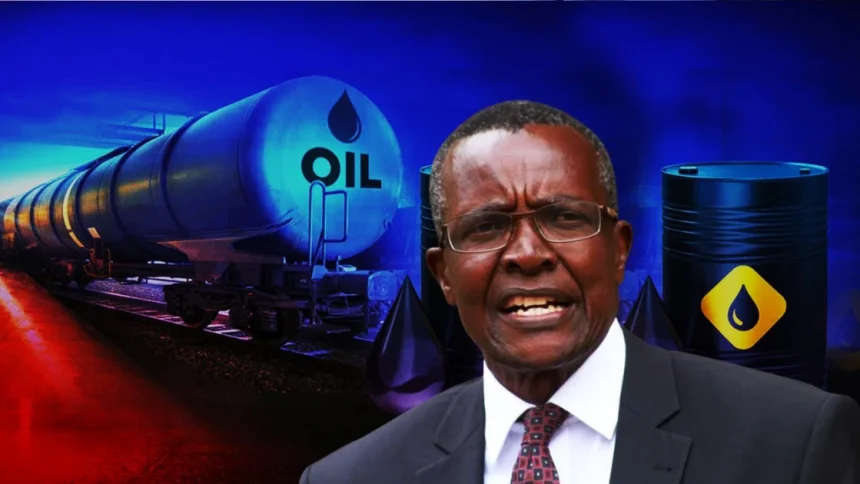
The political earthquake that Kenyans have been waiting for has arrived. In a devastating joint statement delivered on April 15, 2026, the United Alternative Government — the opposition coalition backed by former Deputy President Rigathi Gachagua and retired Chief Justice David Maraga — has accused President William Ruto of personally profiting to the tune of KSh30 billion from Kenya’s controversial government-to-government (G2G) fuel importation deal.
The allegations, made at a press briefing in Karen, Nairobi, are the most direct and detailed accusations of presidential self-dealing in Kenya’s recent political history. They come at a moment when millions of Kenyans are reeling from record fuel price hikes that have pushed the cost of living to unprecedented levels.
The Scale of the Allegations
Former DP Gachagua, reading the coalition’s joint statement, laid out figures that — if proven — would represent one of the most serious corruption scandals in the country’s history:
.The President allegedly earns KSh5 for every litre of fuel purchased by Kenyans
.The April 2026 pricing cycle alone is alleged to generate KSh2.5 billion in presidential profit (based on 500 million litres of regional consumption)
Since the G2G deal began, the cumulative alleged presidential profit stands at KSh30 billion
These are opposition allegations and have not been independently confirmed. The government has not issued a detailed financial response to the specific claims.
These are opposition allegations and have not been independently confirmed. The government has not issued a detailed financial response to the specific claims.
“The Biggest Fuel Scandal in Kenya’s History”
Gachagua was unsparing in his language, calling the situation “one of the greatest fuel scandals in the history of independent Kenya” and describing the entire energy supply chain under the current administration as a “criminal enterprise.”
He accused President Ruto of engineering a false narrative — portraying recently arrested energy officials as corrupt “oil cartel” members, when in reality, the opposition claims those officials had resisted presidential pressure and acted within the law.
The Government-to-Government Deal: A System Built for Insiders?
The G2G fuel importation deal replaced Kenya’s open-tender procurement model. Kenya now sources petroleum directly from three sovereign oil producers — Saudi Aramco, ADNOC, and ENOC — who then distribute through six local oil marketing companies.
Maraga and Gachagua Drop Bombshell: President Ruto Has Personally Made KSh30 Billion From Kenya’s Fuel Deal