
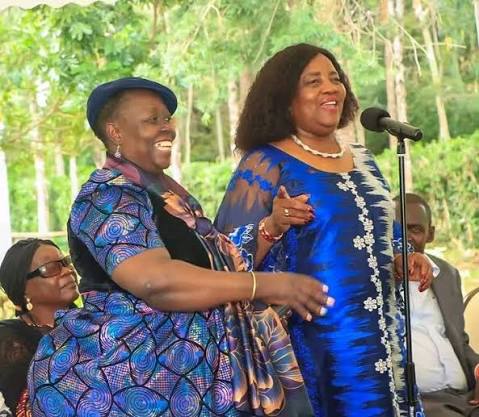
The decision by the Odinga siblings to publicly back a youthful faction in the succession debate within the Orange Democratic Movement has added a deeper layer to what was already a sensitive political moment.
Beyond internal party rivalry, the move has reframed the conversation around one central question:
How does Raila Odinga manage his exit without losing control of his political legacy?
This blog examines the succession row through the lens of legacy preservation, power transition, and party control.
ODM and the Raila Factor
For nearly two decades, ODM has been inseparable from its leader, Raila Odinga. His name, political ideology, and personal history have defined:
Party identity
Opposition politics
Reform narratives
Unlike many parties that survive leadership changes, ODM has never truly operated without Raila at the center.
This makes succession not just a leadership change — but a structural transformation.
Why the Odinga Siblings’ Move Is Strategic
The entry of figures like Oburu Odinga into the succession debate is widely viewed as deliberate rather than emotional.
Political analysts argue the siblings are:
Testing the party’s readiness for transition
Signaling Raila’s preferred direction indirectly
Managing elite resistance before formal succession
By backing youth, the family avoids endorsing any single heavyweight rival, while still influencing outcomes.
Controlling Succession Without Naming a Successor
One of Raila Odinga’s greatest political skills has been managing uncertainty.
Rather than anointing a successor outright — which could:
Split the party
Weaken his authority
Create premature rebellion
The Odinga siblings’ intervention allows Raila to:
Shape the process, not the person
Retain moral authority
Avoid direct confrontation with senior leaders
This approach keeps all factions negotiating within boundaries set by the Odinga family.
The Legacy Question
Raila Odinga’s legacy is built on:
Pro-democracy struggles
Opposition resistance
Mass mobilisation
Youth activism
Allowing ODM to remain dominated by aging elites risks turning the party into what it once fought against.
By encouraging youth leadership, the Odingas are attempting to:
Align legacy with generational change
Prevent ideological drift
Secure relevance beyond Raila’s active politics
In this sense, succession becomes a legacy insurance policy.
Resistance From the Old Guard
Not everyone in ODM is pleased.
Several senior party figures argue that:
Experience should outweigh age
Loyalty should trump innovation
The family should stay neutral
Some view the siblings’ move as family interference, while others see it as necessary guidance.
Privately, critics fear losing influence in a restructured ODM dominated by younger leaders.
Is ODM Ready for Life After Raila?
Despite years of speculation, ODM remains psychologically dependent on Raila Odinga.
Challenges include:
Weak institutional independence
Personality-driven mobilisation
Factional loyalty over ideology
Political observers warn that without a carefully managed transition, ODM risks fragmentation — a fate that has weakened previous opposition parties.
Why Youth Leadership Is a Calculated Risk
Backing youth is not without danger.
Risks include:
Inexperience at national negotiation tables
Fragmentation among young leaders
Resistance from county-level power brokers
However, the alternative — clinging to the old guard — risks alienating voters under 35, who now form Kenya’s largest voting bloc.
The Odingas appear willing to risk short-term turbulence for long-term survival.
National Political Calculations
ODM’s transition will affect:
Coalition politics
Opposition unity
Presidential succession narratives
A youthful ODM leadership could:
Challenge established national figures
Rebrand opposition messaging
Shift alliances
This explains why rival parties are closely monitoring the internal ODM debate.
Is Raila Odinga Really Stepping Back?
While Raila has not formally announced retirement, insiders believe:
He is transitioning into a statesman role
He wants to influence politics without daily control
Succession planning is no longer optional
The Odinga siblings’ actions suggest that internal decisions are being made quietly, even as public silence remains.
What This Means for ODM Members
For grassroots supporters, the debate offers:
Hope for renewal
Anxiety over unity
Opportunity to influence direction
Party members are being forced to ask whether loyalty lies with:
Individuals
Ideals
Or the future generation
A Controlled Transition or Internal Revolt?
ODM now faces two possible paths:
A managed transition guided by the Odinga family
A chaotic power struggle driven by personal ambition
The siblings’ intervention aims to ensure the former.
Conclusion
The Odinga siblings’ decision to back a youthful faction in ODM’s succession battle is not accidental — it is a calculated move to shape Raila Odinga’s political legacy.
Rather than naming a successor, the family is influencing the rules of succession itself, ensuring ODM evolves without abandoning its roots.