
Rising internal tensions within the Orange Democratic Movement are no longer just a concern for party insiders. As lawmakers publicly urge Oburu Odinga to step in and discipline Junet Mohamed and Edwin Sifuna, the unfolding power struggle is increasingly shaping how voters—especially the youth—perceive the country’s leading opposition party.
What was once considered an internal leadership dispute has now spilled into the public domain, raising questions about ODM’s readiness to present itself as a united and credible alternative government.
From Internal Wrangles to Public Debate
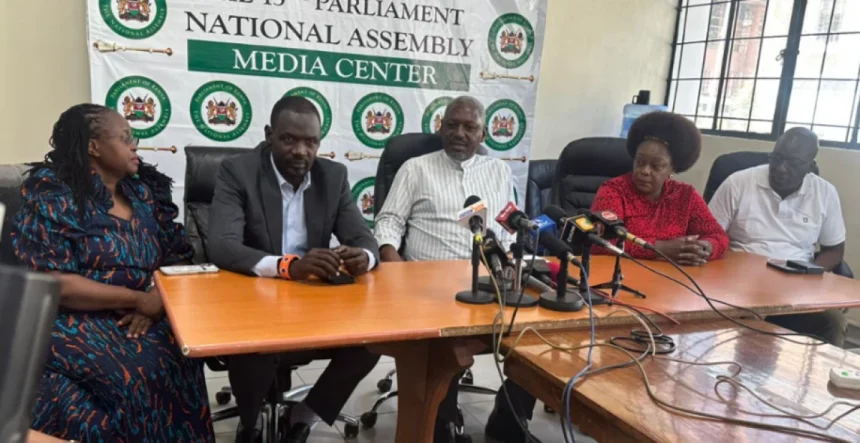
ODM MPs calling for intervention reflects deeper frustrations within the party’s parliamentary wing. The public nature of the appeal suggests that internal mechanisms may be struggling to contain disagreements, forcing lawmakers to seek elder intervention.
Junet Mohamed’s outspoken political style has often energized ODM supporters, but critics argue that his sharp rhetoric sometimes intensifies divisions. At the same time, Edwin Sifuna’s assertive posture as Secretary General has attracted both praise and criticism. While some view him as a bold reformist voice, others see his approach as confrontational, exposing internal rifts that should be resolved behind closed doors.
Youth Voters Are Watching Closely
Kenya’s youth make up a significant portion of the voting population, and their political expectations are rapidly evolving. Many young voters are less attached to traditional party loyalties and more focused on leadership discipline, unity, and issue-based politics.
Political analysts warn that repeated public disagreements within ODM could alienate young voters who are already skeptical of established political parties. For this demographic, internal power struggles often signal self-interest rather than a commitment to solving real economic and social challenges such as unemployment, rising living costs, and governance reforms.
Oburu Odinga’s Role as a Stabilizer
The push for Oburu Odinga’s intervention highlights the continued relevance of elder leadership within Kenyan politics. Seen as a political stabilizer, Oburu is viewed by many ODM MPs as someone capable of restoring calm without escalating tensions.
Supporters of his involvement believe that a mediated settlement could help refocus the party on national issues. Critics, however, argue that reliance on elder intervention exposes weaknesses in ODM’s internal governance structures and raises concerns about long-term leadership sustainability.
What This Means for ODM’s Credibility
For an opposition party, credibility is built not only on criticizing the government but also on demonstrating internal order and clarity of vision. Persistent wrangles risk overshadowing ODM’s policy positions and reform agenda.
Voters often interpret internal conflict as a preview of how a party might govern if elected. If ODM struggles to manage disagreements within its own ranks, skeptics may question its ability to manage national affairs.
The 2027 Question Looms Large
Although the 2027 General Election is still some distance away, political positioning has already begun. ODM’s internal dynamics suggest that leaders are increasingly conscious of future power alignments.
Analysts note that unresolved leadership disputes could weaken ODM’s bargaining power in potential coalitions and alliances. Unity, they argue, will be essential if the party hopes to remain competitive in an increasingly crowded political field.
Public Perception vs. Political Reality
While internal disagreements are common in political parties worldwide, how they are handled often determines public perception. ODM now faces the challenge of balancing open debate with discipline, ensuring disagreements do not erode trust among supporters.
If Oburu Odinga successfully mediates the dispute, ODM could emerge stronger, projecting maturity and internal resilience. Failure to resolve the wrangles, however, risks reinforcing narratives of division and instability.
Conclusion
The call by ODM MPs for Oburu Odinga to rein in Junet Mohamed and Edwin Sifuna underscores growing anxiety about the party’s internal health and public image. As voter attention—especially among the youth—intensifies, ODM’s ability to manage internal power struggles may prove decisive in shaping its political future.