

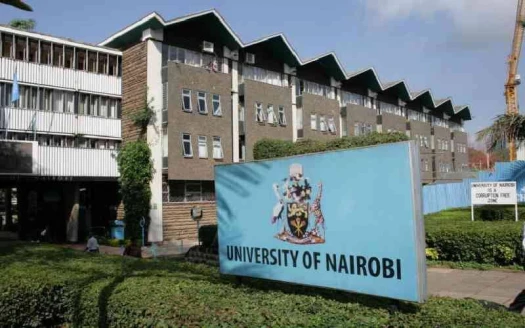
While senior administrators and council members at the University of Nairobi (UoN) clash over recruitment and control, over 70,000 students watch their academic futures hang in the balance. The latest UoN leadership wrangles are not abstract governance issues—they are an active, slow-burning crisis that threatens to derail semesters, devalue degrees, and disillusion a generation of Kenya’s brightest minds. This blog shifts the focus from the power players in paneled offices to the lecture halls and hostels, examining the tangible, daily impact of this stalemate on the students who are the university’s primary reason for existence. When leaders fight, students pay the price.
Section 1: The Tangible Toll: Disruption in the Lecture Hall
The paralysis at the top has a direct, cascading effect on core academic functions.
The “Acting” Syndrome & Academic Paralysis: With keyUoN’s leadership battle has real victims: its students. We document the academic delays, welfare neglect, and psychological toll on 70,000 students caught in the crossfire. positions like Deans of Schools and Heads of Departments filled by “acting” officials, critical decisions are postponed. This delays approval for new courses, research projects, and even the marking and ratification of exams, pushing back graduation timelines.
Frozen Academic Programmes: New, market-responsive degree programs and partnerships with international universities require approval from now-dysfunctional committees. Students are denied access to cutting-edge education because the machinery to approve it is stuck.
Erosion of Teaching Quality: Morale among lecturers is at a nadir. Distracted by union politics and uncertainty, and often burdened with extra administrative duties due to vacancies, the focus on innovative teaching and student mentorship suffers.
Section 2: Beyond Academics: The Crumbling Student Ecosystem
A university is an ecosystem. The administrative standoff is causing systemic failures.
Welfare in Limbo: Decisions on critical student welfare issues—hostel fee allocations, cafeteria tenders, sports facility upgrades, and mental health services—are stuck in bureaucratic limbo without permanent leadership to sign off.
SONU’s Diminished Voice: The Student Organization of Nairobi University (SONU), traditionally a powerful advocacy body, finds itself negotiating with a shifting cast of “acting” officials who lack the mandate to make binding agreements, rendering student representation ineffective.
The Internship & Career Crisis: The university’s career services and industry linkage offices are weakened, compromising the vital pipeline for student internships and graduate employment. Companies are hesitant to engage with an institution in visible turmoil.
Section 3: The Psychological Burden: Anxiety and Lost Faith
The impact is not just logistical; it is profoundly psychological.
Uncertainty as a Constant: Students live with the anxiety of not knowing if their semester will be completed on time, if their degree will hold its value, or if they will graduate into a job market that increasingly views UoN with pity rather than prestige.
The Betrayal of Promise: Many students sacrificed greatly to earn a place at Kenya’s top university. The ongoing crisis feels like a betrayal of the social contract and the promise of a stable, quality education in exchange for their fees and effort.
A Generation of Cynics: Watching respected institutions fail due to elite power struggles teaches young people the wrong lessons about leadership, accountability, and national priorities, fostering cynicism over citizenship.
Section 4: The Ripple Effect: Families, Economy, and National Development
The student crisis becomes a national crisis.
Financial Strain on Families: Delayed graduations mean extra years of tuition and upkeep, a devastating burden for families already struggling with economic hardship.
A Weakened Talent Pipeline: Kenya’s vision for a knowledge-based economy (Vision 2030) relies on a steady stream of skilled graduates. UoN’s dysfunction creates a bottleneck in the nation’s most critical talent pipeline, affecting every sector from tech to healthcare.
Damaged National Brand: UoN is a barometer for Kenya’s entire higher education system. Its visible struggles tarnish the country’s reputation as an emerging education hub in East Africa, deterring international students and collaborative research funding.
Conclusion: A Plea from the Precarious Generation
To the Council Chairperson, the Vice-Chancellor, the Ministry of Education, and all who wield power in this dispute: Look down from the hill. Your war of memos and meetings has real casualties. Every day of impasse is a day of stolen education, mounting anxiety, and deferred dreams for thousands of young Kenyans. They did not choose to be pawns in your game of control.
Resolve this. Not for your legacy, but for the fourth-year student unsure if they will graduate, for the first-year whose dream is turning to ash, and for the Kenya that desperately needs their talent, hope, and energy. The true test of leadership is not who controls the appointment of a Dean, but who protects the future of the student.