
A Signature and a Silence
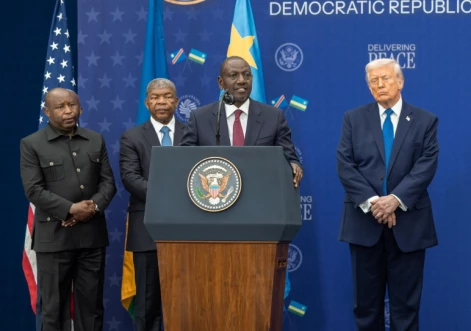
In the grand, chandeliered room at the White House on December 4, 2025, history was made with the stroke of a pen. Rwandan President Paul Kagame and Democratic Republic of the Congo (DRC) President Félix Tshisekedi signed the Washington Accord, a “historic” pact to end one of the world’s deadliest and most complex conflicts. Yet, in the flurry of photographs and diplomatic speeches, one silent gesture spoke volumes about the daunting road ahead: the two presidents did not shake hands.
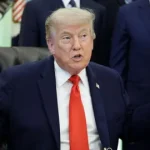
That absent handshake is the most honest symbol of this peace process. It speaks to the profound, generational mistrust that no document, however well-crafted, can instantly erase. While leaders like Kenyan President William Ruto rightly praised the deal as a “credible and hopeful pathway,” and U.S. President Donald Trump was lauded for his mediation, the real work does not lie in Washington. It lies in the shattered villages, crowded displacement camps, and traumatized communities of Eastern Congo. The Accord is a map for peace, but the terrain it must cross is a humanitarian and psychological nightmare of its own making.
The Scale of Suffering: A War Measured in Millions
To understand the challenge, one must first grasp the apocalyptic scale of the crisis the deal seeks to resolve. This is not a conventional war with front lines, but a multi-layered humanitarian catastrophe.
A Death Toll Beyond Comprehension: Since the war reignited in the 1990s, estimates suggest over 5 million people have died from violence, hunger, and disease—a number that dwarfs most contemporary conflicts. It is a rolling genocide by attrition.
The Capital of Displacement: Eastern DRC is home to one of the world’s largest and most neglected displacement crises. Over 6 million people are internally displaced within the DRC, with families forced to flee their homes repeatedly as violence shifts from one village to another.
A Weapon of War: Sexual violence has been deployed systematically as a tool of terror. Hundreds of thousands of women, men, and children have been brutalized, leaving deep physical and psychological scars that last generations.
The Lost Generation: An entire cohort has grown up knowing nothing but war. They have been robbed of education, stability, and the very concept of peace. This is the human foundation upon which peace must be built—and it is cracked and fragile.
The Architecture of Distrust: Why a Handshake Is So Hard
The mistrust between Kinshasa and Kigali is not a mere political disagreement; it is wired into the DNA of the conflict. For thirty years, the border has been more of a bleeding wound than a line on a map.
The Ghost of Genocide: Rwanda’s 1994 genocide against the Tutsi casts a long shadow. Many perpetrators, including the FDLR militia, fled into Eastern Congo. Rwanda has repeatedly justified military incursions into the DRC as necessary for its own security to hunt down these groups, which the DRC views as a violation of its sovereignty and a pretext for resource plunder.
The Proxy War Reality: The conflict has long been a proxy battle. Rwanda has been accused of backing the powerful M23 rebel group to maintain influence and secure access to the DRC’s mineral wealth. The DRC, in turn, has at various times tolerated or collaborated with other armed groups hostile to Rwanda. Each side sees itself as both victim and righteous actor.
The Failure of Previous Accords: This is not the first peace deal. The 2013 Framework Agreement, brokered by the UN, failed spectacularly. That memory hangs over the Washington Accord. Communities have heard promises before, only to see them broken. As one Congolese civil society leader put it, “We celebrate the signature, but we wait to see the implementation.”
The Daunting To-Do List: From Paper to Peace
The Washington Accord provides a framework, but its success hinges on executing near-impossible tasks in a climate of deep suspicion.
Disarming the Hydra: The region is a kaleidoscope of over 120 armed groups, from community-based militias to well-equipped rebels like M23. The deal requires Rwanda to end support for M23 and the DRC to disarm the FDLR. But who will ensure this happens? How will thousands of fighters, for whom the gun has been a source of livelihood and identity, be reintegrated? A misstep here could see groups simply splinter and re-form under new names.
Healing the Land and Its People: Peace is more than the absence of war. It requires a massive, multi-generational investment in healing. This means:
Trauma Counseling: Building a mental health infrastructure to address widespread PTSD.
Justice and Reconciliation: Creating credible pathways for justice for victims of atrocities, which may include hybrid courts or truth commissions.
Return and Reintegration: Safely returning millions of displaced people to their homes and helping them rebuild farms and communities from scratch.
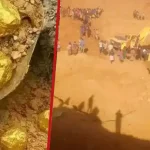
Transforming the War Economy: Conflict minerals—tin, tungsten, tantalum, and gold—have funded the violence. The Accord’s economic pillar aims to create a legal, U.S.-partnered mining sector. This must be managed with extreme transparency to ensure wealth benefits Congolese communities, not just elites and foreign corporations. If it becomes another form of extraction, it will fuel the next rebellion.
Conclusion: The Courage of the Next Step
President Kagame’s own words at the signing ceremony were the most prescient: “There will be ups and downs.” The Washington Accord is a necessary and welcome starting point—a acknowledgment by the world and the region’s leaders that this suffering cannot be allowed to continue.
However, the true heroes of this next chapter will not be the presidents in suits. They will be the community mediators negotiating local ceasefires, the humanitarian workers delivering aid under threat, and the ordinary Congolese citizens who must find the courage to trust, to return, and to rebuild after a lifetime of betrayal.
The handshake didn’t happen in Washington because that trust does not yet exist. It must be earned, village by village, day by day, through the consistent, verifiable actions dictated by the Accord. The deal has provided a door. Walking through it will require a courage far greater than that needed to sign a paper. The world has offered a map; now, the people of the Great Lakes must begin the long, hard walk home.