

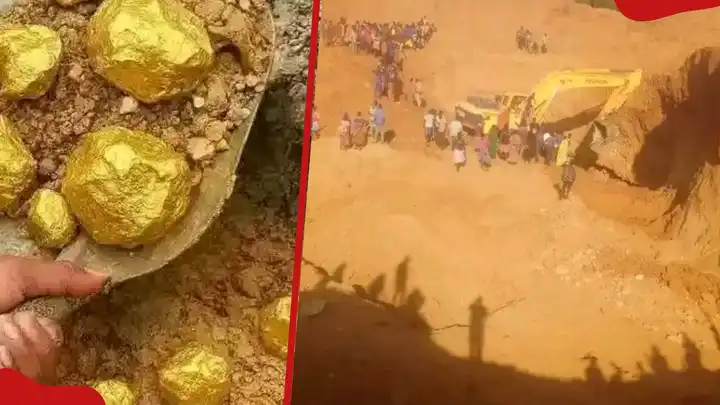
A Fatal Discovery
The discovery of a resource should be a blessing. It should mean jobs, roads, schools, and a brighter future for a community. Yet in the verdant hills of Kakamega County, a vast gold deposit worth over Sh680 billion has instead brought bloodshed, terror, and the specter of mass displacement. The December 4th tragedy in Ikolomani, where three people were killed by police during a protest, is not a random act of violence. It is a textbook symptom of an ancient and devastating phenomenon: the “resource curse.”
Also known as the “paradox of plenty,” the resource curse describes the cruel irony where countries or regions rich in minerals, oil, or gas fail to thrive. Instead of prosperity, they experience greater poverty, corruption, environmental devastation, and conflict. The gold beneath Ikolomani was meant to be the key to Kenya’s mining-led economic transformation. Instead, for the local community, it has become a nightmare they cannot wake up from, a geological lottery ticket that has condemned them to lose their homes, their land, and now, their loved ones. Kakamega’s agony forces a national question: is Kenya prepared to manage its extractive wealth, or is it destined to repeat the tragic cycles seen from the Niger Delta to the diamond fields of Sierra Leone?
The Anatomy of a Curse: How Gold Poisons a Community
The resource curse follows a predictable, brutal pattern that is now unfolding in Kakamega.
1. The Shadow of Displacement: The most immediate and personal horror is the threat of losing one’s home. For the over 800 families in the path of the Shanta Gold Ltd mine, the resource curse manifests as violent uncertainty. They are not partners in development; they are logistical problems to be solved. Where is the proof that the resettlement site is habitable or that compensation will be fair and timely? Without transparent, binding agreements, the gold becomes a curse of mass homelessness in the making, severing people from their history, livelihoods, and ancestral graves.
2. The Looming Environmental Catastrophe: Beyond displacement lies a second layer of the curse: ecological ruin. Large-scale gold mining is not a gentle process. It involves massive open pits, the use of toxic chemicals like cyanide to leach gold from ore, and the generation of mountains of waste rock. The community’s fears are not speculative; they are based on the documented history of mines worldwide. They fear their rivers and streams, the lifeblood of their farms, will be poisoned. They fear the dust will blanket their crops and the land will be left scarred and barren for generations. The gold, in this light, is a temporary treasure that leaves a permanent poison.
3. The Erosion of Trust and the Birth of Conflict: At its core, the resource curse is a curse of governance and broken trust. The community does not trust the foreign mining company, which it sees as an agent of extraction, not development. More devastatingly, it does not trust its own government. The police who opened fire were not seen as protectors of citizens, but as enforcers for corporate and state interests. When the state is perceived as taking the side of a foreign entity against its own people, the social contract is shattered. This vacuum of trust is where conflict breeds. The tragic shootout was not the start of this conflict; it was the violent culmination of months, even years, of eroding faith in the system.
Beyond the “Goons” Narrative: The Real Faces of the Curse
In the aftermath, a convenient narrative emerged from official police channels: the dead were “hired goons.” This dehumanizing label is itself a tool of the resource curse. It strips the victims of their identity—as farmers, fathers, sons, and concerned citizens—and recasts them as disposable mercenaries. It attempts to divorce the violence from its root cause: a community’s desperate, collective fight for survival. This narrative allows authorities to avoid the harder truth: that ordinary, terrified people were pushed to extraordinary confrontation because all other channels of redress seemed closed.
The real faces of the resource curse are the widows of the slain men. They are the families of the 18 injured. They are the 800 households lying awake at night, wondering if a bulldozer will be at their door next year. They are the smallholder farmers eyeing their stream, fearing its last drink.
Breaking the Curse: Is There a Kenyan Model?
The grim history of the resource curse is not an inevitable destiny. It is a failure of policy, priority, and power-sharing. For Kenya to avoid becoming another cautionary tale, it must forge a different path before more mines open.
Community as Shareholders, Not Spectators: The model must shift from one of compensation to co-ownership. This means legally guaranteeing the community a meaningful equity stake in the mining venture. Their benefits must be tied to the mine’s long-term profits, not a one-off payment for their land. This aligns interests and turns the community from adversaries into stakeholders with a seat at the boardroom table.
The “Free, Prior, and Informed Consent” Standard: Kenya must move beyond weak “public participation” to adopt the international gold standard: FPIC. This means the community has the right to give or withhold its consent to a project before major operations begin, based on full understanding of the risks and benefits. It is a right to say “No.”
An Iron-Clad, Citizen-Led Environmental Pact: Environmental protections cannot be left to company reports and government inspections alone. The community must have the funding and technical support to hire its own independent environmental monitors to oversee the mine’s operations in perpetuity, with the power to halt work if agreements are breached.
Conclusion: A Choice at the Crossroads
The gold in Kakamega presents Kenya with a profound moral and economic crossroads. Down one path lies the well-trodden trail of the resource curse: short-term profits for a few, lasting misery for the many, environmental debt, and a legacy of conflict. The blood already spilled marks the start of this path.
The other path is harder. It requires radical transparency, legally enforced power
Continue