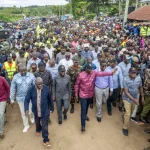

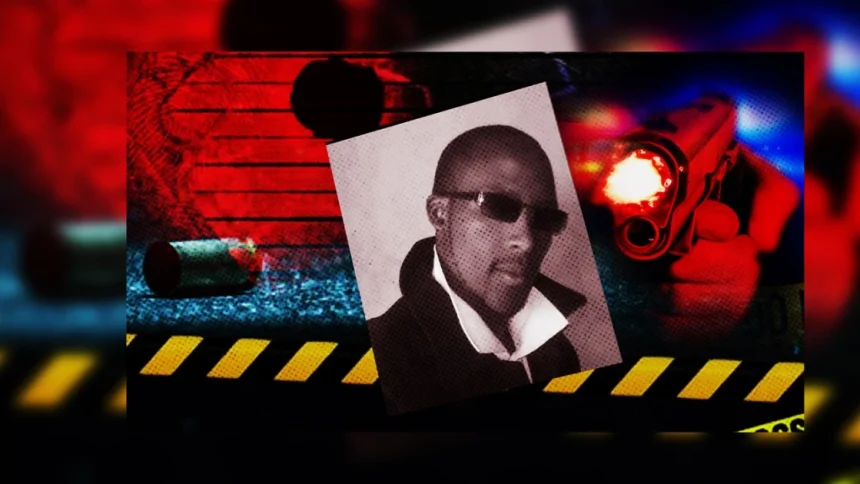
As of January 30, 2026, a freshly dug grave in a quiet corner of Kitengela remains empty. This is not due to a delay in logistics, but a deliberate act of civil disobedience. The family of Brian Kimutai has officially put the state on notice: there will be no funeral until the officers responsible for his January 22 shooting are behind bars.
While the community rallies around the family, this “burial strike” raises profound questions about justice, the law, and the psychological toll of police brutality in Kenya.
[Image: A silhouette of an empty grave in a rural setting, with a “Justice for Brian” poster leaning against a nearby tree]
1. The Legal Standoff: Mortuary vs. Mandate
In Kenya, delaying a burial for “justice” is a rare and legally complex move.
The Mortuary Crisis: Kitengela Sub-County Hospital and local private morgues typically require a police burial permit to release a body or keep it indefinitely. The family is currently in a standoff with administrators to ensure Brian’s body remains preserved as “evidence.”
The Penal Code: Under Section 137 of the Penal Code, hindering a burial is technically an offense. However, the family argues that the police are the ones hindering the process by withholding the necessary ballistics and post-mortem reports required for a fair trial.
The Evidence Factor: By keeping the body in the mortuary, the family is preserving the primary evidence of the crime, preventing a “quick burial” that might allow the case to go cold.
2. The “Missing Voices” of 2026
Human rights groups like Missing Voices and Amnesty International Kenya have highlighted Brian’s case as a bellwether for 2026.
The Stats: Brian is one of at least seven civilians killed by police in the first 21 days of January.
The “Stage-Managed” Defense: Local residents have dismissed police claims that Brian was part of a “criminal gang.” Instead, they point to a systemic issue where officers use lethal force first and “investigate” later.
Community Resolve: “If we bury Brian today, his story dies tomorrow,” said a local youth leader. “The body is the only witness that can’t be intimidated.”
3. The Moral Toll: Grief on Hold
Psychologists warn that “delayed closure” can have devastating effects on a family.
Frozen Grief: By refusing to bury their son, the Kimutai family is living in a state of “suspended mourning.” They cannot begin the healing process because the funeral—a vital rite of passage—is being used as a bargaining chip.
Financial Strain: Every day the body remains in the mortuary, the family incurs costs. A community-led “Justice Fund” has been set up in Kitengela to help cover these mounting bills, allowing the family to maintain their stance.