

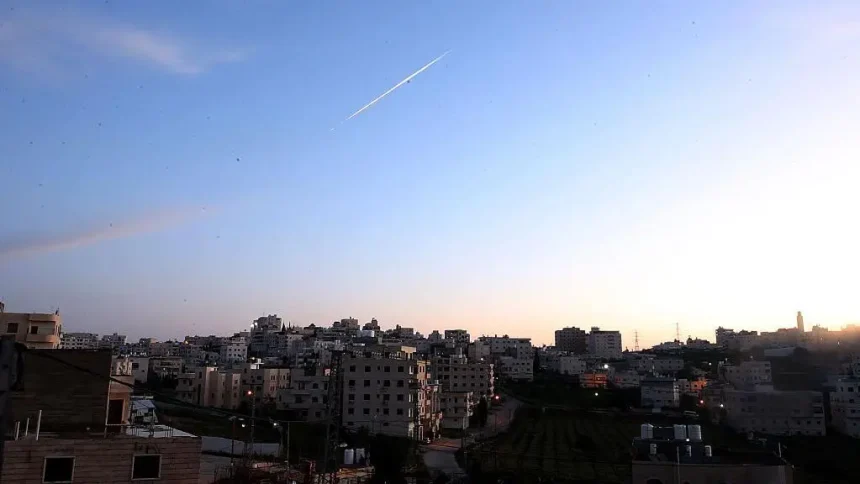
The regional “ring of fire” around Israel has tightened. Just 24 hours after their initial ballistic missile strike, the Houthi movement (Ansarullah) has announced a second military operation targeting what they described as “vital and military sites” in southern Israel.
In a televised address early Sunday, March 29, 2026, Houthi military spokesperson Brig. Gen. Yahya Saree confirmed that the group used a barrage of cruise missiles and drones to strike targets in southern occupied Palestine. This follows Saturday’s ballistic missile launch that triggered sirens near Israel’s nuclear research center in Dimona and the city of Beersheva.
1. The “Holy Jihad” Coordination
This second operation was not a lone-wolf attack. Saree emphasized that the strike was part of the “Holy Jihad Battle” and was specifically timed to “coincide with the military operations being carried out by our mujahideen brothers in Iran and Hezbollah in Lebanon.”
This level of synchronization confirms that the “Axis of Resistance” is now operating as a unified front, stretching from the Persian Gulf to the Red Sea.
2. Weaponry: From Ballistic to Cruise
While Saturday’s attack utilized long-range ballistic missiles (likely Qadr or Soumar variants), Sunday’s wave focused on cruise missiles and explosive drones.
Tactical Change: Cruise missiles fly at lower altitudes, designed to hug the terrain and evade traditional radar and the Arrow-3 interceptors used for high-altitude ballistic threats.
The Outcome: The IDF stated that their multi-layered defense systems—including the Iron Dome and David’s Sling—successfully engaged several threats, though fragments of intercepted drones were reported in southern regions.
3. The “Red Sea” Warning
Beyond the missiles, the Houthis issued a chilling warning to the international community. They declared that they will not allow the Red Sea to be used as a “hostile launchpad” for operations against Iran.
With the Strait of Hormuz already seeing limited traffic due to Iranian activity, any Houthi interference in the Bab al-Mandab Strait could effectively cut off the Suez Canal.
Energy analysts warn that this “double-choke” strategy could push global oil prices toward $130 per barrel by early April.
4. Israel’s Multi-Front Response
Israeli Defense Minister Israel Katz responded by stating that the military is “preparing for a multifront war” and that those who strike Israel “will pay heavy, increasing prices.” While Israel has focused its primary strikes on Iran’s nuclear and missile facilities, the Houthi entry may force the IDF to divert significant air assets to targets in Yemen, such as the port of Hodeidah.
What’s Next?
The Houthis have vowed that their operations will “continue in the coming days” until the military campaign against Iran and Lebanon is halted. For the global economy, the focus now shifts to the maritime insurance markets, where premiums for Red Sea transit are expected to skyrocket overnight.