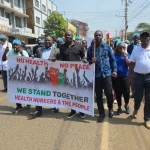

The Democratic Republic of Congo (DRC) is currently the epicenter of a high-stakes geopolitical storm where public health emergencies and intense political maneuvers have collided. In an unexpected weekend directive issued on June 27, 2026, the Congolese government announced a total ban on large public gatherings, political meetings, and street demonstrations in several key regions—including the heavily populated capital city of Kinshasa.
EDNEWS
While Interior Minister Jacquemain Shabani signed off on the decree as an emergency preventive measure against a rapidly escalating Ebola outbreak, the country’s political opposition has fiercely rejected the mandate. With a massive anti-government protest scheduled for July 8, 2026, critics argue that the ruling regime is weaponizing public health fears to suppress democratic dissent and secure an unconstitutional path toward an extended presidency for Felix Tshisekedi.
Türkiye Today
+ 1
Inside the Decree: What the New Ban Formally Covers
The sudden directive has effectively placed millions of Congolese citizens under tight restrictions regarding public assembly. According to the official document seen by global press agencies, the primary goal is “to prevent any spread of the Ebola virus epidemic” into areas that have so far managed to remain clear of active infections.
The Whistler Newspaper
+ 1
Affected Geographies
The ban targets four specific provinces across the vast central African nation:
Kinshasa Province: The nation’s capital and a sprawling megacity home to over 17 million to 18 million people.
The Star
Tshopo Province: A key regional hub bordering the current hot zones.
en.politis.com.cy
Haut-Uele Province: A northern territory lying directly in the path of potential transmission lines.
Bas-Uele Province: A remote northern region bordering highly vulnerable forest zones.
Under this strict mandate, provincial governors have been instructed to shut down all public marches, political rallies, sporting celebrations, and any social events that draw dense crowds. Additionally, local health authorities in these four provinces are now legally required to monitor anyone presenting hemorrhagic fever symptoms and submit detailed daily surveillance reports directly to the national health ministry.
The Whistler Newspaper
+ 1
The Public Health Context: How Dangerous is the 2026 Ebola Outbreak?
To understand the government’s official justification, one must look at the alarming data emerging from the northeastern front of the country. The DRC is currently battling its 17th recorded Ebola outbreak, which was officially declared on May 15, 2026.
Citizen Digital
[ May 15, 2026: Outbreak Declared ]
│
▼
[ Epidemic Epicenter: Eastern DRC ] ───► (Ituri, North Kivu, South Kivu)
│
▼
[ Current Toll: 1,307+ Cases | 377+ Deaths ]
│
▼
[ Pre-emptive Ban: Kinshasa & Border Provinces ]
According to data compiled by the World Health Organization (WHO) and the Congolese Ministry of Health, the epidemic has grown at an aggressive pace. Confirmed infections have reached 1,307 cases, with the death toll climbing to 377 casualties. The vast majority of these cases—nearly 90%—are heavily concentrated in the volatile eastern province of Ituri, alongside active transmission chains in North Kivu and South Kivu.
IGIHE News
+ 1
Public health experts from the Africa CDC and the WHO have expressed deep concern, warning that this could potentially spiral into one of the largest and deadliest Ebola outbreaks in history. The primary reason for this fear is twofold:
The Star
The Virus Strain: This specific outbreak is driven by the Bundibugyo species of the Ebola virus, a highly lethal strain for which there is currently no approved vaccine or definitive treatment therapy.
en.politis.com.cy
Conflict and Displaced Populations: Violent insurgencies by rebel groups—including the Rwanda-backed M23 movement near Goma and the Islamic State-affiliated Allied Democratic Forces (ADF) in Ituri—have severely compromised health worker access, forcing thousands of civilians into overcrowded displacement camps where viral transmission can thrive unchecked.
The Inciting Incident: The French Connection and the Kinshasa Scare
If the active outbreak is currently confined to provinces nearly 1,800 kilometers (1,100 miles) away from the capital, why did the Interior Ministry panic and lock down Kinshasa?
The catalyst was a major scare involving international travel. A medical doctor working at an Ebola treatment center in the eastern epicenters contracted the virus. Before showing full clinical symptoms, the doctor traveled across the country, passing directly through Kinshasa international airport to catch a flight back home to France, where he subsequently tested positive.
en.politis.com.cy
The moment the French health authorities made the diagnosis public, the Congolese government realized how vulnerable the capital’s transport networks were. The administration quickly implemented a mandatory 21-day quarantine for all individuals traveling out of the eastern conflict zones, but the fear that the virus may have already leaked into Kinshasa’s dense transport hubs triggered the subsequent ban on mass gatherings.
EDNEWS
“A Political Manoeuvre”: The Opposition Decries a Constitutional Coup
Despite the severe medical realities in the east, the political opposition in Kinshasa is refusing to back down. Prominent figures from major coalitions have openly defied the order, calling it a desperate political stunt designed to insulate President Felix Tshisekedi from immense public anger.
en.politis.com.cy
The timing of the health directive is the primary point of contention. The ban arrived just days after parliament adopted a controversial bill aimed at organizing a national referendum for sweeping constitutional reforms.
Citizen Digital
[ Parliament Adopts Referendum Bill ]
│
▼
[ Critics Fear Elimination of Term Limits ]
│
▼
[ Massive Opposition Protests Mobilized ]
│
▼
[ Government Imposes Gathering Ban over Ebola ]
Under the current rules of the Congolese constitution, a president is strictly limited to two five-year terms. President Tshisekedi, 63, is currently serving his second term, which is legally mandated to end in December 2028. However, the opposition alleges that the proposed constitutional amendments are specifically engineered to reset the clock or remove term limits entirely, paving the way for a controversial third term in office.
The Star
+ 2
Voice of Dissent: Prince Epenge, the outspoken spokesperson for the Coalition Article 64 (C64) and the Lamuka alliance, pulled no punches when addressing the media. “This decision is entirely political, not medical. There is not a single confirmed case of Ebola in Kinshasa. The government is simply terrified of the people. We do not accept this illegitimate decree, and our march on July 8 will proceed exactly as planned.”
Türkiye Today
+ 1
Similarly, Rodrigue Ramazani, the Secretary-General of the Envol opposition party, urged citizens to ignore the health ministry’s guidelines and flood the streets of the capital, stating that the directive “reeks of an authoritarian crackdown masquerading as a public health intervention.”
The Star
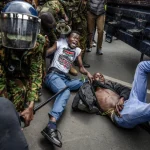
The skepticism among the public is further amplified by memory of recent violence. On June 12, an anti-referendum rally in Kinshasa was brutally crushed by a combination of pro-government activists and riot police using tear gas and live ammunition. The UN Human Rights Office later condemned the state’s heavy-handed response, which resulted in dozens of injuries and the confirmed death of at least one civilian demonstrator.
health.economictimes.indiatimes.com
+ 1
President Tshisekedi Counters: “Ebola is Not a Rumor”
As tensions threatened to boil over into widespread urban rioting, President Felix Tshisekedi took to national television to address the country. In a carefully structured evening broadcast, the President chose to completely bypass the political accusations regarding his term limits, focusing entirely on framing the virus as an existential national threat.
During his address, Tshisekedi officially unveiled a comprehensive $319 million emergency response plan financed in partnership with international health agencies to aggressively contain the eastern outbreak. He strongly admonished political leaders who were sowing doubt among the population regarding the gravity of the disease.
IGIHE News
The President’s Warning: “Ebola is neither a rumor nor a source of shame,” Tshisekedi declared during his address. “It is a severe health emergency that demands absolute civic responsibility, national solidarity, and truth. Giving in to political misinformation only jeopardizes the lives of millions of our citizens.”
IGIHE News
+ 1
Key Element Government Position Opposition Position
Primary Motivation Pre-emptive containment of an unvaccinable Ebola strain. Sabotaging the July 8 anti-third-term demonstration.
Scientific Basis High mobility of infected travelers passing through Kinshasa. Zero confirmed cases within the capital city’s borders.
Legal Stance Justified under emergency public safety and executive powers. An unconstitutional violation of the freedom of assembly.
The Economic and Regional Stakes
While the political elite fight for control over the streets of Kinshasa, the economic consequences of a prolonged lockdown could be devastating for the continent. A United Nations economic impact brief released on Tuesday warned that if the Bundibugyo Ebola strain breaches the containment zones and spills over the porous borders into neighboring nations like Rwanda, Burundi, or Angola, the financial fallout could top $3.6 billion, decimating regional trade and triggering upwards of 328,000 job losses across Central Africa.
WBAL Radio
Furthermore, the ban has cast a dark shadow over national celebrations. For the first time in over fifty years, the DRC national football team successfully qualified for the knockout rounds of the 2026 FIFA World Cup. Just hours before the ban, thousands of ecstatic fans had packed the streets of Goma and Kinshasa to celebrate the historic sports milestone. Under the new rules issued by local mayors and the interior ministry, all such spontaneous public viewings and celebrations are now strictly illegal.
health.economictimes.indiatimes.com
Conclusion: A Tense Standoff Awaits July 8
The Democratic Republic of Congo stands at a dangerous crossroads. The government’s emergency assembly ban has successfully set up a classic catch-22 situation for the state: if the July 8 protests occur and are met with brutal police suppression, the government will face severe international condemnation for human rights abuses. If the opposition successfully mobilizes hundreds of thousands of people into the streets of an unprotected capital, they risk creating a massive super-spreader event for an incurable virus.
With neither side showing a willingness to compromise, the upcoming days will determine whether the DRC can successfully navigate a terrifying public health emergency without completely breaking its fragile democratic structures.