
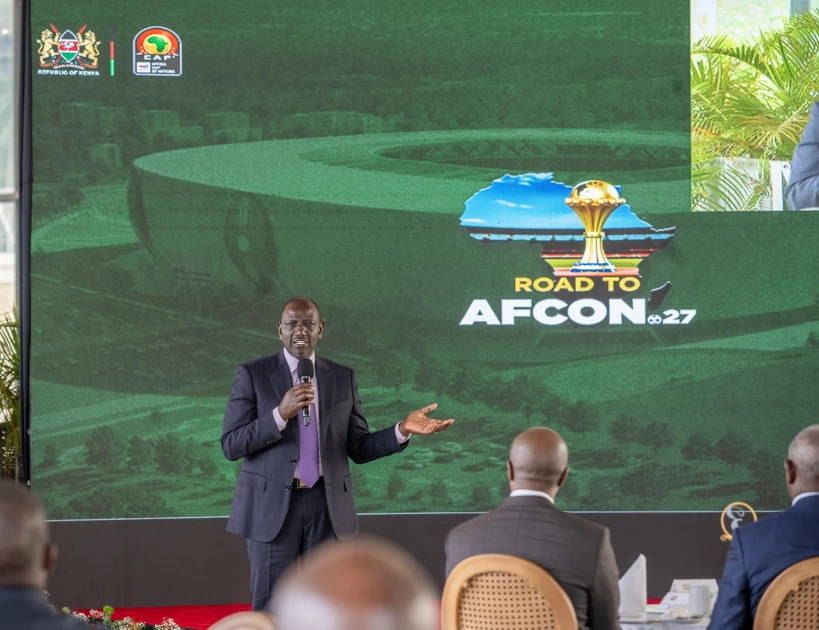
The dream of hosting the 2027 Africa Cup of Nations (AFCON) is officially in the “danger zone.” On Monday, March 30, 2026, opposition leader Kalonzo Musyoka voiced the frustrations of a nation, accusing the government of administrative lethargy that could see Kenya stripped of its hosting rights.
The “East Africa Pamoja” bid, a historic joint venture between Kenya, Uganda, and Tanzania, is facing a major crisis because Kenya remains the only partner yet to remit its Ksh 3.9 billion ($30 million) hosting fee to the Confederation of African Football (CAF).
1. The March 30 Ultimatum
CAF was clear: show commitment or step aside. March 30 was set as the absolute final date for the three nations to deposit their contributions.
The Pamoja Gap: Reports indicate that both Uganda and Tanzania have already fulfilled their financial obligations.
Kenya’s Silence: As of Monday evening, there has been no official confirmation from the National Treasury that the funds have been wired, despite last-minute reassurances from Sports CS Salim Mvurya.
2. Kalonzo’s Stern Warning
Speaking in Nairobi, Kalonzo, who is also the patron of Sofapaka FC, described the situation as a monumental failure of leadership.
“Kenyans love football. When you see an opportunity for Kenya to host AFCON being squandered, it is regrettable,” Kalonzo stated. “This was a joint bid. I hope the other two countries are ready, but here at home, we will push for full accountability.”
3. Stadium Sabotage and Corruption Claims
Beyond the missing billions, Kalonzo raised red flags over the infrastructure projects meant to house the tournament.
Talanta Stadium: He pointed to alleged mismanagement and “possible irregularities” in the construction of the proposed Raila Odinga International Stadium (Talanta Stadium).
Pending Bills: These claims come amid reports that contractors at Kasarani and Nyayo stadiums have scaled down work or vacated sites due to unpaid debts totaling over Ksh 6 billion.
4. What Happens if Kenya Fails?
If CAF issues a notice of default, the “Pamoja” bid won’t necessarily die, but it will change.
Reassignment: Matches originally slated for Nairobi could be moved to Kampala or Dar es Salaam.
Economic Blow: Kenya would lose out on an estimated Ksh 20 billion in tourism, hospitality, and infrastructure stimulus.
Credibility: It would be a repeat of the 1996 disaster when Kenya was stripped of hosting rights, cementing a reputation for “unreliability” in global sports.
The Bottom Line
The next 48 hours are critical. If the government cannot produce a “proof of payment” from CAF, the “East Africa Pamoja” bid might proceed without its biggest economy. For Kalonzo Musyoka, this isn’t just about football—it’s about a government that he claims is “dropping the ball” on a historic opportunity.