

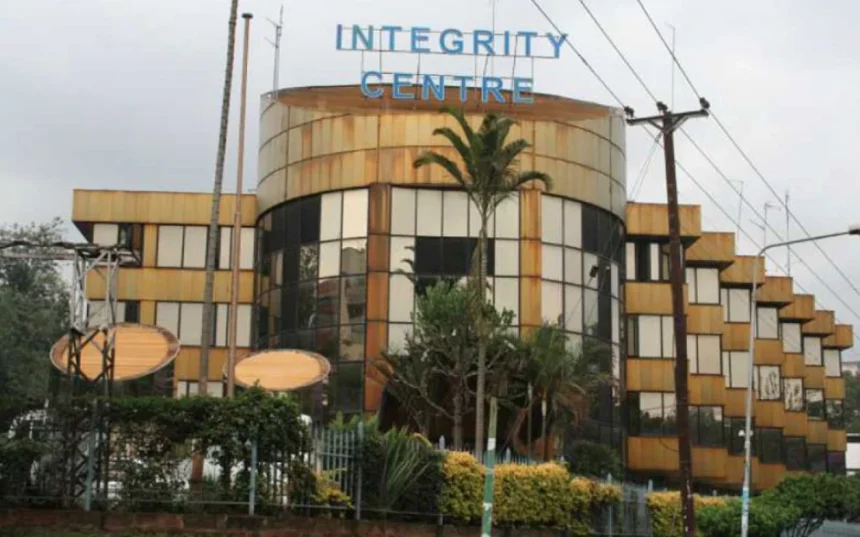
When the Ethics and Anti-Corruption Commission (EACC) detectives arrived at the Embu County Treasury at 6:00 AM on Tuesday, March 24, 2026, they weren’t just looking for paper; they were looking for patterns. For months, intelligence had suggested that the county’s procurement system had been “captured” by a small circle of political elites.
By the time the sun set over Embu town, the EACC had seized dozens of computers, hundreds of payment vouchers, and personal mobile phones from eight different high-end residences. The goal? To prove that the Ksh.95 million paid out over the last 18 months didn’t go to legitimate contractors, but back into the pockets of the very people meant to oversee the budget.
The “Proxy” Strategy: How it Worked
The most damning aspect of the EACC’s preliminary report is the use of “Proxy Companies.” According to lead investigator Japheth Baithalu, the 11 companies under the spotlight shared a suspicious set of characteristics that are common in Kenyan “tenderpreneurship.”
The “Red Flag” Patterns:
Shared Directors: Several of the companies, though registered under different names, shared the same physical addresses or listed the spouses and siblings of sitting MCAs as “Directors.”
Instant Payments: While genuine local suppliers often wait months for payment, these 11 firms were reportedly paid within days of submitting “completion certificates.”
The “Shell” Factor: Detectives found that some of the companies had no physical offices or equipment, suggesting they were mere “briefcase entities” created solely to move money from the County Revenue Fund to private bank accounts.
[Legal Breakdown] The Conflict of Interest Trap
Under the Anti-Corruption and Economic Crimes Act and the Leadership and Integrity Act, the lines are very clear:
The Evidence Trail: From LPOs to WhatsApp
The raid wasn’t just about hard files. Detectives are currently analyzing digital footprints.
The “LPO” Trail: Investigators are matching Local Purchase Orders (LPOs) to the specific dates when the County Assembly approved “Supplementary Budgets.”
The Communication Chain: Forensic experts are looking for “instructional” messages between procurement officers and the suspect MCAs, which could prove that the tenders were “pre-determined” before the advertisements were even placed.
Bank Disclosures: The EACC has already moved to freeze several accounts linked to the 11 companies to prevent the further transfer of the Ksh.95 million.
The Political Fallout: A County in Limbo
The raid has effectively paralyzed operations at the Embu County Assembly. With three prominent MCAs now under active investigation, the “Oversight” role of the house is in question. Speaker Josiah Thiriku has called for calm, but the ground in Embu is shifting. Residents are increasingly demanding a full audit of all projects from the 2024/2025 financial year.
Governor Cecily Mbarire, while not personally mentioned in the raid warrants, now faces the challenge of distancing her administration from the procurement “cartels” that the EACC claims have infiltrated her finance department.
Conclusion: The End of “Business as Usual”
The Embu raid is a signal to all 47 counties that the EACC is moving beyond “low-level” arrests. By targeting the Conflict of Interest between legislators and contractors, the commission is striking at the very heart of devolved corruption. For the people of Embu, the hope is that this Ksh.95 million probe will finally lead to a system where tenders are won on merit, not on “membership” in the County Assembly.