

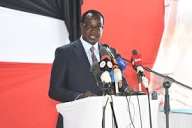
As the second week of the 2026 academic year winds down, a quiet frustration is growing in Senior Schools across Kenya. While the Ministry of Education has promised that the Sh11 billion textbook deadlock is broken, the physical reality for the 1.13 million pioneer Grade 10 learners is a “content vacuum.”
From national schools to sub-county day schools, teachers are being forced to innovate—or idle—as they wait for the delivery trucks to arrive. Here is the status report on the Grade 10 textbook crisis as of January 26, 2026.
1. The Reporting Delay: 85% and Rising
One of the hidden reasons for the textbook lag was the slow pace of admissions. Education CS Julius Ogamba noted that by January 22, the transition rate stood at 85%.
Because the government uses the National Education Management Information System (NEMIS) to distribute books based on actual enrollment, publishers were hesitant to ship massive quantities to schools that hadn’t fully “updated” their student numbers. The Ministry has now extended a olive branch, allowing students to report in their former Junior School uniforms to speed up the data capture.
2. The 50% Threshold: Where are the Books?
To restart the printing presses, the Treasury released Sh5.6 billion earlier this month to partially offset the Sh11 billion debt owed for previous grades (1–9).
The Current Status: Approximately 50% of the required materials are now in the hands of schools or in transit.
The Priority Subjects: Schools like Kenya High have reported receiving core books for ICT, English, and French, but are still waiting on heavyweights like Mathematics and the specialized Science pathways.
The “One-to-One” Promise: The Ministry is strictly enforcing a 1:1 book-to-student ratio. If your school has 100 students but only 40 books, more are officially on the way.
3. “Digital Notes” and Shared Resources: How Teachers are Coping
With the first term only 13 weeks long, time is the one resource schools cannot recover. KESSHA Chairman Willy Kuria has warned that the delay has already “eaten” into the syllabus.
How schools are surviving the gap:
WhatsApp Pedagogy: Teachers are sharing PDF versions of the KICD-approved content via parent and student groups.
Projector Learning: Schools with ICT labs are projecting digital textbooks onto walls to conduct lessons for the entire class at once.
Pathway Switching: Interestingly, the delay is giving students more time to reconsider their “Pathways” (Arts & Sports, Social Sciences, or STEM) before the books are permanently issued.
4. The Countdown to January 31st
The Ministry has set a “hard deadline” of January 31, 2026, for 100% distribution. This week is critical for the “mop-up” exercise. CS Ogamba has directed any Principal who has not received at least 50% of their core materials by Friday to report directly to their Sub-County Directors of Education.