
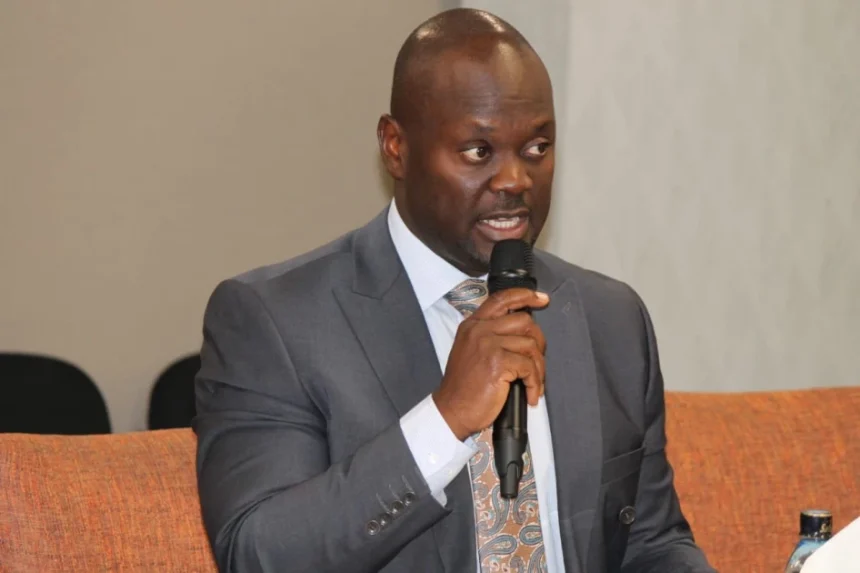
In the early hours of Tuesday, February 17, 2026, Anthony Kibagendi sat in the Citizen TV studios and spoke a truth that many in power didn’t want to hear. By Tuesday evening, he was a man without an office, barred indefinitely from the National Assembly.
The suspension of the Kitutu Chache South MP is being framed by the House leadership as a matter of “decorum” and “standing orders.” But for those watching the escalating tension on Kenya’s streets, this isn’t about etiquette—it’s about an attempt to silence one of the most vocal critics of a government currently under fire for police brutality and institutional capture.
1. The “Appendage” Remark: Truth or Treason?
During his appearance on Daybreak, Kibagendi didn’t mince words. He characterized the 13th Parliament as an “auctioned house” and a mere “appendage of State House.” He took specific aim at Speaker Moses Wetangula and Deputy Speaker Gladys Boss Shollei, accusing them of surrendering the legislature’s independence to the Executive.
For the Speaker, these words were a “disrepute to the institution.” For Kibagendi’s supporters, they were a reflection of a Parliament that has consistently voted in favor of controversial bills while ignoring the cries of the mwananchi.
2. The Kitengela Shadow: Why Now?
To understand the timing of this suspension, one must look at the events of Sunday, February 15, 2026. Kibagendi was part of a high-profile opposition rally in Kitengela, led by Nairobi Senator Edwin Sifuna. The rally ended in chaos as police lobbed teargas and fired live rounds, resulting in the death of one person and dozens of injuries.
During his TV interview, Kibagendi didn’t just criticize Parliament; he accused Interior CS Kipchumba Murkomen of giving “instructions to the police to kill” to intimidate opposition leaders. He warned that if the upcoming Kakamega rally faced similar interference, the youth would take to the streets “more aggressively than ever before.”
By suspending Kibagendi just hours after these remarks, Parliament has effectively removed a key liaison between the political leadership and the restless youth movement.
3. The “Properly Worded Apology” Trap
Speaker Wetangula’s ruling is particularly restrictive. Kibagendi is not just suspended for a few days; he is barred indefinitely until he brings a “properly worded apology” to the Clerk.
“It will be looked at carefully,” Wetangula warned, “and if the wording is acceptable, then it will be brought to the House and you will be allowed to come back.”
This creates a dangerous precedent. If an MP’s return to his constitutional duties is contingent on a “worded apology” that must satisfy the very people he is criticizing, we are no longer looking at a democracy—we are looking at a system of forced compliance.
4. A History of Resistance
Kibagendi’s suspension is the latest in a string of attempts to neutralize him:
The SHA Whistleblower: In late 2025, he was forcibly removed from a Health Committee meeting for accusing CS Aden Duale of fraud regarding the Social Health Authority (SHA).
The Narok Arraignment: Just weeks ago, he was dramatically arrested and transported across multiple counties to face assault charges in Narok—a move his lawyer, Senator Okong’o Mogeni, termed “forum shopping” by the state to influence the court.
5. The Disenfranchised Voter
While the political elite bicker in Nairobi, the 100,000+ residents of Kitutu Chache South are the real victims. Their representative cannot:
Vote on the Budget: As the 2026/27 budget cycle approaches, their voice is silenced.
Access the NG-CDF: The administrative freeze on his office complicates the management of local development projects.
Provide Oversight: One less critic in the House means one less barrier to the Executive’s agenda.
6. The Kakamega Countdown
Kibagendi’s parting shot on Citizen TV was a warning: “The only way to deal with IG Kanja… we are waiting for them to try and disrupt Kakamega.” By suspending him, the government may have hoped to lower the temperature. Instead, they have turned Kibagendi into a martyr for free speech. With Senator Sifuna and the “United Opposition” vowing to proceed with their nationwide rallies, the suspension has only added fuel to an already volatile political atmosphere.
Conclusion: Can You Suspend an Idea?
You can bar a man from a building, and you can lock his office door, but you cannot suspend the grievances of a nation. Anthony Kibagendi’s suspension is a test for every Kenyan. If a Member of Parliament can be silenced for speaking his mind on national TV, what hope does the ordinary citizen have?