

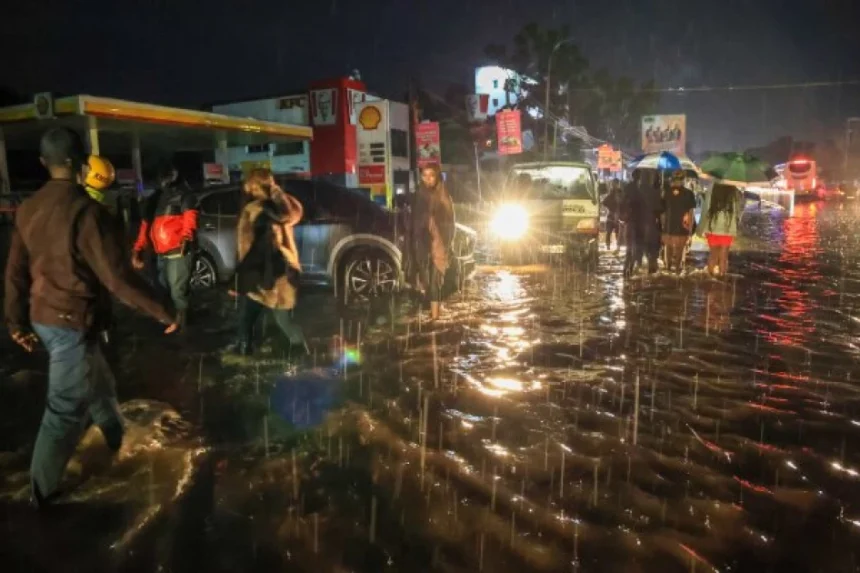
The Friday evening commute in Nairobi is traditionally chaotic, but as the Kenya Meteorological Department (KMD) issued its latest “heavy rain” red alert, the chaos has turned into a survival mission. From today through Sunday, March 22, 2026, the city is expected to receive a concentrated downpour that will test every drainage pipe and riverbank in the metropolitan area.
For many residents, the question isn’t just “Will it rain?” but “Will my street become a river?” In 2026, despite significant investment in the Nairobi Expressway and improved bypasses, the city’s “internal” drainage remains a legacy system struggling to cope with modern weather patterns.
Mapping the Danger: The 2026 Flash Flood Zones
Based on historical data and current saturation levels, certain areas are officially on “High Alert” for this weekend. If you live or work in these zones, your preparation should start immediately.
1. The “Basin” Zones (South C and Lang’ata)
South C remains the “canary in the coal mine” for Nairobi flooding. Because it sits in a natural depression, runoff from the Ngong Hills naturally settles here.
The Risk: Flash floods that can submerge cars in basement parking lots within 30 minutes.
Action: Move all vehicles to the elevated sections of Mombasa Road or designated high-ground parking.
2. The River Corridors (Kibra, Mathare, and Mukuru)
The Nairobi River and its tributaries (Ngong and Mathare) are already at 80% capacity. With the predicted 20mm+ rainfall, these rivers will burst their banks.
The Risk: Sweeping currents that can destroy informal structures and contaminate local water sources.
3. The “Clogged” Hubs (CBD and Eastlands)
In areas like Kamukunji and the City Center, the issue isn’t geography; it’s waste. Plastic blockage in the main storm drains means even light rain results in knee-deep water on the tarmac.
The “New” Threat: Saturated Soil and Foundation Shifts
In the upscale areas of Kileleshwa and Lavington, the threat isn’t just surface water; it’s the ground itself. In early 2026, Nairobi has seen an increase in “subsidence”—where the ground settles unevenly due to excessive moisture.
Warning Sign: If you notice new cracks in your perimeter wall or if your garden looks “spongy” and holds water for more than 2 hours after rain stops, your soil is over-saturated.
The Danger: This can lead to small landslides or the sudden collapse of older masonry walls.
Navigating the City: The “No-Go” Roads
If you must be on the move between now and Sunday evening, avoid these known “water traps”:
The Ojijo Road Underpass: Frequently transforms into a swimming pool during heavy downpours.
Lower Kabete Road: Prone to mudslides and falling trees near the university sections.
Enterprise Road (Industrial Area): Heavy truck traffic combined with deep flooding makes this a graveyard for small sedans.
Mbagathi Way (Rahimtulla Section): Notorious for high-velocity runoff that can sweep motorcycles off the road.
Health Alert: The “After-Flood” Danger
The Ministry of Health has warned that as the rain intensifies through Sunday, the risk of Cholera and Typhoid spikes by 40%.
Do Not Waded: Floodwater in Nairobi is often mixed with raw sewage from burst manholes.
Treat Your Water: Ensure all drinking water is boiled. Even “bottled” water can be compromised if the storage facility was flooded.
Conclusion: Sunday is the Peak
The Kenya Met Department is clear: Sunday will be the most intense day of this cycle. By Saturday evening, ensure you have enough food, water, and charging capacity to stay indoors for 24 hours.
Nairobi is a resilient city, but the power of nature, especially during the March long rains, should never be underestimated. Stay dry, stay high, and stay connected to our live weather feed for minute-by-minute updates.
3. Engagement & Conversion Block
Don’t Get Caught Unprepared:
Live Update Thread: Is it raining in your area? Post your location and the water level in the comments to warn fellow residents.
Emergency Kit List: [Download: The 10 Items Every Nairobi Household Needs During Floods]
Stay Alert: Join our [Nairobi Weather Telegram] for instant alerts when a major road becomes impassable.