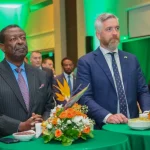


As of March 21, 2026, the relationship between the Executive and the Kenya Conference of Catholic Bishops (KCCB) has shifted from “constructive engagement” to an open “pulpit war.” The spark? A scathing rebuke from Archbishop Maurice Muhatia, who recently termed the public bickering between President William Ruto and opposition figures as a “national disgrace.”
For many Kenyans, the term “verbal indiscipline”—coined by Muhatia during a service in Machakos—has become the defining phrase of the month. It describes a political environment where body-shaming, raw insults, and personal attacks have replaced policy debate. But the President’s response has been equally sharp: “Keep the politics out of the sanctuary.”
Why the Clergy Broke Their Silence
The Catholic Church, historically a powerful moral referee in Kenya, hasn’t been this vocal since the 2024 tax protests. Archbishop Muhatia’s concern isn’t just about the words spoken, but the moral decay they represent.
The Scandal to the Youth: The bishops warned that young people are “traumatized” and “shocked” by the lack of decorum in high offices.
The “Bunker” Suggestion: In a rare moment of biting irony, Muhatia suggested that if leaders must insult each other, they should “find a bunker somewhere underground” and finish their business there, rather than subjecting 50 million Kenyans to the spectacle.
Institutional Respect: The KCCB maintains that public insults are a direct disrespect to the citizens who entrusted these leaders with power.
Ruto’s Counter-Attack: The “Neutrality” Argument
President Ruto has not taken the criticism lying down. While speaking in Siaya and earlier at a groundbreaking ceremony in Suswa, the President challenged the clergy’s own neutrality.
The President’s Defense:
Factual Critiques: Echoing his 2024 and 2025 responses, Ruto urged the clergy to be “careful to be factual.” He implied that some religious leaders have become victims of the very “culture of lies” they accuse his administration of fostering.
The Sanitized Pulpit: The President argues that by allowing opposition figures to use church platforms to launch attacks, the clergy is effectively “politicizing the pulpit.”
Governance Success: The administration points to the SGR Phase 2B (Narok-Kisumu) and other infrastructure milestones as the “facts” the Church should be focusing on, rather than the “noises” of political