
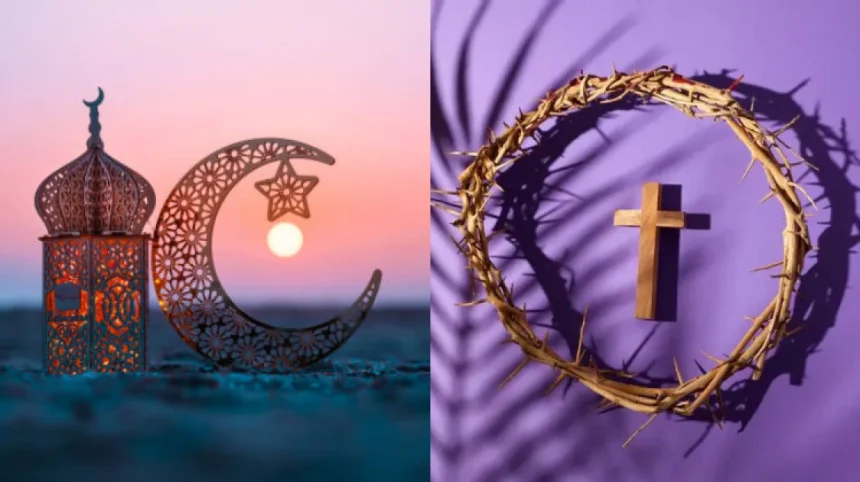
On the morning of February 18, 2026, a unique silence fell over Kenya. It wasn’t the silence of an empty street, but the heavy, intentional quiet of a nation “turning inward.” As the smudge of ashes met the first pre-dawn Suhoor meal, we entered a 30-day spiritual laboratory.
While Blog 1 covered the rare mechanics of this coincidence, this entry explores the “So What?”—the profound psychological and communal shifts occurring when half of humanity decides to be hungry for the same reason at the same time.
1. The “Hunger for Justice” vs. The Hunger for Bread
Religious leaders in Malindi and Mombasa have been quick to point out that the 2026 overlap isn’t just a liturgical quirk; it’s a social mirror. In their joint statement at the Butwani Waterfront, clerics noted that the experience of hunger during this season should awaken a shared national conscience.
The Mirror of Poverty: When a middle-class Christian fasts for Lent and a Muslim neighbor fasts for Ramadan, their temporary “choice” to be hungry connects them to the millions of Kenyans for whom hunger is not a choice, but a daily reality driven by inflation and debt.
The Solidarity of the Stomach: In 2026, the “theological wall” is being replaced by the “communal table.” The shared physical weakness of the fast is proving to be a stronger bond than any political manifesto.
2. The Psychology of Self-Mastery: A Global Reset
In a world addicted to instant gratification—scrolling, snacking, and spending—the 2026 convergence is a massive counter-cultural strike.
Psychologists have noted that “collective ritual” significantly lowers social anxiety. In 2026, because “everyone is doing it,” the social pressure to consume is replaced by a social permission to reflect.
3. Moving from “Tolerance” to “Encounter”
For decades, interfaith relations in Kenya have focused on tolerance—the act of putting up with each other. The 2026 overlap is pushing us toward encounter.
The Dialogue of Life: This isn’t happening in boardrooms; it’s happening in the Kibanda and the office breakroom. It’s the Christian coworker who waits to eat their lunch out of respect for their Muslim colleague, and the Muslim neighbor who invites the Christian family for a “Lenten-friendly” Iftar (no meat, plenty of prayer).
The “Kairos” Moment: Archbishop Anthony Muheria of Nyeri described this as an appointed time where “God has invited us to breathe together.” By syncing our most intense periods of prayer, we are inadvertently creating a “national prayer canopy” that many hope will lower the political temperatures of 2026.
4. The “March Overlap”: A Season of Quiet Anticipation
As we move into March 2026, the “Double Fast” will reach its peak.
The Mood: Expect a noticeably quieter social scene. Major weddings, high-octane parties, and noisy political rallies are being rescheduled or scaled back as the country prioritizes the “interior life.”
The Climax: While Ramadan will conclude around March 19 with the celebration of Eid al-Fitr, the Lenten journey will continue toward Holy Week (starting March 29). This creates a staggered “release” of spiritual energy that will carry Kenya into the second quarter of the year.
Conclusion: Emerging Different
The 2026 overlap is a reminder that while our scriptures might be different, our “software”—the human need for meaning, discipline, and mercy—is identical. We are currently in the middle of a global experiment in empathy.
If we emerge from this month only having lost weight, we will have missed the point. But if we emerge with a deeper respect for the “other” and a stronger grip on our own impulses, 2026 will be remembered not as the year the calendars collided, but as the year the nation connected.