

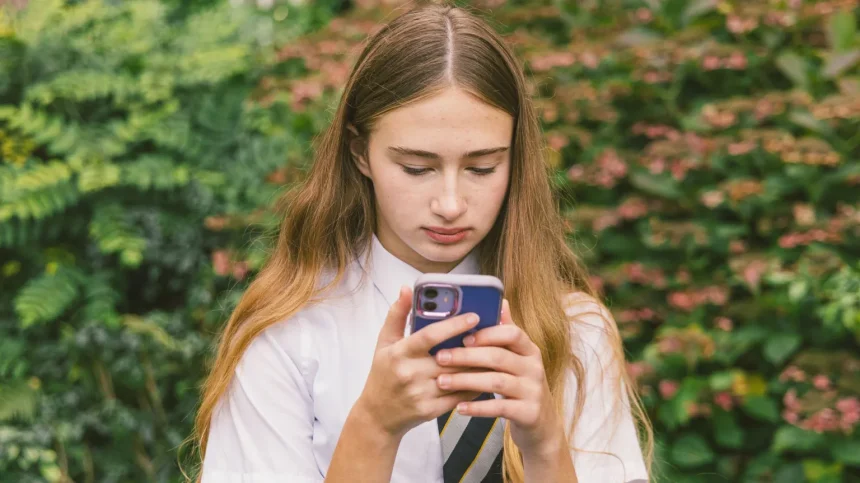
The debate over whether to ban social media for children under 16 has reached its most critical stage. Today, March 25, 2026, Technology Secretary Liz Kendall announced the launch of a first-of-its-kind government pilot program that puts 300 British households at the center of a “real-world” experiment.
While politicians in the House of Commons recently rejected a blanket statutory ban, the government is now gathering the “hard evidence” needed to decide if a nationwide restriction is the only way to save a “lost generation” from digital addiction.
1. The Government Pilot: 300 Homes, 6 Weeks
This isn’t a lab study; it’s a lived experience. For the next six weeks, 300 families will be split into experimental groups to test different levels of restriction:
The “Blackout” Group: Parents will use technical controls to entirely disable social media apps, mimicking an Australia-style ban.
The “One-Hour” Group: A strict 60-minute daily cap on TikTok, Snapchat, and Instagram.
The “Night-time Curfew”: A total block on social media between 9:00 PM and 7:00 AM.
Crucially, the government will be interviewing these families about “workarounds.” Officials want to know how quickly a 14-year-old can bypass these rules using VPNs or hidden browsers, allowing the state to build a more “un-hackable” national policy.
2. The “IRL Trial”: A Scientific Powerhouse in Bradford
Running alongside the government’s pilot is The IRL Trial (In Real Life)—the world’s first major scientific study of its kind. Co-led by Professor Amy Orben (University of Cambridge) and the Bradford Institute for Health Research, this study will track 4,000 students aged 12–15 across 10 secondary schools.
Unlike the smaller pilot, the IRL Trial is a randomized controlled study designed to produce peer-reviewed data. Over the next two years, researchers will measure:Anxiety & Sleep Quality: Does removing the “infinite scroll” actually lower cortisol levels and improve REM sleep?Social “In-Real-Life” Interactions: Does less time on TikTok lead to more time with friends in the physical world?Bullying & Absences: Can a digital curfew reduce the 24/7 nature of school-based cyberbullying?
3. The “You Won’t Know Until You Ask” CampaignWhile the trials gather data, the government is also launching the “You Won’t Know Until You Ask” campaign. This provides parents with immediate, practical toolkits to talk to their children about “ragebait,” misogynistic content, and the addictive “streaks” that keep them hooked.