

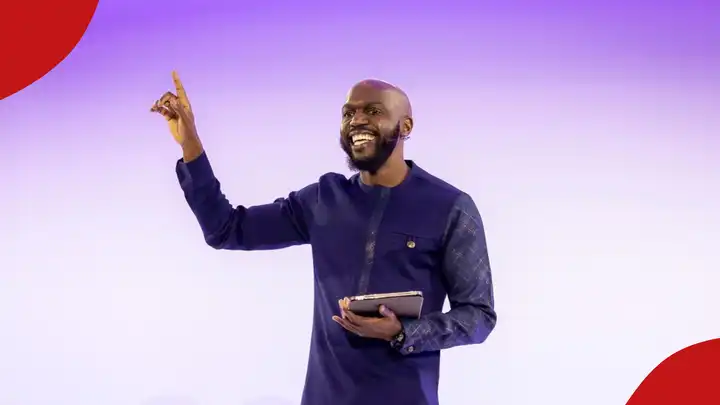
In the digital theatre of modern media, Larry Madowo performs a fascinating, high-wire act of cultural and contextual code-switching. One moment, he’s delivering grave analysis on CNN about geopolitical strife; the next, he’s engaging in witty, relatable banter on X (Twitter) about the surreal experience of receiving flirtatious DMs. His recent viral moment is not an anomaly—it’s a strategic, authentic display of a bifurcated public persona essential for the 21st-century journalist. This blog explores how Madowo’s humor is a sophisticated tool that bridges the immense gap between the gravitas of global reporting and the accessible language of pop culture, making him not just a trusted correspondent, but a culturally relevant icon.
Section 1: The Two Stages: CNN’s Desk vs. The Twitter Timeline
Madowo operates on two distinct but interconnected stages, each with its own script and audience.
Stage 1: The Global Journalist (CNN). Here, the persona is defined by authority, gravitas, and precision. The language is formal, the topics are weighty (war, diplomacy, economics), and the goal is to inform and analyze with unimpeachable credibility. It’s a performance of expertise and trust.
Stage 2: The Digital Personality (Social Media). Here, the persona shifts to accessibility, relatability, and cultural fluency. The language is conversational, peppered with Kenyan slang, internet lingo, and self-deprecating humor. The goal is to connect, engage, and build community.
The Seamless Pivot: The genius lies in the pivot. After signing off from a segment on, say, the Ukraine war, he can tweet a witty observation about the experience or a humorous personal anecdote. This doesn’t diminish his credibility; it humanizes the expertise. It shows the person behind the podium.
Section 2: The Humor as a Strategic Bridge
His specific brand of humor—seen in the “war zones” quip—is the architectural marvel that connects these two worlds.
It Demystifies the Elite Profession: Global journalism can feel remote and inaccessible. By joking about the mundane intrusions (like flirty DMs) into his high-stakes world, he dismantles the ivory tower. It tells the audience: “I do this extraordinary job, but I still deal with the same ordinary, awkward social stuff you do.”
It Creates a Shared Cultural Language: The joke relied on a universal understanding of both “shooting your shot” (pop culture) and “war zones” (current events). By fusing them, he speaks fluently to multiple audiences at once: the politically engaged, the pop culture savvy, and everyone in between.
It Reinforces Authenticity in an Age of Distrust: In an era of media skepticism, audiences crave authenticity. Showing a sense of humor—especially one that doesn’t try too hard—signals confidence and realness. It suggests his on-air persona isn’t a mask; it’s one facet of a complete, grounded person.
Section 3: The Kenyan Anchor in a Global Context
For his Kenyan audience, this code-switching carries an additional layer of significance.
Carrying “Home” to the World Stage: His use of Kenyan references, humor, and perspective, even while on global platforms, is a form of soft power. It normalizes a Kenyan viewpoint in global discourse. He’s not just reporting to the world; he’s bringing a piece of Kenya with him.
The Pride of Accessible Excellence: Kenyans see one of their own excel at the highest level of journalism while remaining unmistakably, unapologetically Kenyan in his digital interactions. This shatters the stereotype that global success requires shedding one’s local identity.
A Blueprint for Aspiring Professionals: He models how to navigate a global industry without cultural assimilation. You can master the formal protocols of international media while retaining your unique voice and cultural touchstones.
Section 4: The Risks and Mastery of Balance
This dual existence is not without its perils. The balance is delicate.
The Credibility Tightrope: Too much levity could risk undermining his journalistic gravitas. Madowo avoids this by keeping the content domains separate yet complementary. The humor is personal or meta-commentary about his life around the job, never mockery of the serious subjects he covers.
Avoiding the “Celebrity Journalist” Trap: The risk is becoming more famous for one’s persona than one’s reporting. He mitigates this by ensuring his social media presence ultimately drives attention back to his substantive work. The humor is the hook; the quality journalism is the enduring product.
Managing Audience Expectations: He trains his audience to understand his codes. When he tweets a joke, they laugh. When he tweets a thread about a breaking news event, they know to shift gears and pay attention. This contextual fluency is a contract with his followers.
Conclusion: The Future of Influence is Bilingual
Larry Madowo’s viral moment is a microcosm of a much larger shift. The future of influence—in journalism, academia, leadership—belongs to those who are “bilingual.” Not just in languages, but in the ability to speak the formal code of their institution and the informal, connective code of digital culture.
He demonstrates that authority no longer resides solely in stoic, distant expertise. It can be amplified by authenticity, humor, and the ability to make human connection across the chasm of status and scale. In a fragmented media landscape, the most powerful voices will be those that can resonate in the boardroom, on the news desk, and in the Twitter timeline with equal potency.
Madowo isn’t just reporting the news; he’s modeling a new paradigm for how a public intellectual operates in the world. He has built a bridge, and he’s inviting us all to cross it.