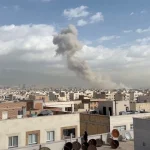


The geopolitical tremor that began in Tehran on Saturday has officially become a domestic crisis for Kenya. On Monday, March 2, 2026, as President William Ruto issued a stern condemnation of the widening strikes across the Gulf, the State Department for Diaspora Affairs moved to its highest alert level in years.
With over 416,000 Kenyans currently working across the Arabian Peninsula—the largest concentrations being in Saudi Arabia, Qatar, and the UAE—the government’s priority has shifted from diplomatic observation to active protection.
The “Regionalization” Trap
What President Ruto termed the “regionalization” of the conflict is now a terrifying reality for Kenyan workers in cities like Abu Dhabi, Doha, and Kuwait City.
The Intercepts: Over the weekend, debris from intercepted Iranian drones and missiles reportedly fell near civilian areas in the UAE and Qatar.
The Casualty List: Reports have already confirmed the death of a Pakistani civilian in Abu Dhabi, a grim reminder that this war is no longer confined to military silos.
The Official Directive: “Shelter in Place”
In a series of urgent morning interviews on Monday, Principal Secretary for Diaspora Affairs Roseline Njogu delivered a blunt message to the diaspora: “Stay indoors.”
“For now, as we monitor the situation, it is important to reiterate to Kenyans to shelter in place and listen to what your host country is advising. We are far from an evacuation scenario, but we have a plan in place if it comes to that,” PS Njogu stated.
The government has outlined a three-step safety protocol for all Kenyans in the region:
Immediate Registration: If you haven’t registered with your local embassy or consulate, you must do so today via official portals to ensure you are reachable for evacuation alerts.
Avoid High-Risk Zones: Stay clear of military bases, government buildings, and “crowded public spaces” that may become targets.
Digital Vigilance: Monitor only verified government platforms for updates; avoid sharing unverified social media rumors that could cause panic.
The Economic “Supply Chain” Shock
Beyond the immediate physical danger, the war is strangling the movement of people and goods.
Kenya Airways: The suspension of flights to Dubai and Sharjah has left thousands of travelers stranded and disrupted the “meat-and-tea” export corridor that sustains many Kenyan farmers.
The Oil Factor: With ships now being attacked near the Strait of Hormuz, fuel prices in Kenya are expected to climb. This “war premium” on oil could trigger a fresh round of inflation back home by the end of the week.
Emergency Contact Directory (2026)
The Ministry of Foreign Affairs has activated 24-hour hotlines for Kenyans in distress:
Embassy in Tehran (Iran): +98 996 672 7549
Embassy in Tel Aviv (Israel): +972 542 540 394
Consular Services (Dubai/UAE): Check official social media handles for the latest regional WhatsApp links.
The Outlook
As the UN Security Council convenes and President Ruto pushes for “UN Charter-based mechanisms,” the hope for peace remains. However, for the families of the 400,000 Kenyans in the Gulf, the coming 72 hours will be a period of immense anxiety.