

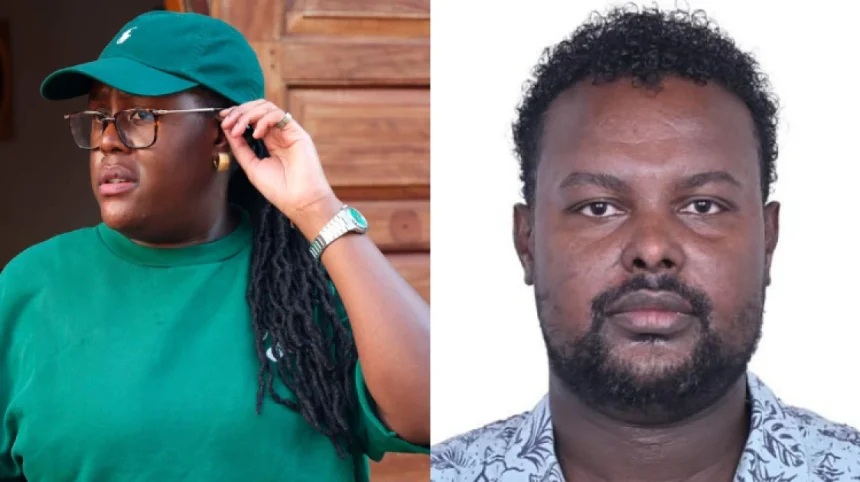
When EALA MP Winnie Odinga took to Citizen TV to declare that businessman Oketch Salah should be “rushed to the DCI or Mathare Hospital,” she wasn’t just being dramatic. Her statement highlights a growing tension in Kenya’s 2026 digital landscape: the line between “personal recollection” and “criminal misinformation.”
As Salah insists his account of Raila Odinga’s final moments is “real and lived,” he may find himself on the wrong side of the law if he cannot provide what the internet calls “receipts.”
1. The 2026 Legal Hammer: Section 23 of the CMCA
Under the recently amended Computer Misuse and Cybercrimes Act (CMCA), publishing false information is no longer just a “social media mistake”—it’s a serious felony.
The Offence: Knowingly publishing false data that is calculated to cause panic, chaos, or violence, or that discredits the reputation of a person.
The Penalty: If the DCI finds that Salah’s claims were fabricated to exploit a national moment of mourning, he could face a fine of up to Ksh 5 million or a prison term of up to 10 years.
2. Why Winnie Mentioned “Mathare”
Winnie’s reference to Mathare National Teaching and Referral Hospital was a sharp jab at Salah’s mental state, suggesting his “adopted son” narrative is a delusion.
The Impact: In Kenyan law, “Mental Incapacity” can sometimes be used as a defense, but in the court of public opinion, it’s a branding death sentence. By suggesting he belongs in a psychiatric facility, Winnie is effectively saying his testimony should be disregarded in the historical record of the “Enigma.”
3. The Burden of Proof: “Real and Lived”
Oketch Salah has fired back, stating he chose silence out of respect for Mama Ida Odinga but stands by his words. However, in the eyes of the law:
Corroboration is King: For Salah to avoid a “DCI summons,” he would need to prove he was physically present in the hospital rooms he describes.
The Family Privilege: The law generally respects the “Privacy of the Family” (Article 31). If the Odingas deny his presence, the burden falls on Salah to prove he wasn’t trespassing or fabricating his proximity to the late leader.
4. Misinformation in the “Succession Era”
Why is the DCI so interested in this? In 2026, misinformation about a leader’s death can trigger:
Market Instability: False claims can affect the value of the Shilling.
Civil Unrest: Conflicting reports on a leader’s “final words” can incite different political factions to violence.
Conclusion: A Warning to Content Creators
The Winnie-Salah feud is a loud warning to bloggers and “political influencers.” In the new Kenya, “clout chasing” using the names of fallen icons carries a heavy price. Whether Salah is a misunderstood confidant or a master of “political jujitsu,” the DCI’s eyes are now firmly on him.