

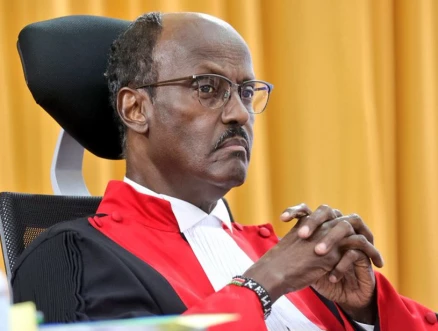
Kenya’s judiciary and the entire nation are in a state of profound mourning following the announcement of the passing of Supreme Court Judge Ibrahim Mohammed. The news, confirmed by the Judiciary on [Date], sends ripples of grief across the legal fraternity and among citizens who saw him as a steadfast pillar of justice. Appointed to the apex court in [Year, e.g., 2021], Justice Mohammed’s tenure, though tragically cut short, was marked by intellectual rigor, unwavering principle, and a deep commitment to the rule of law. This article reflects on his distinguished career, his significant rulings, and the enduring void his departure leaves in Kenya’s Supreme Court and the broader pursuit of constitutionalism.
Section 1: A Storied Career: From Magistrate to Supreme Court Bench
Justice Ibrahim Mohammed’s journey to the pinnacle of Kenya’s judiciary was one of dedication and exemplary service.
Early Career and Rise: He began his legal career as a magistrate, steadily rising through the ranks due to his sharp legal mind and reputation for fairness. He served as a High Court Judge before his elevation to the Court of Appeal.
Elevation to the Apex Court: In [Year], President Uhuru Kenyatta appointed him to the Supreme Court of Kenya, following the recommendation of the Judicial Service Commission (JSC). His appointment was widely hailed as meritorious, filling the seat left by the retirement of Justice [Previous Justice’s Name].
Judicial Philosophy: Known for his meticulous writing and thoughtful deliberations, Justice Mohammed was seen as a judge who strictly interpreted the law within the framework of the 2010 Kenyan Constitution. He believed in the judiciary’s role as a guardian of the constitution and a protector of citizens’ rights.
Section 2: Key Rulings and Lasting Impact
Though his time on the Supreme Court was brief, Justice Mohammed participated in and authored opinions in several landmark cases that shaped Kenya’s jurisprudence.
Electoral Law & Democracy: He was part of the historic Supreme Court bench that heard the [Mention a significant petition if applicable, e.g., “2022 Presidential Election Petition”]. His questions during hearings and his reasoned contributions to the final judgment underscored his commitment to electoral integrity and due process.
Constitutional Interpretation: In matters concerning devolution, separation of powers, and bill of rights, his judgments often emphasized the need for all arms of government to operate within their constitutionally mandated boundaries.
Advocate for Legal Reform: Beyond judgments, he was a vocal proponent for the efficiency and independence of the judiciary, often speaking on the need for adequate resources and protection from undue influence.
Section 3: The Man Behind the Robe: Tributes and Personal Legacy
As news of his death spreads, heartfelt tributes have poured in, painting a picture of a respected colleague and a man of integrity.
From the Bench: Chief Justice Martha Koome led the judiciary in mourning, describing him as “a brilliant jurist, a devoted public servant, and a brother to us all.” Fellow Supreme Court judges remembered his collegiality and wisdom.
From the Bar: The Law Society of Kenya (LSK) and senior counsels have expressed deep sorrow, noting his courteous demeanor in court and his openness to persuasive legal argument.
A Family Man: While a private figure, he was known to be a devoted family man. The nation’s condolences are extended to his family, who have lost a loving pillar.
Section 4: What Next? The Process of Appointing a Successor
Justice Mohammed’s passing creates a vacancy in the seven-member Supreme Court. The Constitution provides a clear path for succession:
Declaration of Vacancy: The Judiciary will formally notify the Judicial Service Commission (JSC) of the vacancy.
Public Recruitment: The JSC will advertise the position, inviting applications from qualified lawyers and judges who meet the stringent constitutional requirements for a Supreme Court judge.
Vetting and Interviews: The JSC will conduct a rigorous public interview process, a critical step for transparency.
Nomination and Appointment: The JSC will forward one name to the President, who will appoint the nominee subject to approval by the National Assembly.
This process will be closely watched, as it is crucial for maintaining the balance and credibility of the nation’s highest court.
Conclusion: A Legacy of Integrity and Service
The sudden death of Supreme Court Judge Ibrahim Mohammed is not just a loss for the judiciary, but for Kenya. In a time when public confidence in institutions is paramount, jurists of his caliber—known for their integrity, intellect, and commitment—are the bedrock of our democracy. His legacy will live on in the legal precedents he helped set and in the high standard he set for judicial service. As the nation mourns, the best tribute would be a continued commitment to the independent, robust, and fair judiciary he served so honorably.