
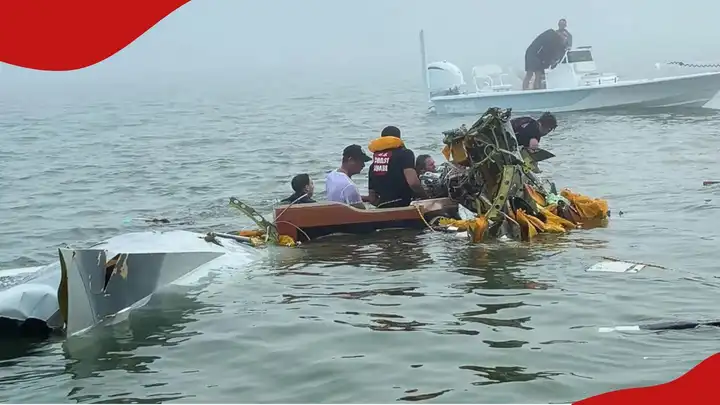
While the world mourns the five lives lost in Mexico, the chilling reality is this: their tragedy is a data point in a persistent, global pattern of medical aviation accidents. From the mountains of Papua New Guinea to the jungles of Brazil, from the Australian Outback to the Alaskan tundra, air ambulances and rescue helicopters crash with a sobering frequency that receives scant attention outside their own borders. The Mexico crash is not an anomaly; it is a stark flare, illuminating a worldwide crisis in a critical, yet perilous, corner of public health infrastructure. This blog connects the dots across continents, revealing a shared web of risk, underfunding, and heroic overreach that puts patients and rescuers in danger daily.
Section 1: The Global Map of Tragedy: A Pattern Emerges
A review of recent decades shows alarming consistency in the causes of medical flight crashes.
The “Hotspots” of High Risk:
Mountainous & Remote Terrain (The Americas, Asia, Oceania): Navigating the Andes, the Himalayas, or the Rockies in poor weather is a prime killer. The Mexican crash fits this pattern.
Poor Visibility & Icing Conditions (Northern Latitudes): In Scandinavia, Canada, and Russia, flights for island or remote communities often battle low clouds, fog, and ice.
Overwater & Coastal Operations (Global): Helicopter emergency medical services (HEMS) flying to offshore platforms, between islands, or along coasts face unique navigational and ditching dangers.
Recurring Causes: Investigations repeatedly cite:
Controlled Flight Into Terrain (CFIT): Flying a functioning plane into the ground, often due to disorientation in poor visibility or inadequate terrain mapping.
Weather-Related Incidents: Icing, sudden storms, and wind shear.
Night Operations: Visual flight rules (VFR) at night is a notoriously high-risk combination, especially over featureless or rugged terrain.
Maintenance & Human Factors: As seen in all aviation, but with higher stakes.
Section 2: The Universal Pressures: Why the System is Inherently Risky
The same pressures that likely played a role in Mexico are replicated globally.
The “Resource Frontier” Paradox: The very communities most in need of air medical services—remote, indigenous, or impoverished regions—are often served by the least resourced operators. Governments and insurers pay low rates, squeezing margins and forcing operators to cut corners on training, maintenance, or safety equipment.
The “24/7/365” Expectation: Societies demand that air ambulances be available instantly, in any weather, day or night. This public expectation creates immense operational pressure to launch when commercial airlines would be grounded. The political cost of saying “no” can be high.
Fragmented Regulation & Oversight: While major airlines operate under stringent international (ICAO) standards, many smaller, private air ambulance operators fall into regulatory gray areas. National aviation authorities are often understaffed and lack specialized expertise to aggressively oversee this niche, high-risk sector.
The Hero Narrative vs. The Safety Culture: Globally, air medical crews are celebrated as heroes—which they are. But this can foster a “can-do” culture that stigmatizes risk-averse decisions. Young pilots and medics may feel pressured to prove their bravery, overriding cautious judgment.
Section 3: The Silent Cost: Beyond the Immediate Crash
Each crash has a devastating ripple effect that cripples healthcare for entire regions.
Loss of Critical Infrastructure: In remote areas, a single aircraft may be the only lifeline for a population of thousands. Its loss can mean months or years without emergency transport, effectively sentencing future patients to death from otherwise treatable conditions.
The Chilling Effect on Recruitment: High-profile crashes make it harder to recruit and retain the specialized pilots and medical staff these services desperately need, further degrading safety through experience gaps.
Erosion of Community Trust: When the flying hospital becomes a flying coffin, communities lose faith in the system. They may refuse evacuations out of fear, leading to preventable deaths on the ground.
Section 4: A Call for a Global Safety Pact
Solving this requires moving beyond national silos. The medical aviation community needs its own “Paris Agreement” for safety.
International Medical Aviation Safety Standards: The International Civil Aviation Organization (ICAO) should develop mandatory, enhanced standards for air ambulance operations (Part 135/133), covering weather minima, terrain avoidance tech, night-vision requirements, and crew fatigue management.
A Global “Safety Pool” for Technology: Create an international fund, supported by developed nations and health NGOs, to subsidize the installation of Terrain Awareness and Warning Systems (TAWS) and satellite weather tracking in medical aircraft operating in low-resource countries.
Shared Data & Transparency: Establish a global, anonymized database of medical aviation incidents and near-misses (like ASRS in the US) to identify universal trends and share lessons learned without fear of punitive action.
A “Safety First” Certification for Operators: An independent global body (perhaps under the World Health Organization and ICAO) could offer a “Gold Seal” certification for operators meeting the highest safety protocols, influencing insurance rates and government contracts.
Conclusion: The Sky Should Be a Highway of Hope, Not a Cemetery of Heroes
The five souls lost in Mexico are ambassadors from a vast, unseen fellowship of the fallen—pilots, nurses, doctors, paramedics, and patients who perished on missions of mercy from Arizona to Zambia. Their collective story is one of systemic neglect dressed in the garb of heroism.
We must stop treating these crashes as isolated, inevitable tragedies. They are predictable, and therefore preventable, failures of a global system. It is time for the world’s health and aviation authorities to convene, not just to mourn, but to mandate.
Let us honor every life lost by building a world where the most vulnerable patient in the most remote location can access care via a sky that is as safe as modern technology and rigorous protocol can make it.
Their flight ended in silence. Our demand for change must be thunderous.
The Global Citizen’s Role
Awareness & Advocacy: Did you know medical flight crashes were such a global issue? Share this analysis to raise awareness.
Follow the Money: In your country, who pays for air ambulance services (government, insurance, patients)? How could funding be tied to publicly verifiable safety metrics?
The UN/WHO Question: Should the United Nations or World Health Organization take a lead role in auditing and supporting medical aviation safety in developing nations as part of public health infrastructure?
This concludes our trilogy on the Mexico medical flight tragedy. We will continue to monitor global medical aviation safety as part of our “Infrastructure of Survival” reporting. The sky must be made safer.
SEO Title: Medical Flight Crashes: A Global Safety Crisis Exposed by Mexico Tragedy
Focus Keyword: global medical aviation safety crisis air ambulance crashes
SEO Meta Description: The Mexico air ambulance crash reveals a worldwide pattern. We map global hotspots, analyze universal risks, and call for an international safety pact to save lives.
SEO Tags: International medical aviation, HEMS safety worldwide, ICAO standards, remote healthcare access, terrain awareness systems, global health infrastructure, pilot training, medical flight funding, WHO aviation safety, preventable tragedies