
A Message from Nairobi to the World
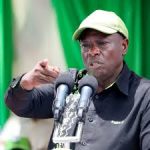
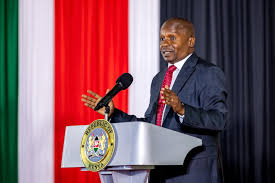
On Wednesday, April 29, 2026, Deputy President Kithure Kindiki took the global stage at the United Nations offices in Nairobi to close the World Health Summit Regional Meeting. His message was simple, direct, and non-negotiable: Africa’s health future will not be given to us; it will be built by us.
Standing before international delegates, Kindiki reaffirmed that Kenya’s transition to the Social Health Authority (SHA) is far more than a government program—it is the fulfillment of a constitutional mandate to ensure no Kenyan is denied care due to poverty.
Taifa Care: Rights over Politics
Kindiki used the summit to refine the narrative around Taifa Care, steering it away from the political friction seen in local rallies.
“Taifa Care is not a political program; it is a constitutional right,” Kindiki noted. “We are fine-tuning our UHC program and working with partners to ensure its perfection.”
By framing healthcare as a fundamental right, the DP is signaling that the government is moveing past “teething problems” into a phase of institutional discipline and long-term sustainability.
The Continental Challenge
The Deputy President didn’t just speak to Kenyans; he issued a bold challenge to leaders across Africa. He urged them to move beyond “policy declarations” and invest in practical, bold reforms in how health is financed and delivered.
-
Self-Reliance: He emphasized that Africa must rely on its own institutions rather than waiting for external solutions.
-
Sustained Investment: Kindiki called for “political courage” to protect citizens from catastrophic medical costs that often lead to intergenerational poverty.
Building the “Hardware” of Healthcare
While the Summit focused on policy, Kindiki reminded the audience that “software” (insurance) only works if the “hardware” (hospitals) is ready. He highlighted ongoing infrastructure wins:
-
Infrastructure: The settlement of Ksh 177 billion owed to contractors has restarted over 6,000 kilometers of road works, ensuring patients can actually reach Level 4 and 5 hospitals.
-
Supplies: The government is reviewing SHA’s actuarial framework to ensure it can support the growing demand for specialized services and essential medical supplies in remote areas.
The Verdict: A Legacy in the Making
As the second year of SHA implementation begins, DP Kindiki has become the face of Kenya’s health resilience. By elevating the conversation to a global level at the UN, he has made it clear that the success of SHA is a development priority for the entire continent. For the DP, 2026 is the year Kenya proves that a public-funded health model isn’t just a dream—it’s a functioning reality.
Do you agree with DP Kindiki that healthcare is a constitutional right that transcends politics? How has the “Taifa Care” transition affected your community? Join the conversation below!