

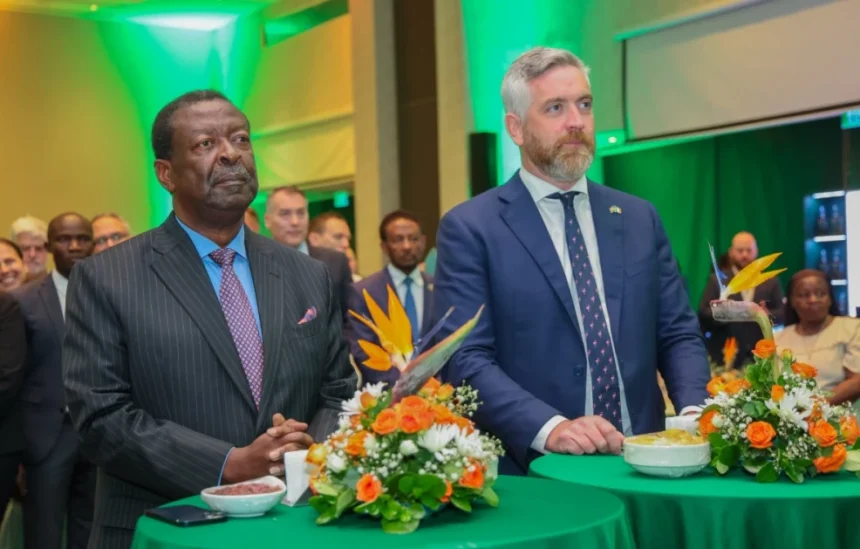
When Prime Cabinet Secretary Musalia Mudavadi stood before the St. Patrick’s Day crowd in Nairobi on March 13, 2026, he wasn’t just announcing a jobs program. He was signaling a fundamental shift in Kenya’s foreign policy. The negotiation of a structured labor mobility framework with Ireland marks a move away from the chaotic migration of the past toward an era of “Ethical Global Professionalism.”
For decades, the departure of nurses from Kenya was viewed through a lens of loss. Today, the narrative is changing. In 2026, the government views our healthcare workers as a premier “export of expertise.” By sending 5,000 nurses to Dublin or Cork, Kenya isn’t just losing hands; it is gaining a global lobby, billions in potential remittances, and a workforce that will eventually return with world-class trauma and oncology skills.
The “Why Now?” Factor: Ireland’s Growing Crisis
Ireland’s Health Service Executive (HSE) is currently battling a staffing deficit that has reached critical levels. As the Irish population ages and their own graduates seek opportunities in Australia or the US, a vacuum has formed.
Kenyan nurses are the preferred answer for three reasons:
Clinical Rigor: Kenyan training standards remain some of the highest in the Commonwealth.
Language Synergy: Unlike many EU neighbors, Kenyan professionals are native or near-native English speakers.
Cultural Resilience: Kenyan healthcare workers have earned a global reputation for high empathy and “grit” in demanding clinical environments.
[Insight Box] The 2026 Salary & Perk Reality
In March 2026, Ireland updated its General Employment Permit and Critical Skills thresholds. Here is what a Kenyan nurse can realistically expect:
Base Salary: Staff Nurse roles typically start between €37,000 and €42,000 (approx. Ksh. 5.3M to 6M) per year.
Specialist Roles: ICU, Theatre, and Midwifery experts can command up to €55,000.
Relocation Support: Many Irish hospitals now offer “Golden Hello” packages including free flights and up to 4 weeks of free accommodation upon arrival.
The Obstacle Course: Navigating the 2026 Requirements
While the deal makes it easier, it does not make it “automatic.” The Nursing and Midwifery Board of Ireland (NMBI) remains the gatekeeper.
For the modern Kenyan applicant, the journey involves more than just a passport. You must navigate the Atypical Working Scheme (AWS)—a short-term permit (up to 6 months) specifically for nurses to complete their clinical adaptation or aptitude tests on Irish soil before their full work permit is granted.
The 2026 “Must-Haves” for Applicants:
The NMBI Digital Portal: Everything is now 100% paperless. You must have high-resolution, certified digital copies of every transcript since high school.
The IELTS/OET Trap: Even with this deal, patient safety comes first. A “Level 7” or “B” in OET is the gold standard that most hospitals still demand to see before they issue an interview invite.
The 50:50 Rule: In 2026, Irish companies must prove that at least half of their workforce are EEA (European) citizens to hire from Kenya. Government-to-government deals like this one often provide a “fast-pass” around this red tape.
Expert Analysis: Managing the Risks
Every opportunity has a shadow. CS Mudavadi and the State Department for Diaspora Affairs have been vocal about “unscrupulous individuals.” In the wake of this announcement, fake “recruitment portals” have already begun to spring up on social media.
The Golden Rule for 2026: If an agency asks for “deployment fees” or “visa processing money” upfront before you have a signed contract from an Irish hospital, it is likely a scam. Real Irish recruitment is employer-funded. The hospital pays the agency; you do not.
The Long-Term Impact: “Circular Mobility”
The most exciting part of the Mudavadi-Ireland negotiation is the concept of “Circular Mobility.” Unlike the “one-way” tickets of the 1990s, this 2026 framework is being designed with return in mind.
Imagine a midwife from a rural clinic in Machakos spending three years at the Rotunda Hospital in Dublin—the oldest maternity hospital in the world. When she returns to Kenya, she brings back protocols for neonatal care that can save thousands of lives. Ireland wins today; Kenya wins tomorrow.
Conclusion: Is Your Empire Ready?
As Kenya reaffirms its commitment to deepening friendship with Ireland, the message to every nurse and midwife in the country is clear: The world is your workplace. This deal is more than a policy shift; it is a validation of the Kenyan professional. If you are a health worker, 2026 is the year to stop “dreaming” and start “documenting.” The bridge to Dublin is being built; your only job is to be qualified enough to walk across it.
3. Engagement & Conversion Block
Don’t Get Left Behind:
Download the 2026 Checklist: [Free PDF: The 10 Documents You Need for NMBI Registration]
Stay Alert: Join our [WhatsApp Channel] for immediate alerts the moment the NEA portal opens for Irish recruitment.
What do you think? Is the “Brain Gain” model fair to Kenya, or should we keep our nurses at home? Join the debate in the comments!