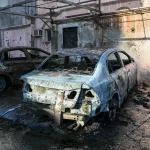


The silence of the Harbole plains in Mandera County was shattered this Tuesday morning by a sound that has become a hauntingly familiar rhythm in Kenya’s Northeastern region. A Specialized Police unit, tasked with the high-stakes job of border surveillance, saw their routine patrol turn into a scene of carnage. Six officers were injured—three critically—when their vehicle struck a concealed Improvised Explosive Device (IED).
While the immediate headlines focus on the casualties, the deeper story lies in the “how” and the “why.” This wasn’t just a random act of violence; it was a calculated strike at the heart of Kenya’s security infrastructure during a pivotal year for regional stability.
The Mechanics of the Attack: Why IEDs?
In the world of asymmetric warfare, the IED is the “great equalizer.” For militant groups like Al-Shabaab, engaging the Kenyan Defense Forces (KDF) or the sophisticated Special Operations Group (SOG) in a direct firefight is often a losing battle. Instead, they rely on the “hidden killer.”
The Harbole area, characterized by its porous borders and sandy terrain, allows for the quick burial of pressure-plate or remote-detonated explosives. By targeting the engine block of the police vehicle, the attackers ensured maximum immobilization. This tactic serves two purposes:
To Inflict Casualties: The physical harm to the six officers.
To Psychological Warfare: Creating a sense of “constant invisible threat” for every other officer who has to drive that road tomorrow.
The 2026 Context: The ATMIS Factor
To understand this attack, we must look across the border into Somalia. As the African Union Transition Mission in Somalia (ATMIS) continues its phased withdrawal in early 2026, a security vacuum is forming. As Somali National Forces struggle to hold territory, Al-Shabaab is finding more “breathing room” to plan cross-border raids into Kenya.
The Mandera-Somalia corridor has always been a flashpoint, but the frequency of these IED incidents suggests that the militants have established semi-permanent “transit cells” within Kenyan soil. These cells don’t live in the bush; they blend into local communities, making intelligence-led policing more difficult than ever.
The Human Cost and the Recovery Path
Of the six officers involved, the three in critical condition represent a significant loss to the frontline. These are not just “ranks”; they are highly trained specialists whose expertise takes years to cultivate. The logistical challenge of airlifting casualties from remote parts of Mandera to specialized hospitals in Nairobi remains a hurdle that the Ministry of Interior is desperately trying to solve with new dedicated medical choppers.
What This Means for the Kenyan Citizen
For the average Kenyan, especially those in the digital and business space, security is the bedrock of the economy. When the Northeastern region is unstable:
Trade Slows: Transportation costs rise as drivers demand “hazard pay.”
Infrastructure Pauses: Key government projects in the region, such as road tarmacking and fiber optic installation, are often suspended due to safety concerns.
Digital Divide: Maintenance of cell towers in these regions becomes a life-threatening job for engineers, leading to poorer connectivity.
The Strategic Response: What Happens Next?
The Ministry of Interior has already signaled a “multi-agency” surge in the Harbole area. We can expect:
Aerial Surveillance: Increased drone activity to monitor movement along the border.
Community Policing: A renewed push for the Nyumba Kumi initiative to identify strangers in the border villages.
Mine-Resistant Vehicles: Continued calls for the government to move away from standard Land Cruisers to MRAPs (Mine-Resistant Ambush Protected) vehicles for all border patrols.
Conclusion: A Call for Vigilance
The Mandera attack is a sobering reminder that while Kenya looks forward to a year of growth and digital expansion, the shadows of the past still linger at our borders. The six officers injured today represent the thin line between national stability and chaos.