
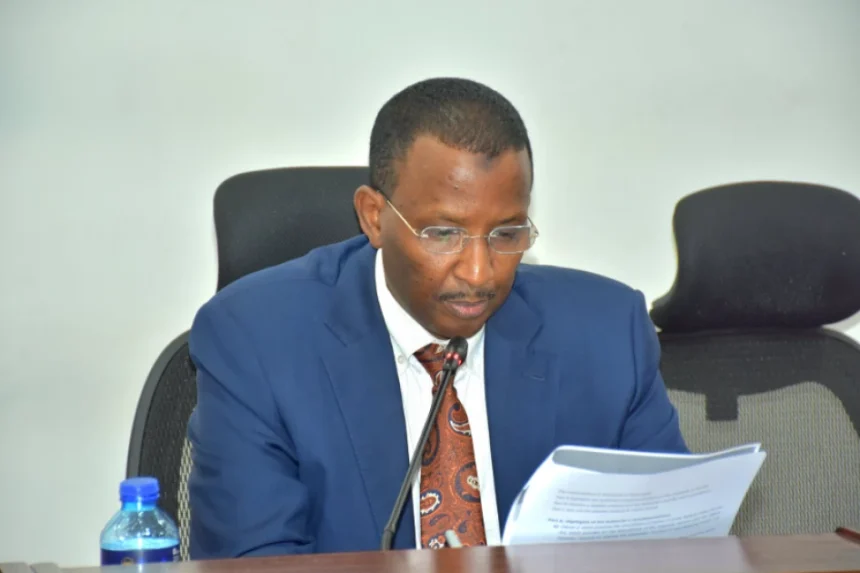
The Independent Policing Oversight Authority (IPOA) is at a crossroads. On Tuesday, February 17, 2026, the authority’s Chairperson, Ahmed Issack Hassan, officially resigned to take up a new role as a Judge of the Court of Appeal.
While the move is a personal and professional milestone for Hassan—a man whose career has traversed the highest offices of electoral and civilian oversight—it leaves a significant void at the top of Kenya’s most vital police watchdog. At a time when the “blue code of silence” remains a formidable barrier to justice, the question on everyone’s mind is: What happens to the momentum of police reform now?
1. A Departure by Design
Hassan’s exit was not a result of scandal or pressure, but rather the culmination of a rigorous judicial recruitment process. Having been vetted and recommended by the Judicial Service Commission (JSC), his transition to the bench is seen as a strategic move to strengthen the Judiciary with seasoned legal minds.
However, the timing is sensitive. IPOA is currently in the middle of implementing its 2025–2030 Strategic Plan, a blueprint designed to decentralize oversight and bring IPOA’s services closer to the grassroots through digital innovation.
2. Evaluating the “Hassan Era” at IPOA
Though his tenure lasted just over a year, Ahmed Issack Hassan brought a “legalist” approach to the authority. He focused on the technicalities of investigation and the strength of evidence, often reminding the public that IPOA is an arbiter of facts, not a populist tool.
His tenure was marked by two distinct themes:
Institutional Strengthening: He pushed for increased forensic capabilities, arguing that IPOA could only secure convictions if its “scientific” evidence was unassailable in court.
The Independence Debate: Hassan faced criticism from civil society groups who felt he was “too diplomatic” with the National Police Service (NPS) leadership. He countered this by stating that “oversight is not synonymous with hostility,” and that cooperation is necessary to access internal police records.
3. The Challenges for the Successor
Whoever steps into Hassan’s shoes will find an inbox overflowing with high-stakes files. The next IPOA Chairperson must navigate three major hurdles:
The Backlog Crisis: Despite efforts to digitize, thousands of cases involving alleged police misconduct remain unresolved, leaving victims in a state of “justice deferred.”
Witness Protection: A recurring challenge for IPOA is the intimidation of witnesses. The new Chair will need to work closely with the Witness Protection Agency to ensure that those who speak up against rogue officers are safe.
Funding Independence: IPOA remains reliant on the National Treasury for its budget, which critics argue is a “leash” that can be pulled to limit its investigative reach.
4. The Selection Process: Searching for the Fourth Chair
The process to replace Hassan is strictly governed by the IPOA Act. Here is what to expect in the coming weeks:
Public Advertisement: A selection panel will be formed to invite applications from qualified Kenyans with at least 15 years of experience in law or human rights.
Transparency: Shortlisted candidates will undergo public interviews, a process that has historically been televised to ensure public confidence.
Presidential Appointment: Following parliamentary approval, the President will formally appoint the next Chair for a single, non-renewable six-year term.
5. Why This Appointment Matters for 2026
Kenya is currently undergoing a series of police reforms prompted by the Maraga Taskforce Report. This includes changes in recruitment, housing, and the internal disciplinary mechanisms of the NPS.
IPOA’s role is to ensure these reforms aren’t just “on paper” but are felt by the citizen on the street. Hassan’s successor will need to be a “bridge-builder” who doesn’t mind “breaking glass” when the situation demands accountability.
Conclusion
Ahmed Issack Hassan leaves IPOA with his head held high, moving into a role where he will continue to shape the legal landscape of Kenya. As he takes his oath for the Court of Appeal, the spotlight returns to the IPOA board and the selection panel. The search for a leader who is “independent, impartial, and fair” has officially begun.
What qualities do you think the next IPOA Chairperson should have? Should they be a career lawyer or a human rights activist? Join the conversation in the comments below.