
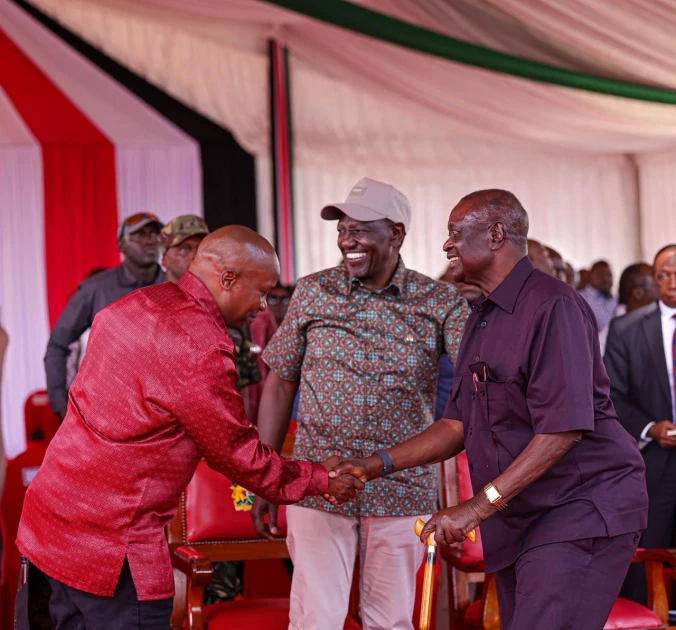
In the early months of 2026, the “Broad-Based Government” that was designed to heal Kenya following the 2024 unrest is facing its first existential threat. The issue? A “Non-negotiable” declaration from Mt. Kenya leaders: The Deputy President’s seat is not for sale, not for trade, and certainly not for ODM.
As interim ODM leaders like Oburu Oginga and Gladys Wanga begin to flex their muscles within the government, the Mt. Kenya region has unified in a way not seen since the 2022 elections. This isn’t just a squabble over titles; it is a battle for the very soul of the 2027 General Election.
1. The Ghost of the 2022 Pact
For Mt. Kenya leaders, the rejection of an ODM Deputy President is rooted in a “Contract of Trust.” When the region backed William Ruto in 2022, it was under a clear, albeit unwritten, understanding that the Mountain would hold the second-highest office in the land.
The Jeremiah Kioni Factor: Even opposition voices like Jeremiah Kioni have been vocal, stating that ODM’s entry into government should not come at the expense of the region’s existing stakes.
The Kindiki Shield: Currently, Prof. Kithure Kindiki is seen as the placeholder for this pact. Any attempt to replace him with an ODM figure is viewed by local voters as an eviction of the entire region from the “House of Power.”
2. The “One Man, One Shilling” Arithmetic
The Deputy President position in Kenya is more than ceremonial—it carries immense weight in the Commission on Revenue Allocation (CRA) debates.
Resource Protection: Mt. Kenya leaders fear that an ODM Deputy President—likely from the Nyanza or Coast regions—would shift the focus of national development toward the “Blue Economy” and away from the agricultural heartland of the Mountain.
The Fear of Marginalization: With the 2027 election on the horizon, leaders in the region are terrified of being “Gachagua-ed”—a term now used to describe being used for votes and then systematically removed from the decision-making table.